
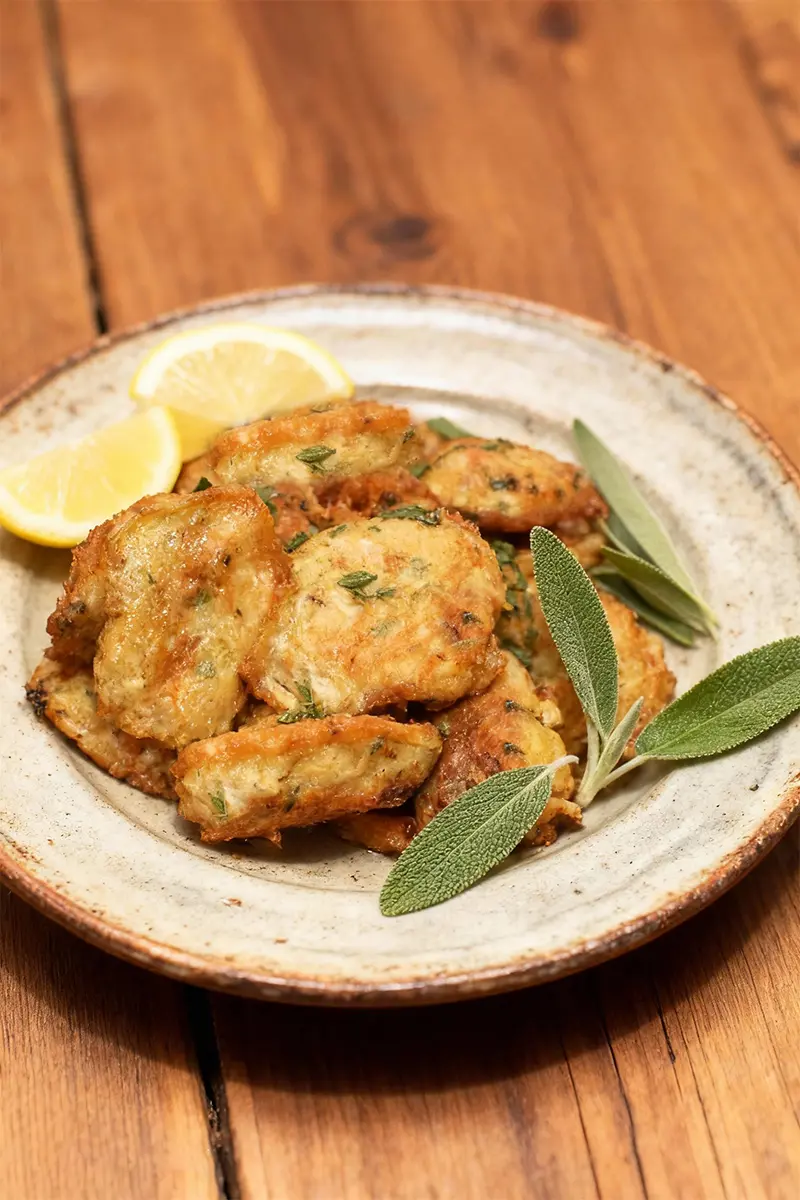
The Elegance of Lemon, Butter, and Artichoke
Artichoke Francese is a deceptively simple yet sophisticated dish that brings restaurant-worthy elegance right to your home kitchen. Much like the classic veal or chicken francese, this Italian-American favorite features tender artichoke hearts enveloped in a delicate, lightly battered coating, finished with a vibrant lemon-butter-white wine sauce.
Despite its rich flavor and elegant presentation, Artichoke Francese can be prepared quickly and easily, making it a wonderful choice for both weeknight dinners and special occasions. The tender artichokes create a beautiful contrast against the tangy, silky sauce, delivering a dish that is at once comforting and refined. Once you master the two core elements of this recipe, the light batter and the emulsified sauce, you will have a reliable showstopper that works as either a main course or an impressive appetizer.
Pairings Table of Contents
Classic Artichoke Francese: The Ultimate Guide to the Elegant Italian-American Dish

A simple yet elegant Italian-American dish featuring tender artichoke hearts in a light, golden batter, topped with a vibrant lemon-butter-white wine sauce. Perfect for weeknight dinners or special occasions.
- Prep Time: 10 minutes
- Cook Time: 15 minutes
- Total Time: 25 minutes
- Yield: 4 servings 1x
- Category: Main Course
- Method: Sauté
- Cuisine: Italian-American
- Diet: Vegetarian
Ingredients
- 1 can (14 oz) quartered artichoke hearts, drained and patted dry
- 1 cup all-purpose flour
- 2 eggs, beaten
- 2 tbsp olive oil
- ½ cup dry white wine (Pinot Grigio, Sauvignon Blanc)
- 2 tbsp fresh lemon juice
- 4 tbsp cold unsalted butter, cut into cubes
- Salt and freshly cracked black pepper to taste
- Fresh parsley, chopped, for garnish
- Angel hair pasta or desired side (optional)
Instructions
- Lightly dredge artichoke hearts in flour, then dip in beaten egg mixture.
- Heat olive oil in a skillet over medium-high heat. Sauté the artichokes for 2–3 minutes per side, until golden and crisp. Remove and set aside.
- Deglaze the pan with white wine, scraping up the browned bits (fond). Simmer for 1–2 minutes to reduce.
- Whisk in fresh lemon juice, then add cold butter cubes, stirring constantly until the sauce is smooth and emulsified.
- Return artichokes to the pan, toss gently to coat with the sauce, and cook for 1–2 more minutes to heat through.
- Serve immediately with pasta or your choice of side, garnished with fresh parsley.
Notes
Use jarred or canned quartered artichokes packed in water. Avoid marinated artichokes, as their oils and flavors can interfere with the delicate batter.
For a more elegant presentation, serve as an appetizer with a crisp white wine.
If your sauce separates, reduce heat and whisk in cold butter gradually to keep the sauce emulsified.
Nutrition
- Serving Size: 1 piece
- Calories: 300
- Sugar: 3g
- Sodium: 400mg
- Fat: 20g
- Saturated Fat: 9g
- Unsaturated Fat: 10g
- Trans Fat: 0g
- Carbohydrates: 20g
- Fiber: 5g
- Protein: 6g
- Cholesterol: 75mg
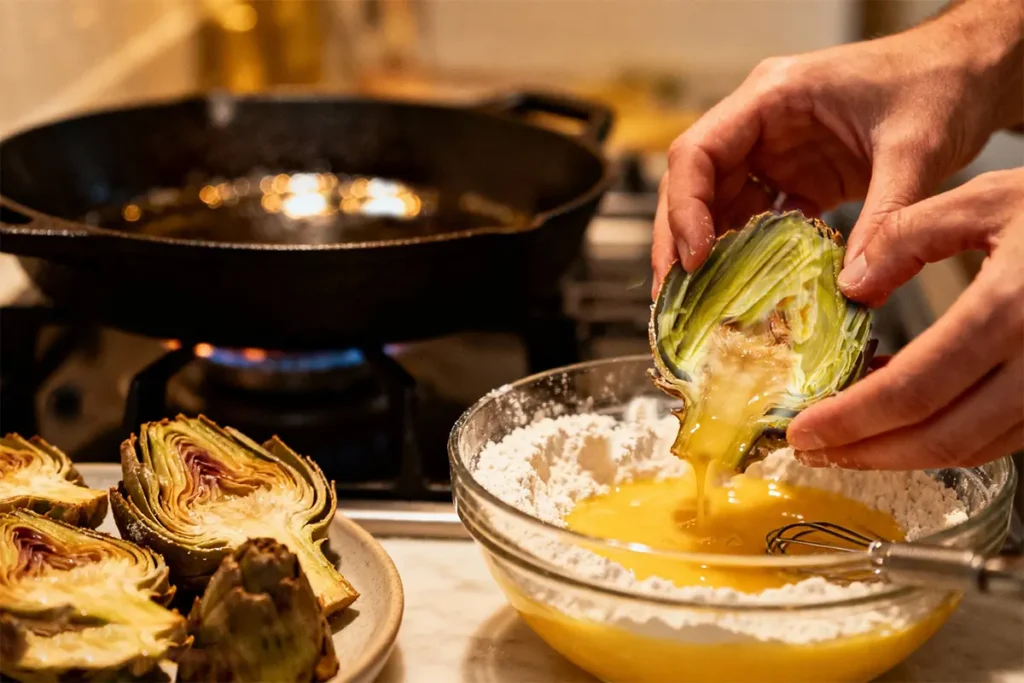
Understanding the Francese Technique: Light Batter is Key
At the heart of Artichoke Francese lies a precise technique that sets it apart from other battered and fried dishes. The artichoke hearts are first dredged lightly in seasoned flour, then dipped into a whisked egg mixture. This light egg dip, unlike heavy breading or deep-frying, creates a thin golden crust that crisps quickly while letting the natural flavor of the artichoke shine through.
Cooking involves a rapid sauté over medium-high heat to set the batter without overcooking. This quick, high-heat method ensures the artichokes remain tender inside while the exterior turns gorgeously crisp and golden. Mastering this technique is crucial for authentic Francese dishes and provides a flavorful base that harmonizes beautifully with the emulsified lemon-butter sauce that follows.
This same technique is foundational in recipes like Creamy Mushroom Artichoke Pasta, where lightly battered artichokes add texture and depth to a richer, creamier preparation.
Three rules to remember for a perfect Francese batter:
First, always pat the artichoke hearts completely dry before dredging. Any surface moisture will prevent the flour from adhering and result in an uneven, soggy crust. Second, use seasoned flour generously but shake off the excess before dipping in egg. A thick coating of flour creates a heavy, doughy result rather than the thin, delicate crust that defines the dish. Third, do not overcrowd the pan. Cook in batches if necessary, giving each artichoke heart enough space to crisp properly on all sides.
The Lemon-Butter-Wine Sauce: Building the Perfect Finish
A hallmark of Artichoke Francese is its bright, tangy, and luscious sauce, which elevates the dish with vibrant acidity and buttery richness. Achieving the perfect sauce requires attention to each step, and understanding why each step matters makes the process far more intuitive.
Deglazing
After sautéing the artichokes, deglaze the pan immediately with dry white wine or a light chicken broth. This process lifts the flavorful browned bits, known as the fond, from the base of the pan, introducing depth and complexity to the sauce. Allow the liquid to simmer until it reduces by roughly half, concentrating its flavor before the next stage.
The Finish
Once the wine has reduced, remove the pan from direct heat and whisk in fresh lemon juice followed by cold cubes of butter, added one or two pieces at a time. This gentle, gradual incorporation emulsifies the sauce, giving it a silky texture and glossy appearance. The cold butter is essential: it binds the fat and liquid together without breaking the emulsion. Always use fresh lemon juice rather than bottled for a bright, clean flavor that lifts the entire dish.
Avoiding the Break
To maintain sauce stability, keep the pan warm but avoid returning it to a full boil once the butter has been incorporated. Overheating at this stage causes the fat and water in the butter to separate, resulting in an oily, broken sauce instead of the smooth, velvety finish that defines a proper Artichoke Francese. Patient whisking and moderate temperature control are the two habits that separate a good francese sauce from a great one.
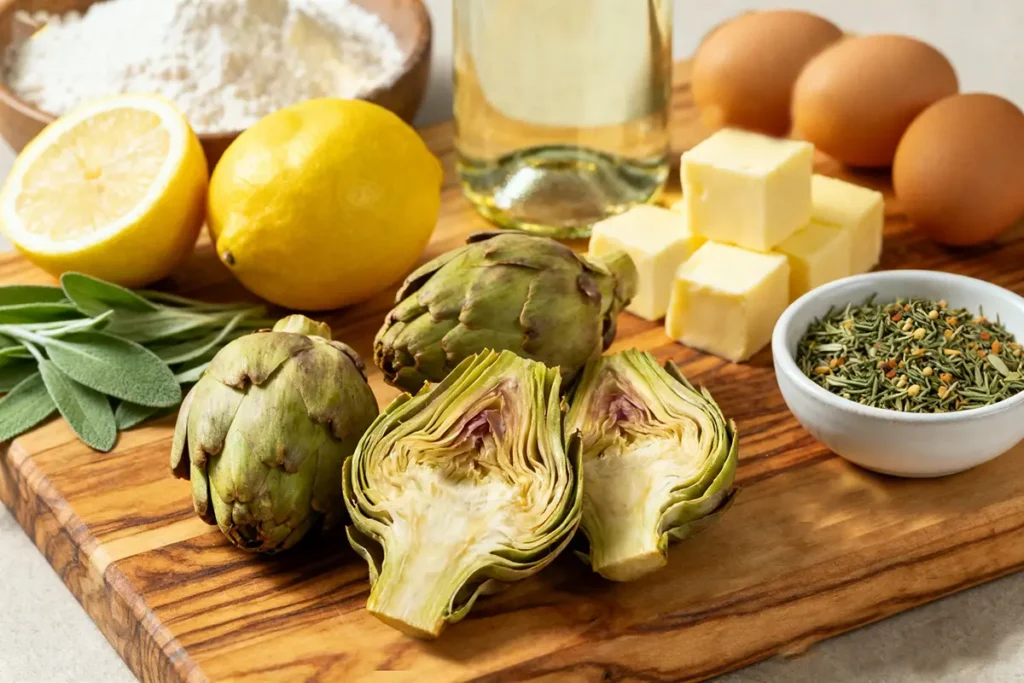
Ingredient Focus: Best Artichoke Hearts for Francese
The quality and preparation of the artichoke hearts you choose will significantly impact the final dish. For Artichoke Francese, the best option is jarred or canned quartered artichoke hearts packed in water. Avoid marinated artichoke hearts entirely: their added flavors, oils, and acidic brine interfere with the delicate egg batter and compete with the bright lemon-butter sauce.
Before cooking, drain the artichoke hearts thoroughly and pat them completely dry with paper towels. This step is critical because surface moisture prevents the batter from adhering properly, which compromises both the crispness and the even browning of the exterior.
Many experienced cooks prefer canned artichoke hearts over frozen for this recipe, as canned ones maintain a tender yet firm texture that holds up to the dredging and sautéing process far better. Frozen hearts release excess water during cooking, which creates steam in the pan and undermines the high-heat sear that the Francese technique requires. Rinse canned artichokes under cold water to remove any residual brine flavor, allowing the true, clean taste of the artichoke to come forward in the finished dish.
For those who enjoy exploring the full range of artichoke preparations, the Artichoke and Bean Salad and Lemon Artichoke Pesto are excellent companion recipes that showcase how versatile this ingredient can be across very different flavor profiles.
FAQ: Troubleshooting and Elegant Pairings
Q: Why did my sauce separate or break?
Sauce separation is the most common issue when making the lemon-butter sauce for Artichoke Francese. It almost always occurs when the sauce is boiled or heated too aggressively after the butter has been added. Butter contains both fat and water, which separate under high heat and cause the sauce to look oily or curdled rather than smooth and glossy.
To prevent this, always add cold butter slowly off the heat while whisking vigorously to emulsify the sauce evenly. Keep the pan warm enough to melt the butter gradually, but never allow it to return to a boil after the butter goes in. Gentle heat combined with constant, patient stirring encourages the fat and liquid to bind together and produces the perfectly silky sauce that clings beautifully to the artichokes.
Q: What is the best white wine to use?
Choosing the right white wine has a significant impact on the flavor balance of the finished sauce. Dry whites with crisp acidity and light fruitiness work best, as they brighten the sauce and complement the lemon and butter without overpowering the artichoke.
The most reliable options are Pinot Grigio, which brings fresh citrus notes and a clean finish; Sauvignon Blanc, known for its zesty acidity and subtle herbaceous quality; and a lightly oaked Chardonnay, which adds a touch of richness without heaviness. Avoid overly sweet or heavily oaked wines, as both can clash with the delicate flavors of the artichoke and the sauce, pulling the dish in the wrong direction.
Q: What are the best side dishes for Artichoke Francese?
The richness and tang of Artichoke Francese pair beautifully with simple, fresh sides that offer balance and textural contrast.
Angel hair pasta tossed lightly with extra virgin olive oil, fresh parsley or basil, and a touch of lemon zest serves as a delicate neutral base that absorbs the extra sauce beautifully without competing for attention. Steamed or roasted asparagus with a drizzle of lemon juice or a light sprinkle of Parmesan adds crisp, vegetal freshness that complements the artichoke’s natural briny notes. For a Mediterranean-inspired table, the Artichoke and Bean Salad blends beans, artichoke hearts, fresh herbs, and a tangy lemon dressing into a refreshing counterpoint that balances the buttery richness of the Francese beautifully.
For a complete Italian-American spread, consider pairing with the Artichoke and Hearts of Palm Salad as a light starter before serving the Francese as the main event.
Conclusion: Your Italian-American Masterpiece Awaits
Artichoke Francese is a shining example of Italian-American culinary elegance: simple ingredients, a refined technique, and vibrant flavors that come together in perfect harmony. Whether served as a main course or a sophisticated appetizer, this dish delivers restaurant-quality results with far less effort than its impressive presentation suggests.
By mastering the light batter technique and the silky lemon-butter sauce, you create a meal that is both comforting and genuinely impressive. Pair it with your favorite sides and a crisp dry white wine for a fully Italian-inspired experience at your own table.
To continue exploring the world of artichoke-based cooking, the Creamy Mushroom Artichoke Pasta, Lemon Artichoke Pesto and Canned Artichoke Hearts guide are the natural next steps. Each one builds on the techniques and flavor principles explored here, expanding your repertoire of artichoke dishes in new and satisfying directions.