
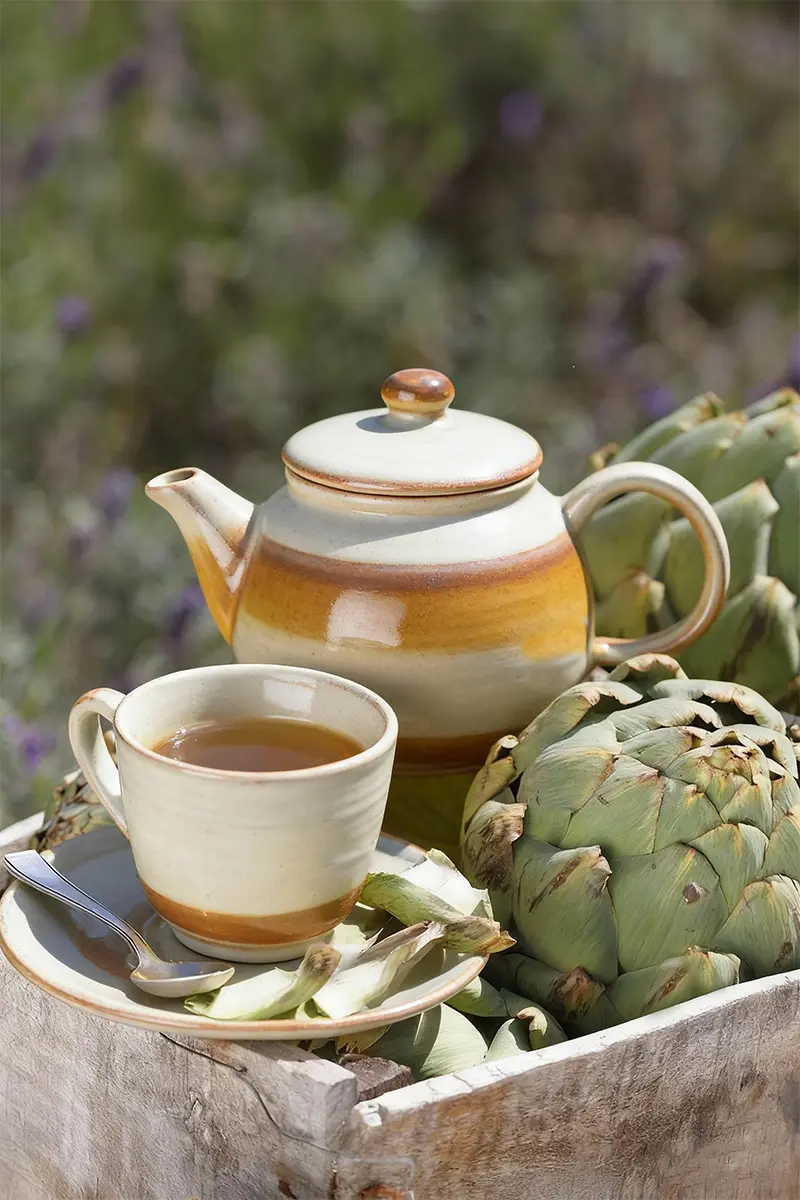
Artichoke Beyond the Kitchen
Artichoke Tea Vietnam is not just a beverage; it’s a symbol of how a humble Mediterranean vegetable has become woven into the daily life and wellness rituals of Southeast Asia. In Vietnam, Artichoke Tea Vietnam (called Trà Atisô) is far more than a curiosity; it’s a beloved caffeine-free health drink enjoyed for its subtle, earthy taste and gentle, restorative properties. You’ll find Artichoke Tea Vietnam at family tables, in bustling cafés, and sold by street vendors, always ready to deliver comfort and refreshment in every sip. The story of Artichoke Tea Vietnam is one of transformation, from colonial cash crop to heritage tea, blending quick preparation with ancient herbal wisdom, all in one cup.
The artichoke is native to the Mediterranean region. French colonial masters brought the plant to Vietnam, where it found favorable, cool climates for cultivation, particularly in the highlands around Đà Lạt and Sapa.
Table of Contents
Artichoke Tea Vietnam (Trà Atisô): A Complete Guide to Its History, Benefits, and Brewing
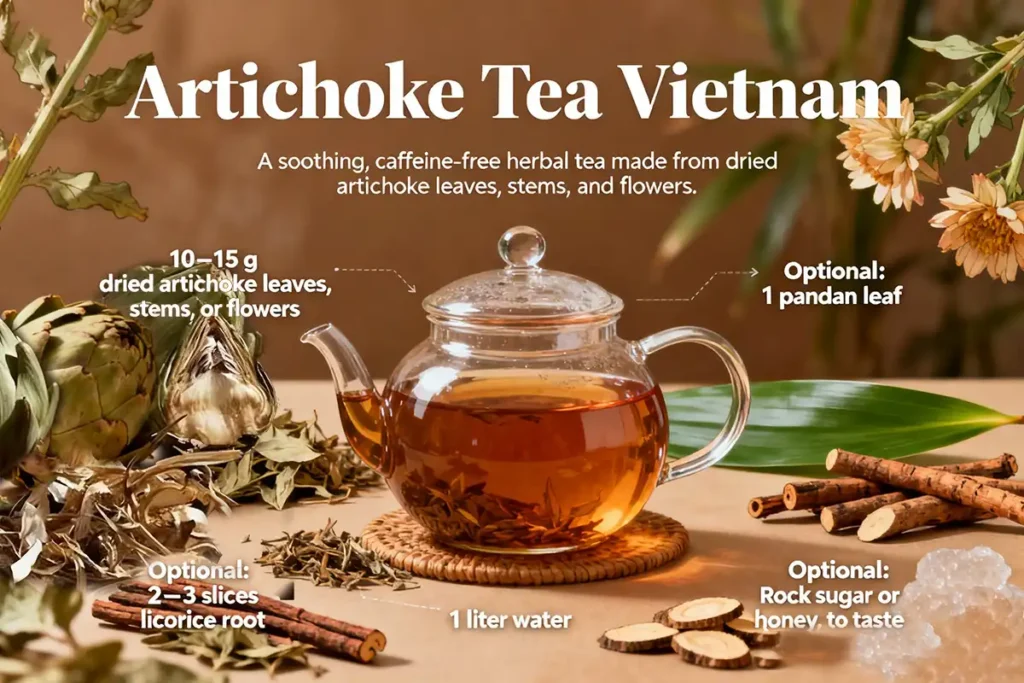
A soothing, caffeine-free herbal tea made from dried artichoke leaves, stems, and flowers; deeply rooted in Vietnamese culture and wellness traditions.
- Prep Time: 5 minutes
- Cook Time: 25 minutes
- Total Time: 30 minutes
- Yield: 4 cups 1x
- Category: Beverage
- Method: Simmered
- Cuisine: Vietnamese
- Diet: Vegan
Ingredients
- 10–15 g dried artichoke leaves, stems, or flowers
- 1 liter water
- Optional: 1 pandan leaf
- Optional: 2–3 slices licorice root
- Optional: Rock sugar or honey, to taste
Instructions
- Add artichoke, pandan, and licorice to a pot with 1 liter of water.
- Bring to a boil, then reduce heat and simmer for 20–30 minutes until golden.
- Strain the tea and sweeten with rock sugar or honey if desired.
- Serve hot or over ice for a refreshing version.
- For tea bags: Steep 1–2 tea bags in hot water for 5–10 minutes. Add sweetener or lemon if desired.
- For extract: Dilute according to label instructions, usually 1 tablespoon per cup of water. Adjust to taste.
Notes
Dried artichoke tea can be found in Vietnamese or Asian grocery stores and online. Add ginger, more pandan, or licorice for flavor and health variation. Naturally caffeine-free, great for hydration and digestion.
Nutrition
- Serving Size: 1 cup
- Calories: 5
- Sugar: 0g
- Sodium: 5mg
- Fat: 0g
- Saturated Fat: 0g
- Unsaturated Fat: 0g
- Trans Fat: 0g
- Carbohydrates: 1g
- Fiber: 0g
- Protein: 0g
- Cholesterol: 0mg
History and Culture: The Rise of Artichoke Tea Vietnam (Trà Atisô)
Vietnamese Origins
Artichoke Tea Vietnam has its roots in French colonial times, when artichoke plants (Cynara scolymus) were introduced to Vietnam’s highland regions; the cool, misty hills of Đà Lạt and Lâm Đồng proved perfect for cultivation. Over time, Artichoke Tea Vietnam became a household staple, thriving as a key cash crop and offering farmers both sustenance and economic opportunity. Unlike the typical Western use of artichoke hearts for food, Artichoke Tea Vietnam makes use of the entire plant. Leaves, stems, roots, and flowers are all harvested, dried, and transformed into tea, conserving every ounce of nourishment present in the plant.
While the French (and Vietnamese) initially consumed the artichoke flower head as a vegetable, the local culture and herbal medicine traditions quickly adopted the leaves, roots, and stems to create a healthful tea.
Traditional Use and Everyday Enjoyment
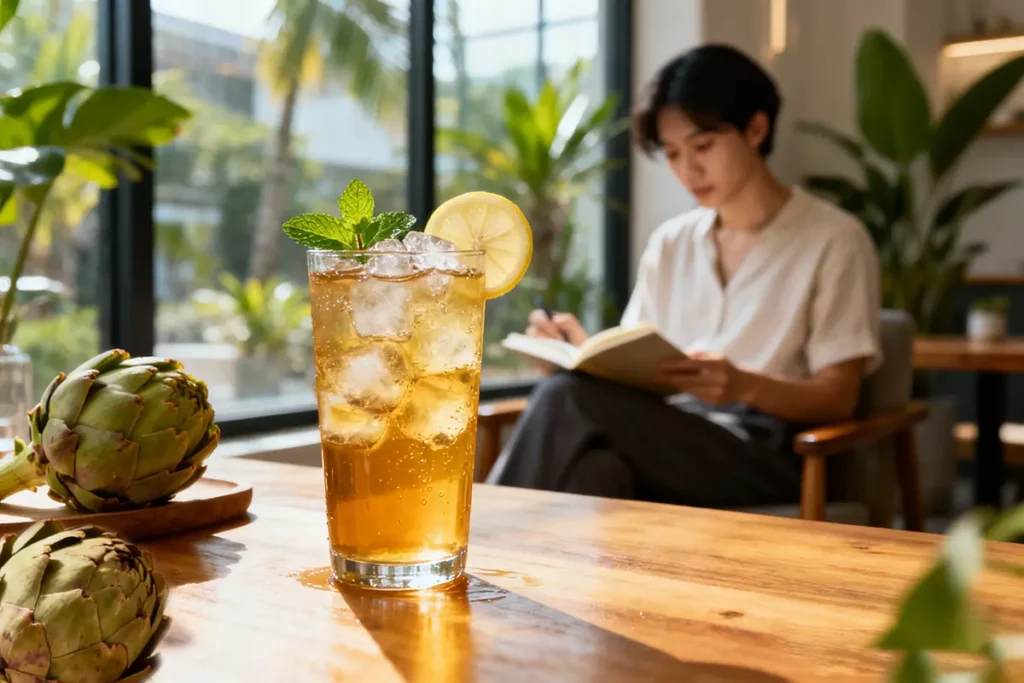
What sets Artichoke Tea Vietnam apart is its year-round popularity across every generation. Akin to a national health tonic, Artichoke Tea Vietnam is consumed hot for relaxation in the colder months and poured over ice for instant coolness during Vietnam’s steamy summers. Whether brewed from scratch at home or made from convenient tea bags, Artichoke Tea Vietnam is considered one of the most accessible, affordable daily drinks, a beverage that is as practical as it is steeped in tradition.
Health Benefits: Why People Drink Artichoke Tea Vietnam
Vietnamese culture has long associated Artichoke Tea Vietnam with well-being, a reputation now supported by science and heralded in herbal traditions across Asia.
- Liver Support: The most famous benefit, Artichoke Tea Vietnam is sipped to “cool” the body, especially after rich meals or during hot weather. Compounds like cynarin and silymarin support healthy liver function and aid bile production.
- Antioxidant Power: Artichoke Tea Vietnam is naturally rich in polyphenols and flavonoids, which combat free radicals and oxidative stress, one reason why many see Artichoke Tea Vietnam as a gentle way to rejuvenate the body and skin.
- Aids Digestion: Folk wisdom, supported by emerging research, celebrates Artichoke Tea Vietnam as a natural digestive aid. Its slight bitterness is believed to stimulate healthy digestion and reduce bloating, making Artichoke Tea Vietnam a favorite after hearty, traditional Vietnamese meals.
Modern drinkers choose Artichoke Tea Vietnam not just for any single benefit, but as a calming, balancing force that is reliable, safe, and suitable for anyone seeking a gentle herbal drink without caffeine.
If you care about staying active and keeping your body strong, you might enjoy our brief look at effective drink choices for weight management (drinks to weight loss).
Preparation Guide: From Dried Leaves to Brewed Goodness
Making Artichoke Tea (Vietnam) is refreshingly uncomplicated but offers enough nuance for those who want to honor tradition or experiment with flavor.
Common Forms of Artichoke Tea Vietnam
- Dried Loose Leaves/Flowers: The most authentic version, dried atisô leaves, stems, and flowers, available at Asian markets and traditional medicine shops throughout Vietnam.
- Tea Bags: Popular for speed and convenience, tea bags are the go-to for busy families-a quick cup in moments, anywhere.
- Concentrated Liquid Extract: Artichoke Tea Vietnam extract is often used by cafés or street vendors. Diluted in water (hot or cold), it’s a fast route to a refreshing cup, though the flavor differs slightly from homemade infusions.
Brewing Instructions for Artichoke Tea Vietnam
- Classic Brewing: Add 10–15 g of dried artichoke to 1 liter of boiling water, sometimes with pandan leaf for aroma or a few slices of licorice root. Simmer for 20–30 minutes until golden, then strain and sweeten with honey or rock sugar if desired. Drink hot or chilled over ice for the classic Vietnamese refreshment.
- desired, and Tea Bag Preparation: Place 1–2 tea bags in a cup, pour over boiling water, and steep for 5–10 minutes. Add sweetener or lemon if desired, and adjust steeping time for strength.
- Using Extract: Follow the label, usually a tablespoon of extract for every cup of water. Always taste and adjust for flavor; some extracts are stronger than others.
Tips: Vietnamese families often pass down tweaks, more pandan for aroma, more licorice for digestive warmth, or a dash of ginger for added health value.
Beyond the Cup: Artichoke in Vietnamese Cuisine
Not just a drink, Artichoke Tea Vietnam speaks to the country’s ingenuity with food and flavor. Vietnamese chefs use fresh artichoke flower heads in savory soups, paired with pork ribs, beef, or chicken; delicately blending artichoke’s texture and taste into nourishing broths. The gentle flavor of Artichoke Tea Vietnam parallels its role in the kitchen: always supporting, never overwhelming.
For a refreshing culinary use that highlights the artichoke heart, discover our [Artichoke and Hearts of Palm Salad], a contemporary dish inspired by the same sense of balance found in a cup of Artichoke Tea Vietnam.
FAQ: Purchasing and Flavor Profile of Artichoke Tea Vietnam
Q: Does artichoke tea contain caffeine?
No, artichoke tea is naturally caffeine-free, which makes it a popular alternative to traditional teas and coffee in Vietnam and beyond. The tea is made from the leaves, stalks, and flower buds of the artichoke plant (Cynara scolymus), a member of the thistle family. This herbal infusion lacks the stimulants found in black, green, or white tea, so it won’t interfere with sleep or cause jitters. Instead, artichoke tea offers calming effects, aids stress reduction, and even supports melatonin production, the hormone responsible for regulating sleep cycles. This makes it an excellent choice for those sensitive to caffeine or seeking a relaxing, healthful beverage throughout the day.
Q: What exactly does artichoke tea taste like?
Artichoke tea offers a distinct, earthy flavor that is subtle and nuanced compared to most traditional teas. The taste is mildly bittersweet but not harsh, carrying gentle vegetal notes reminiscent of fresh artichoke leaves with a pleasant, slightly floral aroma. It is less astringent and less grassy than green tea, with a natural mild sweetness often enhanced by adding rock sugar or honey during brewing. The taste of artichoke tea is so delicate that it pairs well with both hot and iced preparations, providing a refreshing quality in warm weather and a soothing warmth in cooler months.
Q: Where can I buy authentic Trà Atisô?
Authentic Vietnamese artichoke tea (Trà Atisô) can generally be found at Asian markets, especially those specializing in Southeast Asian or Vietnamese products. Many cities with Vietnamese communities will have shops that sell loose dried artichoke leaves or tea bags labeled as Trà Atisô. Increasingly, reputable online vendors offer authentic Vietnamese artichoke tea sourced from the highlands around Đà Lạt, the renowned region for cultivation. When purchasing, look for labeling that specifies Vietnamese origin and avoid mixes that combine artichoke with other herbal supplements that change the flavor profile. If you prefer convenience, tea bags are an easy way to enjoy this traditional beverage, while dried leaf versions offer a more robust infusion for the connoisseur.
Conclusion: A Taste of Health and History
Artichoke Tea Vietnam (Trà Atisô) captures centuries of tradition, modern wellness, and culinary creativity in every gentle sip. Served everywhere from rural family homes to chic urban cafés, it’s a bridge between generations, offering a flavor that calms, a ritual that heals, and a link to Vietnam’s agricultural roots. Whether you enjoy Artichoke Tea Vietnam for its light, earthy sweetness or its ancient status as a health drink, each cup invites you to join a story that stretches from French colonial gardens and royal palaces to the vibrant heart of Vietnam today.
So, while the tradition of drinking herbal teas is ancient in Vietnam, the specific practice of drinking Artichoke Tea (Trà Atisô) began after the plant’s introduction by the French in the early 1900s.