

If you’ve been scrolling through social media lately, chances are you’ve stumbled across the Dr Jennifer Ashton gelatin trick recipe, and walked away more confused than when you started. Is it a miracle weight loss drink? A TikTok scam? Something your doctor actually recommends? The truth, as it usually turns out, is more nuanced and more interesting than the viral headlines suggest.
In this article, we’re cutting through the noise. You’ll learn exactly what this gelatin trick is, the real science behind it, a simple daily recipe you can actually make, and who should (and shouldn’t) try it. No hype, no product sales, just a clear-eyed look at one of 2025’s most talked-about wellness rituals.
Table of Contents
What Is the Dr Jennifer Ashton Gelatin Trick Recipe?
The “Dr Jennifer Ashton gelatin trick recipe” refers to a simple daily practice of consuming unflavored gelatin, usually dissolved in warm water, sometimes with lemon juice or herbal tea, with the goal of supporting satiety, gut health, and gradual weight management. It is not a branded product or a patented protocol. It’s a food-based strategy grounded in the properties of gelatin as a high-glycine, high-protein, low-calorie ingredient.
The confusion online stems from the way social media algorithms lump together any “celebrity + gelatin + weight loss” content. Many viral videos falsely imply a specific product, a specific endorsement, or a specific episode. What actually exists is a credible body of nutritional logic, gelatin is high in protein, very low in calories, and contains the amino acid glycine, which has well-documented effects on satiety and metabolism.
Who Is Jennifer Ashton and Why Her Advice Matters
Dr. Jennifer Ashton is a board-certified OB/GYN and a former Chief Medical Correspondent for ABC News, where she regularly appeared on Good Morning America. She holds degrees from Columbia University College of Physicians and Surgeons and has spent years translating complex medical research into accessible public health guidance.
Her credibility is rooted in clinical training, not wellness influencer culture. When her name appears alongside nutrition discussions, it carries the weight of someone who understands evidence-based medicine, which is precisely why marketers and algorithm-driven content farms attach her name to trending topics. Understanding who she actually is helps you filter the genuine from the fabricated.
Why This Gelatin Trick Is Trending in 2025
Several forces converged to make gelatin the unexpected wellness star of 2025:
- TikTok’s “quiet health” movement: viewers grew fatigued by extreme diets and GLP-1 drug discourse. Simple, affordable, food-based approaches went viral as a counterreaction.
- The collagen boom spilled over: as collagen supplements became mainstream, people started asking about gelatin, the cooked, accessible, budget-friendly cousin of hydrolyzed collagen peptides.
- Satiety science went mainstream: research on protein and appetite signaling (particularly glycine’s role) reached general audiences through podcasts and long-form health content.
- The routine factor: TikTok thrives on simple morning or evening rituals. Dissolving a teaspoon of powder in water fits perfectly into the “hot girl walk” energy of 2025 wellness culture.
Dr Jennifer Ashton Gelatin Trick Recipe (Simple Daily Version)
The following is a clean, practical interpretation of the gelatin trick based on established nutritional principles, not a product advertisement. It costs under $1 per serving.
Ingredients
- 1 tablespoon unflavored grass-fed gelatin powder (e.g., Great Lakes or Bernard Jensen’s)
- 250 ml warm water (not boiling, ideally around 50°C / 120°F)
- Juice of ½ lemon (optional but recommended, adds vitamin C and improves palatability)
- 1 pinch of sea salt (optional, supports electrolyte balance)
- 1 teaspoon raw honey or a few drops of liquid stevia (optional, for taste)
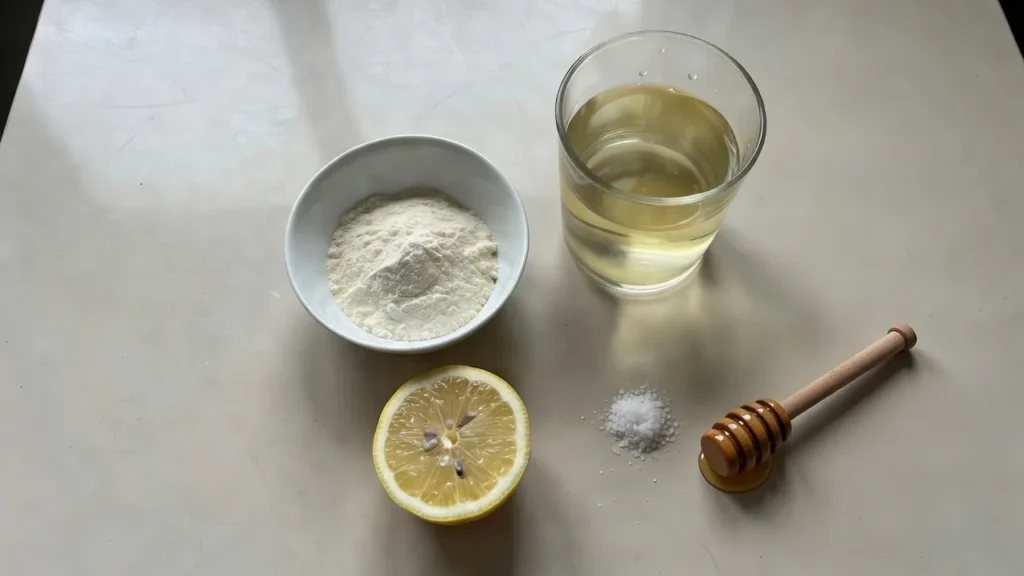
Why each ingredient matters:
- Gelatin powder: the core ingredient, high in glycine (~3g per tablespoon), very low in calories (~25 kcal), essentially zero carbs or fat.
- Warm water: activates the gelatin and ensures full dissolution. Boiling water can denature some proteins.
- Lemon juice: vitamin C may enhance glycine absorption; adds natural flavor and digestive support.
- Sea salt: a small amount supports mineral balance, especially if consumed before meals.
- Honey or stevia: purely optional. Skip entirely if fasting.
Step-by-Step Instructions
- Heat your water to about 50°C, hot but not boiling. A standard kettle left to cool for 2–3 minutes works perfectly.
- Add 1 tablespoon of unflavored gelatin powder to your cup.
- Pour the warm water slowly over the gelatin while stirring continuously to prevent clumping.
- Add lemon juice, salt, and sweetener if using.
- Stir for 30–60 seconds until fully dissolved. The liquid should be clear and slightly viscous.
- Drink immediately while warm.
Best Time to Take It
Most practitioners suggest one of two windows:
- 30 minutes before your largest meal of the day, to increase pre-meal satiety and reduce calorie intake at that meal.
- 30–60 minutes before bed, glycine has been shown to support sleep quality and may help regulate overnight blood sugar. This is the preferred window in many online communities.
Avoid taking it immediately after a meal, as the satiety effect is most pronounced when consumed on a relatively empty stomach.
How Often to Use It
Daily use is generally considered safe for healthy adults. Most people start with once per day and some increase to twice daily (morning and evening) after 2–3 weeks if well tolerated. More is not necessarily better, the goal is consistent, moderate intake, not megadosing.
PrintDr Jennifer Ashton Gelatin Trick Recipe

A simple, high-protein gelatin drink designed to support satiety, digestion, and daily wellness using minimal ingredients.
- Prep Time: 5 minutes
- Cook Time: 0 minutes
- Total Time: 5 minutes
- Yield: 1 serving 1x
- Category: Drink
- Method: Mixed
- Cuisine: Healthy
Ingredients
- 1 tablespoon unflavored grass-fed gelatin powder
- 250ml warm water (not boiling)
- Juice of 1/2 lemon (optional)
- 1 pinch sea salt (optional)
- 1 teaspoon honey or a few drops stevia (optional)
Instructions
- Heat water until warm (around 50°C, not boiling).
- Add gelatin powder to a cup.
- Pour warm water slowly over gelatin while stirring.
- Stir continuously for 30–60 seconds until fully dissolved.
- Add lemon juice, salt, and sweetener if desired.
- Mix well and drink immediately while warm.
Notes
Do not use boiling water. Always use unflavored gelatin for best results. Best consumed before meals or before bedtime for satiety support.
Nutrition
- Serving Size: 1 cup
- Calories: 25
- Sugar: 0g
- Sodium: 30mg
- Fat: 0g
- Saturated Fat: 0g
- Unsaturated Fat: 0g
- Trans Fat: 0g
- Carbohydrates: 0g
- Fiber: 0g
- Protein: 6g
- Cholesterol: 0mg
Does This Gelatin Trick Actually Work for Weight Loss?
The honest answer: it can support weight loss as part of a broader healthy lifestyle, but it is not a standalone fat-burning solution. Here is what the evidence actually says:
Protein and satiety: Gelatin is approximately 85–90% protein by dry weight. High-protein foods are well-documented to reduce appetite and increase feelings of fullness. According to research published by the National Institutes of Health on dietary protein and satiety, protein is the most satiating macronutrient.
You can read more on this at: NIH on protein and appetite regulation
Glycine specifically: Glycine, the dominant amino acid in gelatin, has been studied for its role in metabolic regulation, sleep improvement, and even blood sugar management. A 2022 review found associations between glycine intake and improved body composition markers in some populations.
Low calorie density: One tablespoon of gelatin contains roughly 25 calories. A drink that provides satiety at 25 calories is genuinely useful in a calorie-controlled approach.
What it won’t do: Gelatin alone will not burn fat, boost metabolism significantly, or override a poor diet. Claims that it “melts belly fat” or triggers fat-burning enzymes are not supported by current evidence.
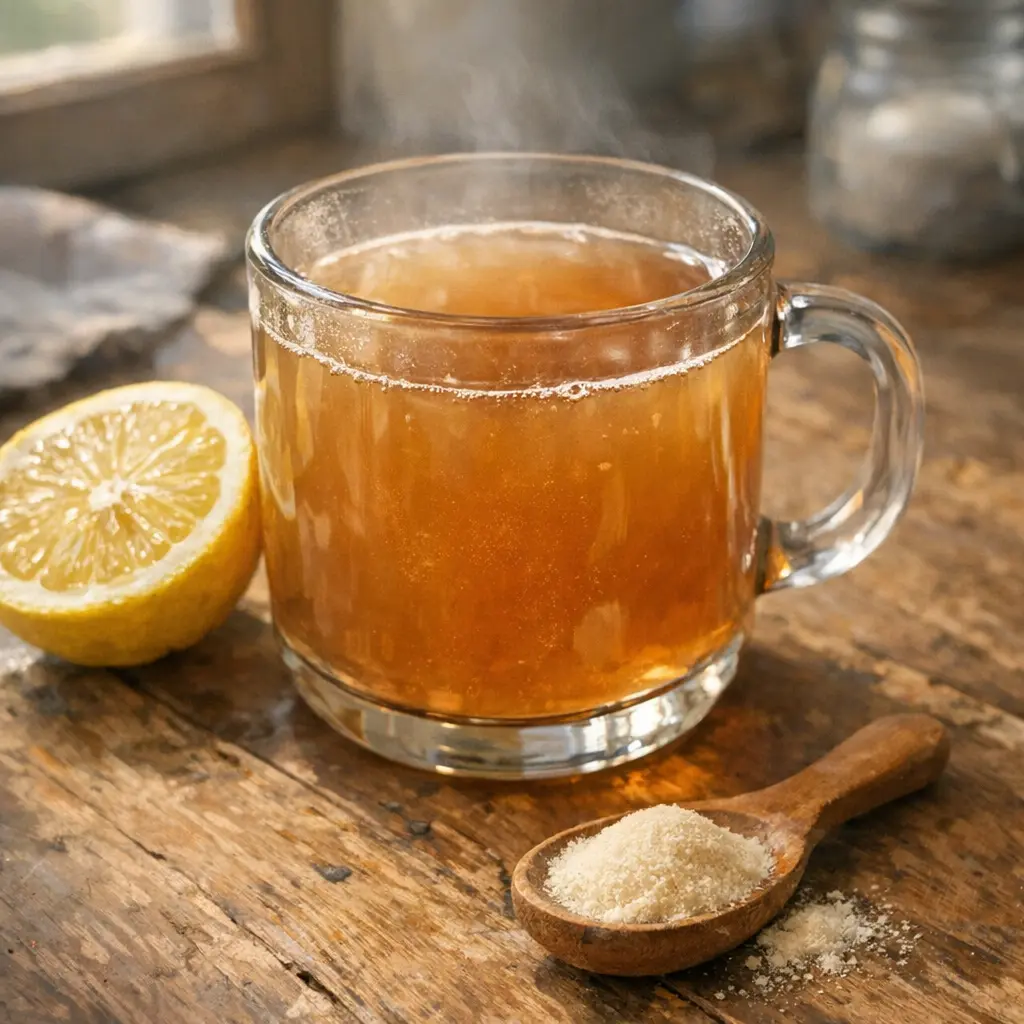
Gelatin Cubes vs Gelatin Drink: What’s the Real Difference?
You may have seen both versions floating around online. Here’s a clear comparison:
Gelatin drink (the method above):
- Faster to prepare (under 5 minutes)
- Absorbed more quickly on an empty stomach
- Better pre-meal satiety tool
- Easier to track exact dosage
Gelatin cubes (set in refrigerator):
- Take 2–4 hours to set
- Can be eaten as a snack rather than a drink
- More satisfying texturally for some people
- Slightly slower digestion and absorption rate
- Popular as a meal-prep friendly option
The nutritional content is nearly identical. The choice comes down to lifestyle preference. The drink format is faster; the cube format is more portable and snack-like. Both deliver the same gelatin and glycine content per gram.
The Science Behind Gelatin (Simple Explanation)
Gelatin is derived from collagen, the structural protein found in animal bones, skin, and connective tissue. When collagen is cooked with water (as in bone broth or commercial extraction), it breaks down into gelatin. Gelatin is approximately 98% protein by dry weight and is particularly rich in three amino acids: glycine, proline, and hydroxyproline.
Glycine and weight management: Glycine is a conditional amino acid with a broad range of physiological roles. It participates in the production of glucagon (a hormone that helps regulate blood sugar), supports liver detoxification pathways, and has been shown in animal studies to reduce fat accumulation. In humans, glycine supplementation has been associated with modest improvements in insulin sensitivity.
Gelatin and digestive health: Gelatin forms a gel-like substance in the gut, which can slow gastric emptying slightly and support the mucosal lining of the intestines. This is why it has historically been used in recovery diets for digestive issues.
Satiety mechanism: A 2008 study found that participants who consumed gelatin before a meal reported significantly higher feelings of fullness and consumed fewer calories at the following meal compared to a casein control group. The effect is real, though modest.
For deeper reading on gelatin’s metabolic effects, our Ray Peat Gelatin Metabolism Guide breaks down the biochemistry in accessible terms.
Common Mistakes That Reduce Results
Many people try the gelatin trick for a week and see nothing, usually because of one of these errors:
- Using flavored Jell-O instead of plain gelatin: commercial flavored gelatin products contain significant amounts of sugar, artificial dyes, and negligible amounts of actual protein. This is the single most common mistake.
- Using boiling water: temperatures above 80°C can break down some of gelatin’s functional properties. Always use warm, not boiling, water.
- Taking it after a heavy meal: the satiety effect is essentially irrelevant when your stomach is already full.
- Inconsistency: gelatin’s benefits are cumulative and subtle. Trying it for 3 days and expecting dramatic results will always disappoint. Give it 3–4 weeks of daily use.
- Not addressing diet quality: gelatin is a supplement to a healthy diet, not a replacement for one. Using it as a permission slip to overeat elsewhere cancels any benefit.
- Using low-quality gelatin with fillers: look for unflavored, grass-fed gelatin with a single ingredient listed.
Who Should Try This (and Who Should Avoid It)
Good candidates:
- Adults looking for a low-cost, food-based approach to appetite management
- People who skip breakfast and want an easy pre-meal satiety tool
- Those with digestive issues who benefit from gut-soothing amino acids
- Anyone transitioning off high-calorie snacks in the evening
Who should be cautious or avoid it:
- Vegans and vegetarians: standard gelatin is animal-derived. Agar-agar is a plant-based alternative but has a different amino acid profile and fewer data on satiety effects.
- People with kidney disease: high protein intake requires careful management in this population. Consult your nephrologist first.
- Those with phenylketonuria (PKU): gelatin contains phenylalanine.
- Pregnant women: always consult your OB/GYN before adding new supplements during pregnancy.
- Anyone with a known allergy to bovine or porcine products: gelatin is typically sourced from one of these animals.
This is a YMYL (Your Money or Your Life) topic. If in doubt, spend 10 minutes with your primary care physician before starting.
How This Compares to Other Gelatin Recipes
The gelatin wellness space has grown significantly, and different practitioners approach it with different emphases. Here’s how the Dr. Jennifer Ashton-inspired approach compares to others we’ve covered:
Dr Gupta Gelatin Recipe: Emphasizes joint health and anti-inflammatory properties, often incorporating turmeric. A great companion protocol if inflammation is your primary concern.
Ray Peat Gelatin Metabolism Guide: The most biochemically detailed approach. Peat advocated for gelatin as a way to balance the amino acid profile of muscle meats. More nuanced but more complex.
Tim Ferriss Gelatin Ritual: Ferriss uses gelatin as part of a sleep optimization protocol, specifically the pre-bed version. Heavy overlap with the glycine-for-sleep literature.
Dr Cate Shanahan Gelatin Ritual: A food-first practitioner who integrates gelatin via bone broth rather than powder supplementation. More traditional, slower preparation.
The Ashton-inspired approach sits in the middle: practical, accessible, food-based, and grounded in publicly available health reasoning without extreme claims.
Simple Variations You Can Try
Lemon-ginger version:
Add 1⁄2 teaspoon fresh grated ginger and the juice of one lemon to your gelatin drink. Ginger adds digestive benefits and a warming effect that makes this version particularly good in the morning.
Green tea base:
Brew a cup of green tea, let it cool to about 50°C, then dissolve your gelatin in it. Green tea provides EGCG, a compound with modest metabolic benefits. This is our most popular variation and ties in with our
full guide to the green tea gelatin recipe for weight loss.
Evening hibiscus version:
Brew a cup of hibiscus tea (naturally tart, deep red), cool to 50°C, and dissolve your gelatin. Add a small amount of tart cherry juice for added melatonin precursors. This is ideal as a pre-bed ritual and pairs beautifully with our
Evening Satiety Protocol guide.
FAQs Dr Jennifer Ashton gelatin trick recipe:
Does gelatin break a fast?
Technically yes, any calorie-containing food breaks a fast in the strict sense. However, at ~25 calories and with zero carbohydrates, it has negligible impact on insulin and will not significantly interrupt fat-burning states or ketosis. Many intermittent fasters use it as a fasting-friendly appetite tool during their eating window.
How long before I see results?
Most people report reduced evening snacking and improved meal satisfaction within 1–2 weeks of daily use. For measurable scale changes, most practitioners suggest 4–6 weeks of consistent use alongside dietary improvements.
Can I use flavored gelatin?
No, and this is important. Commercial flavored gelatin products like Jell-O contain very little actual protein and substantial amounts of sugar or artificial sweeteners. Always use plain, unflavored gelatin with no added ingredients.
Is it safe to use daily?
For healthy adults without kidney disease or specific amino acid metabolism disorders, daily use is generally considered safe. Gelatin is a food, not a drug. Start with one tablespoon per day and stay consistent.
What’s the difference between gelatin and collagen peptides?
Gelatin and collagen peptides come from the same source (animal connective tissue) but are processed differently. Gelatin gels when cooled; collagen peptides do not. Both provide similar amino acids, but collagen peptides dissolve in cold water and are more bioavailable. Gelatin is significantly cheaper and still delivers substantial glycine.
Can I take it with other supplements?
Generally yes. Gelatin pairs particularly well with vitamin C (which supports collagen synthesis), magnesium, and digestive enzymes. Avoid taking it at the same time as medications until you’ve confirmed there are no interactions with your pharmacist or physician.
Final Thoughts: Is This Gelatin Trick Worth Trying?
Here’s the honest bottom line: the Dr Jennifer Ashton gelatin trick recipe is not magic, and it is not a scam. It is a simple, inexpensive, food-based habit that has a plausible mechanism for reducing appetite, supporting gut health, and making it marginally easier to maintain a calorie deficit.
If you’re looking for a $1-per-day ritual that has actual nutritional logic behind it and zero risk of side effects for most healthy adults, this is worth trying. If you’re hoping it will compensate for a poor diet or replace real lifestyle changes, it won’t.
The most powerful thing about simple habits is that they’re actually done. A gelatin drink takes 4 minutes. That’s 4 minutes that could shift your appetite, improve your sleep quality, and build the momentum of caring about your nutrition daily.
Try it for 30 days. Track your hunger, your snack cravings, and your energy. The results, or lack thereof, will tell you everything you need to know.
Save it on Pinterest for later