

Medical Disclaimer
The information on Joyful Bite Recipes is for educational purposes only and is not intended as medical advice. Fiber intake recommendations vary based on individual health status, digestive conditions, and medication use. Always consult a qualified healthcare professional before making significant changes to your diet, especially if you have irritable bowel syndrome (IBS), Crohn’s disease, diabetes, or other metabolic conditions.
Fiber maxxing for weight loss is the most nutritionally grounded metabolic strategy to go viral in years, and unlike most wellness trends, the science behind it is not new. What is new is the framing: instead of treating fiber as a digestive afterthought, fiber maxxing positions it as the primary lever for hormonal satiety, glucose stabilization, microbiome optimization and sustainable fat loss. The goal is not the standard 25 grams per day recommended by most health organizations. The fiber maxxing approach targets 50 or more grams of daily fiber from whole food sources, a target that research increasingly suggests is more aligned with the intake levels of the populations with the lowest rates of metabolic disease.
This guide covers the complete fiber maxxing protocol: the science, the implementation phases, the most effective fiber sources, the strategic timing that amplifies results, the meal integrations that make the habit sustainable and the pitfalls that separate genuine fiber optimization from the fiber-washing that processed food marketing has normalized.
Table of Contents
The Science of Fiber Maxxing: Reclaiming Your Metabolic Health
Soluble versus Insoluble Fiber: A Functional Synergy
The distinction between soluble and insoluble fiber is not a reason to choose one over the other. It is a reason to understand how they contribute different and complementary functions to the fiber maxxing protocol.
Soluble fiber dissolves in water and forms a viscous gel in the digestive tract. This gel slows gastric emptying (the rate at which food leaves the stomach), blunts the absorption of glucose into the bloodstream after meals and creates the substrate that gut bacteria ferment into short-chain fatty acids (SCFAs). The most clinically studied forms of soluble fiber include beta-glucan (found in oats and barley), pectin (found in apples, citrus and legumes), psyllium husk and inulin (found in chicory, garlic and onions).
Insoluble fiber does not dissolve in water and adds bulk to the stool, accelerating transit time through the colon and reducing the contact time between the intestinal wall and potentially harmful compounds. It is found in wheat bran, vegetable skins, nuts and seeds. Its contribution to satiety is primarily mechanical: the physical bulk of insoluble fiber in the stomach and small intestine stretches the gastric wall, activating the stretch receptors that signal fullness to the hypothalamus.
Fiber maxxing for weight loss works best when both types are consumed in roughly equal proportions from diverse whole food sources, because their mechanisms of action are additive rather than redundant.
On the Microbiome and SCFAs: “When soluble fiber undergoes fermentation in the colon, it produces short-chain fatty acids (SCFAs) that regulate inflammation and metabolism. For a deeper look at this process, Healthline provides a comprehensive breakdown of how SCFAs affect long-term health.
The GLP-1 Mechanism: Stimulating Satiety Naturally
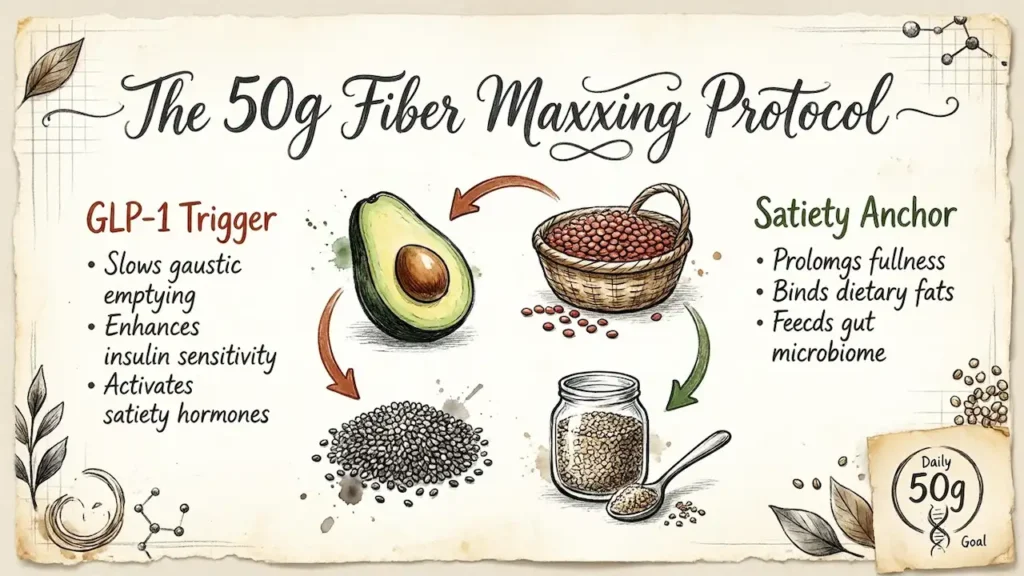
The most compelling science behind fiber maxxing for weight loss is its connection to GLP-1 (glucagon-like peptide-1), the satiety hormone that has become a household name through the popularity of medications like Ozempic and Mounjaro. What most people do not know is that GLP-1 is a naturally occurring gut hormone that the body produces in response to specific dietary signals, and fiber is one of the most potent dietary GLP-1 triggers available.
The mechanism works as follows. When soluble fiber reaches the colon, gut bacteria ferment it through anaerobic fermentation into three primary short-chain fatty acids: acetate, propionate and butyrate. Butyrate is the primary fuel source for colonocytes (the cells lining the colon) and is directly anti-inflammatory. Propionate travels to the liver and is involved in glucose regulation and appetite suppression. Acetate enters circulation and acts on the hypothalamus to reduce appetite.
More directly relevant to fiber maxxing for weight loss, these SCFAs stimulate the L-cells of the intestinal lining to secrete GLP-1 and PYY (peptide YY), both satiety hormones that reduce gastric emptying, suppress appetite and improve insulin sensitivity. This is the same hormonal pathway that GLP-1 medications activate pharmacologically, at concentrations far greater than food can produce, but the food-based stimulation is real, cumulative and sustainable without the cost, side effects or prescription requirement of medication.
On Scientific Validation: “The physiological shift triggered by high-fiber intake is well-documented; research published in The Lancet confirms that dietary fiber is significantly associated with lower body weight and the natural stimulation of satiety hormones like GLP-1.”
For a comparison with the hormonal effects of other whole food GLP-1 strategies, see: Natural Mounjaro Recipe and What Does Mounjaro Do to Your Gut?
Why Modern Diets Fail and Why Fiber Maxxing Succeeds
Modern dietary patterns fail at metabolic health for a predictable reason: ultra-processed foods deliver calories efficiently while delivering almost no fiber, leaving hunger hormone systems perpetually under-stimulated and insulin regulation permanently impaired. The average American adult consumes approximately 13 to 17 grams of fiber daily, roughly one quarter to one third of the fiber maxxing target.
The consequence is a gut microbiome that is starved of fermentable substrate, chronically low SCFA production, reduced GLP-1 secretion and impaired satiety signaling. The result is the cycle most people on calorie-restricted diets know intimately: hunger that returns within 90 minutes of eating, intense carbohydrate cravings in the afternoon and evening, and a metabolic rate that adapts downward to match caloric restriction over time.
Fiber maxxing for weight loss breaks this cycle not by restricting calories but by restoring the satiety signaling infrastructure that makes caloric moderation feel effortless rather than effortful. When GLP-1 and PYY are adequately stimulated by high fiber intake, the brain naturally receives the fullness signals that make smaller portions feel satisfying. This is the metabolic mechanism that makes fiber maxxing sustainable where caloric restriction alone consistently fails.
For a comparison with how stimulant-based metabolic strategies work differently from fiber-based approaches, see: 2-Ingredient Coffee Loophole Recipe
The Fiber Maxxing Protocol: Practical Implementation
Phase 1: Adaptive Introduction (Weeks 1 and 2)
The most common reason people abandon fiber increases is digestive distress: gas, bloating, cramping and changes in stool consistency that occur when the gut microbiome encounters more fermentable substrate than it is accustomed to processing. This is not a reason to avoid fiber maxxing. It is a reason to implement it gradually.
Start at your current fiber intake and add approximately 5 grams per day every 3 to 4 days. If your current intake is the average 15 grams, your progression looks like this: 15g in days 1 to 3, 20g in days 4 to 7, 25g in days 8 to 11, 30g in days 12 to 14. Reach 50 grams around weeks 4 to 5. Most gut microbiomes adapt well within 3 to 4 weeks, after which the fermentation process becomes more efficient and the digestive symptoms largely resolve.
Diversity matters as much as quantity. A microbiome that has adapted to fermenting one type of fiber (psyllium only, for example) will still produce digestive distress when a new fiber source is introduced. Rotate your fiber sources constantly: oats one day, lentils the next, flaxseed the day after. This builds a more resilient and diverse gut microbiome that handles high fiber intake efficiently.
Phase 2: The Hydration Mandate
Fiber without adequate water is the primary cause of constipation in people who increase their intake too quickly or without proportional fluid consumption. Soluble fiber absorbs water as it forms its gel matrix: inadequate water means the gel becomes too thick, transit slows and the bloating that should have resolved becomes worse.
The fiber maxxing hydration protocol targets 35 to 40ml of water per kilogram of body weight per day, meaningfully more than the standard 8-glasses recommendation. For a 70kg adult, that is approximately 2.5 liters per day. For each additional 10 grams of fiber above your baseline, add approximately 200ml of additional fluid.
For a functional hydration drink that supports both electrolyte balance and cortisol management during the fiber maxxing protocol, see: Cortisol Cocktail Recipe for Weight Loss
The Functional Fiber Powerhouses
Psyllium Husk: The Clinical Benchmark
Psyllium husk (Plantago ovata) is the most clinically studied fiber supplement available and the most versatile fiber source for the maxxing protocol. A single tablespoon of psyllium husk powder delivers approximately 5 grams of soluble fiber, primarily arabinoxylan, a highly fermentable fiber that stimulates SCFA production and GLP-1 secretion with exceptional consistency across clinical populations.
Psyllium’s gel-forming capacity is the highest of any commonly available fiber: it absorbs up to 10 times its weight in water, creating a viscous mass in the stomach that slows gastric emptying dramatically. In clinical trials, psyllium supplementation before meals reduces post-meal glucose spikes by 20 to 30% compared to control, reduces total LDL cholesterol by 5 to 10% in people with elevated baseline values, and reduces caloric intake at the subsequent meal by 10 to 20%.
The practical rule for psyllium: always consume with at least 250ml of water and drink the mixture immediately, before it gels. Psyllium that has fully gelled before swallowing is difficult and unpleasant to consume. Mix, drink immediately and follow with a second full glass of water.
For additional context on psyllium in health protocols beyond human use: Psyllium Husk for Dogs
Chia and Flax: The Omega-Fiber Synergy
Chia seeds and flaxseed combine two benefits that most fiber sources cannot offer simultaneously: significant soluble fiber content and a meaningful dose of omega-3 fatty acids (alpha-linolenic acid, ALA). This combination is particularly valuable in a fiber maxxing protocol because omega-3 fatty acids independently reduce systemic inflammation, the chronic low-grade inflammatory state that underlies insulin resistance and metabolic weight gain.
Two tablespoons of chia seeds deliver approximately 10 grams of fiber (80% soluble) and 4 grams of omega-3 fatty acids. Two tablespoons of ground flaxseed deliver approximately 4 grams of fiber and 3 grams of omega-3 fatty acids, plus lignans (phytoestrogens that support estrogen metabolism and reduce the estrogen dominance that contributes to visceral fat accumulation in women).
For practical integration of chia and flaxseed into a fat-optimized daily drink, see: Keto Smoothie for Weight Loss
Resistant Starches and Glucomannan
Resistant starch is a type of carbohydrate that resists digestion in the small intestine and reaches the colon intact, where it is fermented by gut bacteria in exactly the same way as soluble fiber. It produces the same SCFA profile and the same GLP-1 stimulation as traditional fiber, making it a powerful and palatable fiber maxxing tool that can be incorporated through familiar foods.
The best food sources of resistant starch are: cooked and cooled potatoes or rice (cooling increases resistant starch content by 2 to 3 times compared to freshly cooked), green bananas, legumes (particularly white beans, black beans and lentils), cooked and cooled oats and unmodified potato starch.
Glucomannan, derived from the konjac plant, is the most viscous dietary fiber known. It forms a gel in the stomach at concentrations so low (1 to 2 grams per serving) that it has negligible caloric impact while producing significant gastric expansion and satiety signaling. It is the primary active ingredient in konjac noodles (shirataki) and is available as a supplement powder.
Strategic Timing for Maximum Satiety
The Fiber-First Rule
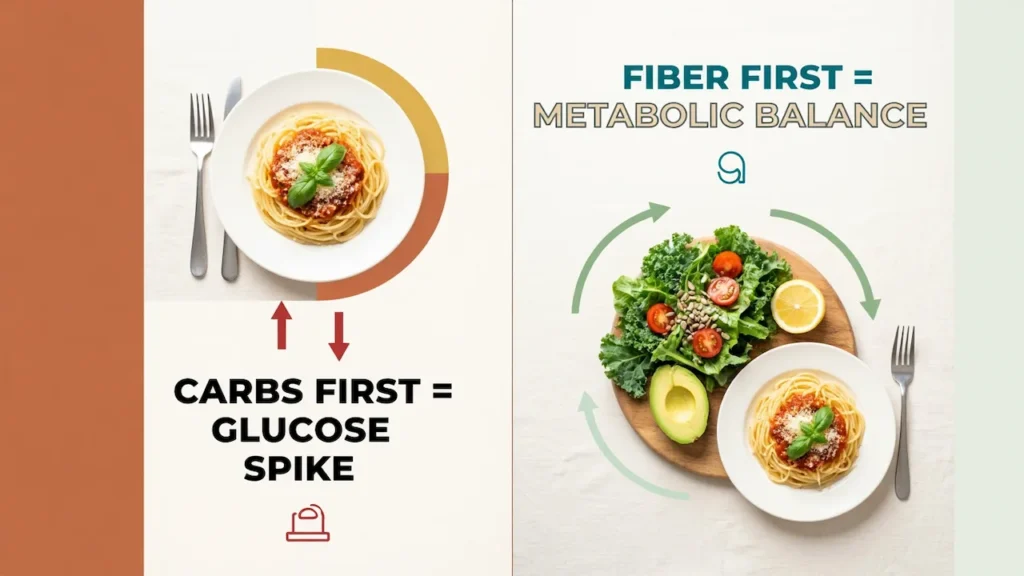
The order in which macronutrients are eaten within a meal has a measurable effect on the post-meal glucose response. Eating fiber-rich vegetables or a fiber source before the carbohydrate and protein portion of a meal reduces the peak blood glucose concentration after that meal by 30 to 40% compared to eating the same foods in random or carbohydrate-first order. This is not a modest effect: it is the difference between a blood glucose spike that triggers fat storage signaling and insulin resistance, and a smooth, controlled glucose rise that supports sustained energy and satiety.
The fiber-first rule is practical: eat your salad before your pasta, your vegetables before your rice, your high-fiber soup before your main course. This single habit, applied consistently, can reduce the average daily glycemic load significantly without changing what you eat at all.
For a structured approach to evening meal sequencing that applies the fiber-first principle, see: Evening Satiety Protocol
The Pre-Meal Fiber Anchor
The most powerful single application of fiber maxxing for weight loss is consuming a high-fiber preparation 15 to 30 minutes before a meal. This pre-meal fiber anchor achieves three simultaneous effects: it begins gastric expansion (reducing the stomach’s appetite for the incoming meal), it initiates GLP-1 secretion (producing the hormonal satiety signal before the meal starts) and it creates a physical gel matrix in the stomach that slows the digestion of whatever follows.
A psyllium husk drink (1 tablespoon in 300ml of water), a chia water (1 tablespoon of chia soaked in 250ml of water for 10 minutes) or a glucomannan preparation are the most effective pre-meal fiber anchors because of their high viscosity and rapid gel formation.
For a pre-meal satiety ritual that combines protein and fiber in a similar timing window, see: Serena Williams Gelatin Trick
Recipes and Meal Integration
High-Fiber Breakfast Frameworks
Breakfast is the highest-leverage meal for fiber maxxing because it sets the blood glucose and satiety hormone trajectory for the entire morning. A breakfast that delivers 15 to 20 grams of fiber produces fundamentally different hormonal conditions at 11 AM than a breakfast that delivers 3 to 5 grams.
The most effective high-fiber breakfast architectures combine a soluble fiber base (oats, chia, psyllium), a protein source (eggs, Greek yogurt, cottage cheese) and a fiber-rich fruit or vegetable addition (berries, banana, spinach). This combination addresses all three satiety pathways simultaneously: mechanical (volume), hormonal (GLP-1 from fiber) and biochemical (protein-driven PYY and CCK).
For practical high-fiber morning meal inspiration, see: Mounjaro Breakfast and Peanut Butter and Jelly Oats
Global Influences: Ancient Fiber Wisdom
Some of the highest fiber intake traditions in the world come from cultures that had no concept of “fiber maxxing” but simply ate in ways that naturally maximized whole plant food consumption. Brazilian traditional food culture provides one of the most instructive examples: the combination of rice, beans, leafy greens and tropical fruits in traditional Brazilian daily eating delivers 30 to 40 grams of fiber per day naturally, without any supplementation or strategic planning.
For fiber-rich functional drink inspiration from Brazilian food culture, see: Brazilian Weight Loss Drinks
Metabolic Salads: The Fiber Density Champions
Salads built with legumes, root vegetables, fermented ingredients and seed-based dressings are the most fiber-dense meal format available in whole food cooking. A well-constructed metabolic salad can deliver 15 to 20 grams of fiber in a single serving while remaining under 400 calories, making it the most calorie-efficient fiber maxxing meal available.
For high-fiber salad ideas that integrate Mediterranean and Asian whole food traditions, see: Artichoke and Bean Salad and Korean Carrot Salad
Fiber versus Gelatin: The Ultimate Metabolic Stack
Fiber maxxing and gelatin protocols address weight management from different but complementary angles. Understanding their distinct mechanisms allows you to use both strategically rather than treating them as alternatives.
| Factor | Fiber Maxxing | Gelatin Protocol | Combined Stack |
|---|---|---|---|
| Primary satiety mechanism | GLP-1 via SCFA fermentation, gastric volume | GLP-1 via glycine, mechanical gastric expansion | Dual GLP-1 stimulation via two pathways |
| Gut health benefit | Microbiome diversity, SCFA production, mucosal health | Tight junction support, gut lining repair | Comprehensive gut barrier and microbiome support |
| Protein content | Negligible | High (6 to 18g per serving) | Fiber provides volume, gelatin provides protein |
| Blood sugar effect | Reduces post-meal glucose spike via gel buffering | Improves insulin sensitivity via glycine | Upstream and downstream glucose management |
| Skin and connective tissue | Indirect (via microbiome and inflammation reduction) | Direct (glycine and proline for collagen synthesis) | Comprehensive skin and connective tissue support |
| Best timing | Pre-meal fiber anchor + fiber-first meal structure | 20 to 30 min pre-meal or before bed | Fiber anchor 30 min pre-meal + gelatin 20 min pre-meal |
For the gelatin side of this metabolic stack, see: Gelatin vs Collagen for Weight Loss and Rebel Wilson Pink Gelatin Recipe
Avoiding Pitfalls: Real Fiber versus Fiber-Washing
The processed food industry has co-opted the language of fiber health to market products that contain functional fiber additives (chicory root, inulin, soluble corn fiber) in quantities too small to produce meaningful metabolic effects, while the ultra-processed matrix of the product itself contributes to inflammation, insulin dysregulation and poor satiety.
Reading fiber content on a nutrition label is necessary but insufficient. The questions to ask are: what is the source of the fiber (whole food or added isolate?), what else is in the product alongside the fiber, and does the food require significant chewing and digestion time (a marker of whole food fiber) or is it a processed, highly palatable product that happens to have fiber listed in the nutritional information?
The practical rule: if the product is in a wrapper, contains more than 5 ingredients and is designed to be eaten quickly without satiety, it is not a meaningful fiber maxxing food regardless of what the label says.
For a case study in processed food marketing that fails the fiber-quality test, see: 3 Servings of Salt and Vinegar Chips Calories
The 21-Day Fiber Maxxing Roadmap
Week 1 (days 1 to 7): Foundation, target 25 to 30g per day. Add one fiber-rich food to each meal without replacing anything. Add a handful of berries to breakfast, a side of lentils to lunch and a large leafy green salad to dinner. Drink an additional 500ml of water per day beyond your normal intake. Track fiber using a food tracking app to understand your current baseline and identify the easiest additions.
Week 2 (days 8 to 14): Amplification, target 35 to 40g per day. Introduce a pre-meal fiber anchor at your largest meal. Use psyllium husk or chia water 20 to 30 minutes before dinner. Replace one refined carbohydrate serving per day with a high-resistant-starch alternative (cooled rice instead of freshly cooked, lentils instead of white bread). Add a tablespoon of ground flaxseed to one meal daily.
Week 3 (days 15 to 21): Optimization, target 45 to 50g per day. Apply the fiber-first rule at every meal. Build at least one metabolic salad per day with legumes, seeds and a diverse vegetable base. Integrate a functional fiber drink (psyllium, glucomannan or chia water) before both lunch and dinner. Assess digestive comfort and adjust sources as needed for tolerance.
For a structured 21-day framework that integrates fiber maxxing with other functional food protocols, see: 21-Day Cleanse Program
To ensure you always have these metabolic insights and the 21-day roadmap at your fingertips during meal prep, you can save this Fiber Maxxing for Weight Loss infographic on Pinterest and add it to your health and wellness boards.
FAQs About Fiber Maxxing for Weight Loss
What Is Fiber Maxxing for Weight Loss?
Fiber maxxing for weight loss is a nutritional strategy that targets 50 or more grams of daily dietary fiber from diverse whole food sources, with the goal of maximizing GLP-1 stimulation, gut microbiome diversity, glucose stabilization and satiety hormone secretion. It differs from standard fiber recommendations (25 to 38g per day) in its ambition level and in its strategic implementation: pre-meal fiber anchors, fiber-first meal sequencing and deliberate diversification of fiber sources across fermentable and non-fermentable types.
What Is the 3-3-3 Rule for Weight Loss?
The 3-3-3 rule in the context of fiber maxxing refers to a practical meal structure: aim for at least 3 different fiber sources at each of 3 daily meals, with a minimum of 3 grams of fiber per food serving counted toward your daily total. This rule prevents the most common fiber maxxing mistake, which is relying on one or two fiber sources and missing the microbiome diversity benefits that come from rotating sources regularly.
Can I Lose Weight by Increasing My Fiber?
Yes, within an important context. Increasing fiber intake from 15 grams to 35 or more grams per day produces measurable effects on satiety, caloric intake and body weight in well-designed clinical trials, with meta-analyses consistently showing that high dietary fiber intake is independently associated with lower body weight and lower risk of metabolic disease. The mechanism is indirect: fiber creates the hormonal conditions (elevated GLP-1, elevated PYY, reduced ghrelin) that make eating less feel natural rather than effortful. Fiber maxxing does not create a caloric deficit directly. It makes maintaining a caloric deficit significantly easier by restoring the satiety signaling that ultra-processed diets have chronically suppressed.
What Fiber Is Similar to Ozempic?
The fiber most studied for GLP-1 stimulation is beta-glucan, found in oats and barley, which produces consistent and clinically meaningful elevations in GLP-1 after meals in multiple randomized controlled trials. Psyllium husk is the second most researched option, with strong evidence for both GLP-1 stimulation and glucose regulation. Resistant starch (from cooled cooked potatoes, legumes and green bananas) produces the highest SCFA output of any fiber type, which drives the most sustained GLP-1 elevation over the hours following a meal. None of these replicate the pharmacological concentration of GLP-1 receptor activation achieved by Ozempic or Mounjaro, but their effect on the same pathway is real and cumulative with consistent daily intake.
Conclusion: Mastering the Satiety Signal
Fiber maxxing for weight loss is not a hack or a shortcut. It is the restoration of a nutritional baseline that the human gut and hormonal system evolved expecting, one that modern ultra-processed food consumption has progressively dismantled. At 50 grams of daily fiber from diverse whole food sources, combined with adequate hydration, strategic pre-meal timing and the integration of fiber-rich whole foods at every meal, the body’s own satiety machinery begins to function as it was designed to function: producing the hormonal signals that make overeating uncomfortable rather than effortless.
The 21-day roadmap, the pre-meal fiber anchor, the fiber-first sequencing rule and the metabolic stack with gelatin protocols give you a complete toolkit for implementing fiber maxxing in a way that is sustainable, evidence-based and genuinely effective for long-term metabolic health. Start with the addition that requires the least friction for your current routine. Build from there, one week at a time, and let the compounding microbiome and hormonal changes do the work that willpower and caloric restriction consistently fail to sustain.
Related Reading
- Natural Mounjaro Recipe
- Cortisol Cocktail Recipe for Weight Loss
- Evening Satiety Protocol
- Keto Smoothie for Weight Loss
- Serena Williams Gelatin Trick
- Gelatin vs Collagen for Weight Loss
- Brazilian Weight Loss Drinks
- Artichoke and Bean Salad
- Korean Carrot Salad
- Mounjaro Breakfast
- 21-Day Cleanse Program
- Peanut Butter and Jelly Oats
- Rebel Wilson Pink Gelatin Recipe