
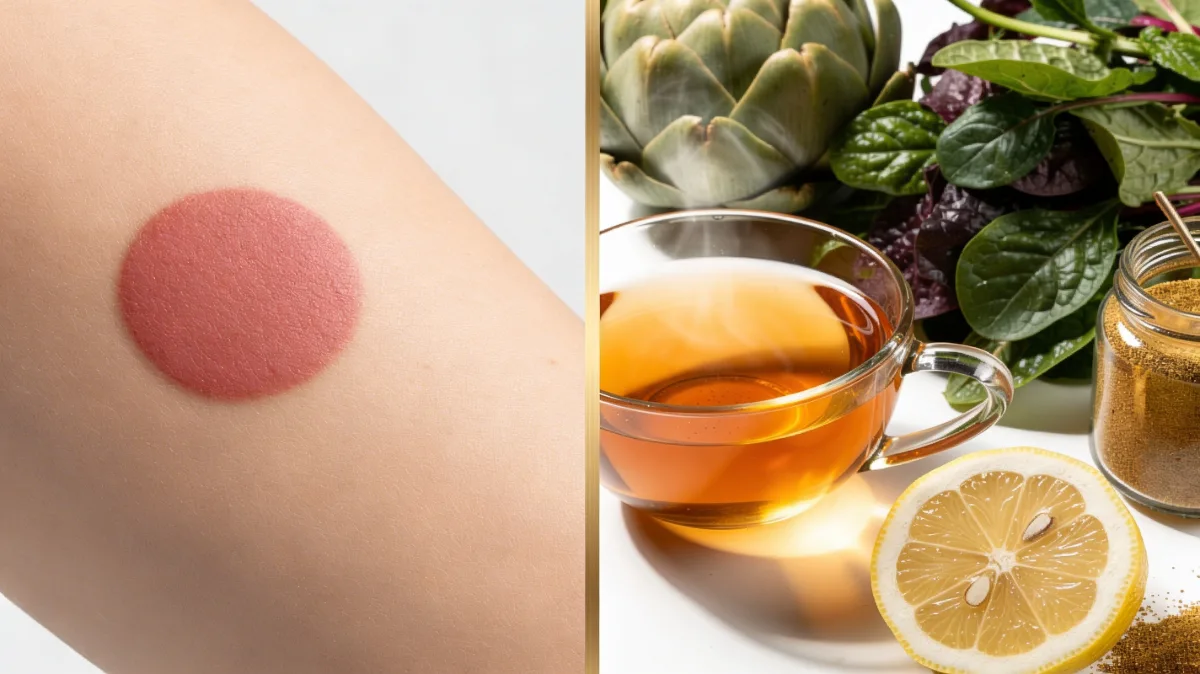
Berberine patches and berberine supplements have become the most talked-about metabolic tools of 2026, with social media flooding search results with claims that this plant compound is “Nature’s Ozempic.” Nicknamed for its apparent similarities to GLP-1 receptor agonists, berberine has attracted enormous attention from people seeking blood sugar balance, weight management support, and metabolic health improvements without a prescription.
As a functional recipe creator, my position is straightforward: berberine is a genuinely interesting compound with real science behind it. But the question of whether a patch or a capsule can replace a nutrient-dense real food approach to metabolic health deserves a more honest answer than most supplement marketers are willing to give.
Table of Contents
What is Berberine? The Biological Switch
Berberine is an alkaloid compound found in several plants including barberry, goldenseal, and Oregon grape. Its primary mechanism of action in the body involves activation of an enzyme called AMPK, which stands for adenosine monophosphate-activated protein kinase. AMPK is sometimes called the metabolic master switch because it regulates how cells produce and use energy, how glucose is absorbed from the bloodstream, and how fat is stored or mobilized.
When AMPK is activated, several metabolic processes shift in ways that are broadly beneficial for people managing blood sugar or weight. Glucose uptake by cells increases, liver glucose production decreases, and fat oxidation is supported. These effects are mechanistically similar to how metformin, the most widely prescribed diabetes medication, works, which is why the berberine versus metformin comparison has attracted so much research attention.
According to a clinical review published by the National Institutes of Health, berberine demonstrated comparable effects to metformin on fasting blood glucose and HbA1c in several randomized controlled trials, though the evidence base is smaller and study quality is more variable than for established pharmaceuticals. You can read the full study here: National Institutes of Health
The comparison to GLP-1 medications is less direct. GLP-1 receptor agonists work through a different mechanism involving incretin hormone signaling, gastric emptying, and appetite suppression at the neurological level. Berberine does not replicate these mechanisms. The Nature’s Ozempic label is a marketing simplification that overstates the mechanistic overlap while capturing real search interest.
If you are already using functional food tools like the Natural Mounjaro Recipe to support insulin sensitivity, understanding how berberine acts on AMPK adds useful context for why certain bitter and functional ingredients produce metabolic effects through overlapping pathways.
Berberine Patches vs. Capsules: Which is Better?
Berberine patches represent one of the newest delivery formats in the supplement market, promising transdermal absorption that bypasses the digestive system and reduces the gastrointestinal side effects that oral berberine frequently causes. The marketing appeal is clear: many people who try berberine capsules experience nausea, cramping, or diarrhea, particularly at the doses required to produce meaningful metabolic effects.
The clinical evidence for berberine patches, however, is substantially weaker than for oral formulations. The doses used in clinical studies showing metabolic benefits from berberine range from 500 mg to 1500 mg per day. Transdermal delivery of large alkaloid molecules like berberine faces significant bioavailability challenges: the skin is designed to keep things out, and berberine’s molecular structure makes dermal penetration inherently limited without pharmaceutical-grade permeation enhancers.
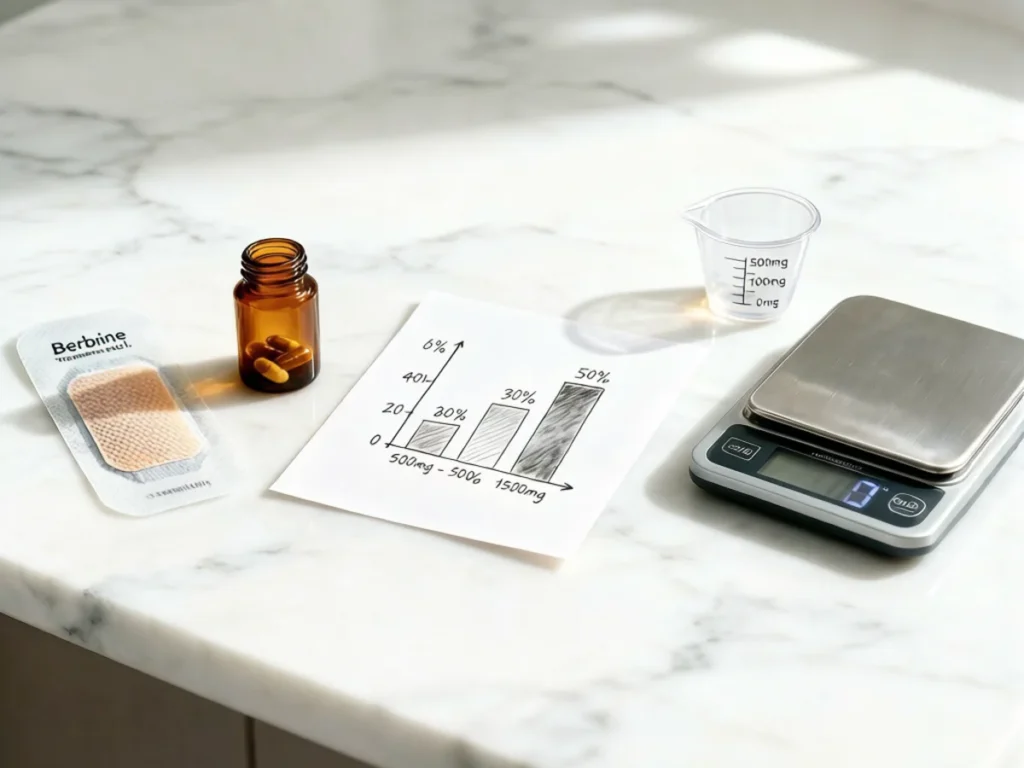
Most berberine patches currently on the market do not publish pharmacokinetic data demonstrating that their transdermal dose produces blood levels comparable to the oral doses studied in clinical trials. Until that data exists, the claim that berberine patches deliver equivalent metabolic benefits to studied oral doses remains unsubstantiated.
The more honest comparison between berberine patches and capsules is this: capsules have a larger evidence base but significant tolerability issues at therapeutic doses. Patches have better tolerability in theory but lack the evidence to confirm their doses are therapeutically meaningful. Neither option should be treated as equivalent to a structured dietary approach without medical supervision.
Safety note: berberine interacts with medications metabolized by the liver’s CYP450 enzyme system, including several common diabetes medications, blood pressure drugs, and anticoagulants. Anyone considering berberine supplementation alongside existing medications must consult their physician before starting.
The Real Food Alternative: Can You Eat Your Way to Balance?
The most important limitation of isolated berberine, whether in patches, capsules, or any other delivery format, is that it is a single compound extracted from its food matrix. Real foods that contain bitter alkaloids and polyphenols deliver those compounds alongside fiber, antioxidants, minerals, and secondary metabolites that work synergistically in ways that isolated supplements cannot replicate.
Artichoke hearts are one of the clearest examples of this principle. They contain cynarin and chlorogenic acid, both of which support bile production, liver phase one detoxification, and glucose metabolism. They also deliver prebiotic fiber that feeds beneficial gut bacteria, which in turn produce short-chain fatty acids that improve insulin sensitivity through a completely different pathway than AMPK activation. Canned artichoke hearts incorporated into regular meals deliver this synergistic package in a form the body recognizes and processes efficiently.
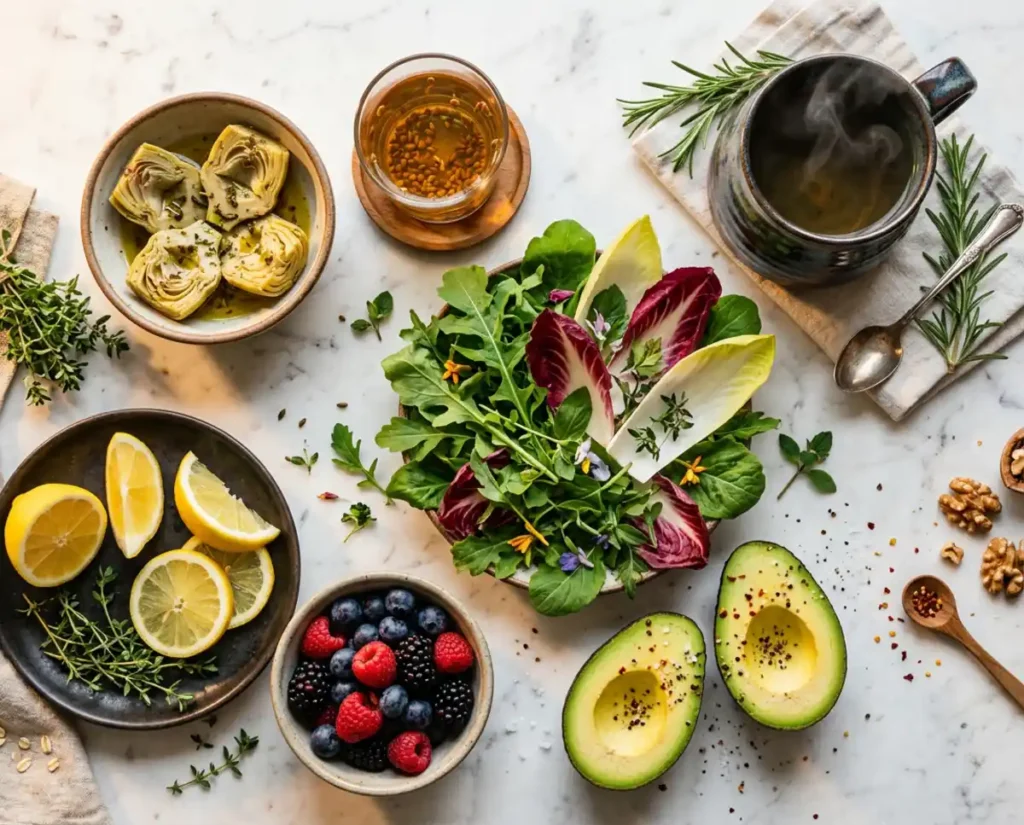
Korean cassia seed tea offers a complementary example: cassia seeds contain anthraquinones that support gut motility and digestive comfort while providing antioxidant compounds that reduce oxidative stress associated with metabolic dysfunction. No single isolated supplement replicates this combination.
The Mounjaro Breakfast approach on this site is built around exactly this principle: combining bitter vegetables, quality protein, and functional fats at the first meal to prime metabolic signaling for the entire day. This is the real food equivalent of what berberine attempts to do pharmacologically, delivered in a form that also provides nutrients, fiber, and culinary satisfaction.
PrintBerberine Inspired Functional Gelatin Recipe
This berberine inspired functional gelatin recipe is designed to support metabolic balance using whole-food ingredients like herbal tea, lemon, and grass-fed gelatin. It mimics the benefits people seek from berberine supplements without relying on isolated compounds.
- Prep Time: 10 minutes
- Cook Time: 5 minutes
- Total Time: 15 minutes
- Yield: 4 servings 1x
- Category: Snack
- Method: No-Bake
- Cuisine: Functional Nutrition
- Diet: Gluten Free
Ingredients
- 2 cups dandelion or barberry herbal tea, warm
- 2 tablespoons unflavored grass-fed bovine gelatin
- 1 tablespoon lemon juice
- 1 teaspoon apple cider vinegar
- 1 to 2 teaspoons monk fruit or stevia, optional
- Pinch of sea salt
Instructions
- Brew the herbal tea and keep it warm but not boiling.
- Pour a small amount of tea into a bowl and sprinkle gelatin over it to bloom for 1 to 2 minutes.
- Add the remaining warm tea and whisk until fully dissolved.
- Stir in lemon juice and apple cider vinegar.
- Add monk fruit or stevia if desired.
- Add a pinch of sea salt to enhance flavor.
- Pour into small jars or molds.
- Refrigerate until fully set.
- Serve chilled as a functional snack or light evening support.
Notes
Use high-quality grass-fed gelatin with no additives. Herbal teas like dandelion or barberry provide bitter compounds that support metabolic pathways similar to those targeted by berberine.
Nutrition
- Serving Size: 1 serving
- Calories: 40
- Sugar: 0g
- Sodium: 50mg
- Fat: 0g
- Saturated Fat: 0g
- Unsaturated Fat: 0g
- Trans Fat: 0g
- Carbohydrates: 1g
- Fiber: 0g
- Protein: 9g
- Cholesterol: 0mg
Why Supplementing is Not a Shortcut
The gut health dimension of berberine is the most underreported aspect of the Nature’s Ozempic conversation. Berberine has meaningful antimicrobial properties, which is part of why it has been used in traditional medicine for centuries to treat intestinal infections. Those same antimicrobial properties, however, mean that berberine can disrupt beneficial gut bacteria when used at high doses or for extended periods without accompanying prebiotic fiber intake.
A disrupted gut microbiome directly undermines the metabolic benefits berberine is supposed to deliver, because a significant portion of insulin sensitivity, glucose metabolism, and appetite regulation is mediated through gut bacteria and the short-chain fatty acids they produce. Taking berberine without simultaneously supporting gut microbiome diversity through fiber-rich foods is a strategy that partially undermines itself.
The 21-Day Cleanse Program on this site prioritizes gut barrier restoration and microbiome support before adding any metabolic stimulants, precisely because the foundation of metabolic health is a functional, diverse gut ecosystem. Building that foundation through real food is more durable and more comprehensive than any supplement protocol can achieve.
For readers interested in how gut health connects specifically to metabolic medication and supplement interactions, the What Does Mounjaro Do to Your Gut article provides a detailed breakdown of the gut-metabolism relationship that applies directly to the berberine conversation as well.
FAQs: Berberine patches
How long does it take for berberine patches to work?
Clinical studies on oral berberine typically show measurable effects on fasting blood glucose within four to eight weeks of consistent use at therapeutic doses. For berberine patches, the timeline is unclear because the dose delivered transdermally has not been standardized or clinically validated. If you are using patches and expecting results comparable to oral studies, the honest answer is that the evidence does not currently support that expectation. Patience and consistency matter for any metabolic intervention, but the baseline requirement is that the dose is actually reaching therapeutic blood levels, which patches cannot currently confirm.
Can I take berberine while on Mounjaro or similar medications?
This is a question for your physician, not a recipe website. The practical concern is hypoglycemia: berberine lowers blood glucose through AMPK activation, and combining it with GLP-1 receptor agonists that also reduce postprandial glucose creates a compounding effect that can drive blood sugar too low. The What Does Mounjaro Do to Your Gut article provides useful context on how GLP-1 medications affect gut physiology, which is relevant background for that conversation with your doctor.
Is berberine safe for long-term use?
Most practitioners who use berberine therapeutically recommend cycling it rather than taking it continuously. A common protocol is eight to twelve weeks on followed by four weeks off, which reduces the risk of gut microbiome disruption and prevents the receptor downregulation that can occur with continuous AMPK activation. Long-term uninterrupted use at high doses without medical supervision is not recommended. Anyone with liver disease, kidney disease, or who takes medications processed by the liver should not use berberine without explicit medical clearance.
Is berberine the same as metformin?
No. The mechanisms overlap in some respects, particularly around AMPK activation and glucose metabolism, but they are different compounds with different pharmacological profiles, different side effect considerations, and very different evidence bases. Metformin has decades of large-scale clinical trial data. Berberine has promising but smaller and more variable research. Treating them as equivalent is an oversimplification that could lead to inappropriate self-treatment decisions.
Can functional foods replace berberine entirely?
For people without a diagnosed metabolic condition, a well-structured real food approach that includes bitter vegetables, prebiotic fiber, quality protein, and functional teas provides metabolic support through multiple complementary pathways without the risks of supplement interactions or gut disruption. The Evening Satiety Protocol and the 21-Day Cleanse framework demonstrate what that looks like in daily practice. For people with diagnosed insulin resistance or type 2 diabetes, any decision about berberine supplementation should involve a healthcare provider.
Conclusion: Bio-Hacking with Wisdom
Berberine is a fascinating compound with genuine science behind it. The Nature’s Ozempic label is an oversimplification that sells supplements but does not serve the people buying them. Berberine patches face unresolved bioavailability questions. Capsules work at therapeutic doses but carry tolerability and interaction risks that require medical oversight.
The real food approach to metabolic health is not a romantic alternative to modern pharmacology. It is a mechanistically sound strategy that delivers multiple compounds through multiple pathways, supports rather than disrupts the gut microbiome, and builds the kind of metabolic resilience that no single supplement can replicate.
Berberine works best when it complements a nutrient-dense plate, not when it replaces one. Do not look for Nature’s Ozempic. Look for a resilient metabolism built on real food, functional ingredients, and sustainable daily habits.
Browse the full index of functional nutrition recipes and strategies at Joyful Bite to build your own evidence-based metabolic approach, one meal at a time.