
Testosterone is not a male hormone. It is a human hormone, and women produce it every day of their lives. The ovaries and adrenal glands synthesize testosterone continuously, and it plays a direct role in energy levels, bone density, muscle tone, cognitive sharpness, libido and mood stability. The problem is not that women have testosterone. The problem is that almost nobody talks about what happens when they do not have enough of it.
The conversation around testosterone for women has been dominated for decades by two extremes: either the subject is ignored entirely in routine gynecological care, or it is associated only with excess (as in polycystic ovary syndrome). The middle ground, where most women actually live, rarely gets addressed. That middle ground is where this guide begins.
This is not a guide about becoming someone else. It is about understanding a hormone you already have, recognizing the signs when it falls out of balance and using food, movement and lifestyle as your first line of support before reaching for a prescription.
Table of Contents
Why Testosterone Matters for Female Vitality
Women produce approximately 10 to 20 times less testosterone than men, but the receptors for testosterone are distributed throughout the female body in the same tissues where they appear in men: muscle, bone, brain, cardiovascular tissue, skin and reproductive organs. The quantity is smaller. The importance is not.
Testosterone in women peaks in the mid-twenties and begins a gradual decline from that point forward. The decline accelerates significantly around perimenopause (typically mid-to-late forties) and continues after menopause. But low testosterone is not exclusively a menopause story. Women in their twenties and thirties can have clinically low testosterone due to chronic stress, hormonal contraceptives, poor sleep, undereating or autoimmune conditions.
Signs of Low Testosterone in Women
Recognizing these signs early is the first step toward addressing testosterone for women through food, movement and targeted support before symptoms compound over time.
The most commonly reported signs include persistent fatigue that does not resolve with rest, reduced libido or loss of interest in sex, difficulty building or maintaining muscle mass despite consistent exercise, increased body fat particularly around the midsection, brain fog and difficulty concentrating, low mood or loss of motivation, thinning hair and reduced skin elasticity, and decreased bone density over time.
Many of these symptoms overlap with low estrogen, low thyroid and adrenal fatigue, which is why hormonal testing is always more informative than symptom-tracking alone. A comprehensive hormonal panel that includes free and total testosterone, DHEA-S, cortisol, estradiol, progesterone and thyroid markers gives a complete picture that no symptom list can replicate.
Can Testosterone Help Women with Fibromyalgia?
This is one of the most searched questions at the intersection of testosterone and women’s health, and the answer is nuanced but encouraging. Fibromyalgia is a condition characterized by widespread musculoskeletal pain, fatigue and heightened pain sensitivity, and research has consistently found that women with fibromyalgia have lower androgen levels (including testosterone and DHEA) than age-matched controls without the condition.
The proposed mechanism involves testosterone’s role in pain threshold regulation. Testosterone influences the sensitivity of pain receptors in muscle and connective tissue, and adequate levels appear to support a higher threshold for pain signaling. Additionally, testosterone’s role in muscle protein synthesis means that healthy levels support the kind of lean muscle maintenance that reduces the mechanical burden on joints and connective tissue.
This does not mean testosterone therapy is a treatment for fibromyalgia. It means that addressing hormonal deficiency as part of a comprehensive approach to fibromyalgia management is worth discussing with a knowledgeable healthcare provider. Food-based support for testosterone production is a low-risk starting point for any woman with this condition.
Hormonal health is the metabolic foundation of the 21-Day Cleanse Program, which addresses the dietary patterns that support whole-body hormonal balance over three structured weeks.
How to Balance Testosterone in Females Naturally
Natural testosterone balance in women is not a single intervention. It is the result of a constellation of factors working together: stress management, sleep quality, dietary choices, movement patterns and avoidance of endocrine-disrupting compounds. Each factor influences testosterone through a different pathway, and improving multiple factors simultaneously produces results that are meaningfully greater than any single change alone.
The Role of Stress: Cortisol versus Testosterone
The relationship between cortisol and testosterone is one of the most important and least discussed dynamics in women’s hormonal health. Cortisol and testosterone are both synthesized from the same precursor molecule: pregnenolone. When chronic stress keeps cortisol demand high, the body preferentially routes pregnenolone toward cortisol production and away from sex hormone synthesis, including testosterone. This is sometimes called “pregnenolone steal” in functional medicine contexts.
The practical consequence is straightforward: chronically stressed women have chronically lower testosterone, not because their gonads are failing, but because their stress response is consuming the raw materials that testosterone needs to be made. Addressing cortisol dysregulation is therefore one of the most direct routes to supporting testosterone production in women who are under sustained pressure.
Strategies for cortisol management that have direct downstream effects on testosterone include consistent sleep (7 to 9 hours in a dark, cool environment), reducing caffeine after noon, daily parasympathetic activation practices (breathwork, gentle movement, nature exposure), blood sugar stability through regular meals with adequate protein and fat, and reducing exposure to chronic low-grade stressors like excessive news consumption and overcommitment.
| Factor | Effect on Testosterone for Women | Actionable Step | Timeline |
|---|---|---|---|
| Chronic stress (high cortisol) | Suppresses testosterone for women by diverting pregnenolone toward cortisol production | Daily breathwork, reduce caffeine after noon, cortisol cocktail protocol | 2 to 4 weeks |
| Poor sleep quality | Testosterone for women is synthesized primarily during deep sleep; less sleep means less production | 7 to 9 hours, dark cool room, magnesium glycinate before bed | 1 to 2 weeks |
| Low dietary fat | Removes cholesterol precursors needed for testosterone synthesis in women | Add avocado, olive oil, eggs and grass-fed butter daily | 4 to 8 weeks |
| Zinc and magnesium deficiency | Directly limits testosterone production and increases SHBG, reducing free testosterone for women | Pumpkin seeds, dark chocolate, oysters daily or targeted supplementation | 3 to 6 weeks |
| Sedentary lifestyle | No mechanical demand signal means no hormonal incentive to produce testosterone in women | Resistance training 3 to 4 times per week with compound movements | 2 to 6 weeks |
| Endocrine disruptors (BPA, synthetic fragrance) | Block and mimic hormone receptors, interfering with natural testosterone signaling for women | Switch to glass storage, stainless steel bottles, fragrance-free products | Ongoing |
| Vitamin D deficiency | Impairs gene expression required for testosterone synthesis; low Vitamin D independently predicts low testosterone for women | 2000 to 5000 IU Vitamin D3 with K2 daily, plus sunlight exposure | 6 to 12 weeks |
Manage acute cortisol spikes with the Cortisol Cocktail Recipe for Weight Loss, a functional drink designed to support adrenal recovery between meals.
What Foods Balance Testosterone in Women?
Food is the most accessible lever for supporting testosterone for women. Testosterone synthesis requires specific micronutrients as cofactors, healthy fats as structural raw materials and adequate calories to signal to the body that it is safe to invest in sex hormone production. Chronic undereating is one of the most reliable ways to suppress testosterone for women, as caloric restriction signals a state of scarcity in which reproductive hormone production is deprioritized.
Zinc and Magnesium Superfoods
Zinc and magnesium are the two micronutrients most directly implicated in testosterone synthesis and regulation. Zinc is a required cofactor for the enzymes that convert cholesterol into testosterone in the ovaries and adrenal glands. Magnesium improves the bioavailability of free testosterone by inhibiting sex hormone-binding globulin (SHBG), the protein that binds testosterone and renders it inactive. Higher magnesium intake is associated with higher free testosterone in both men and women across multiple population studies.
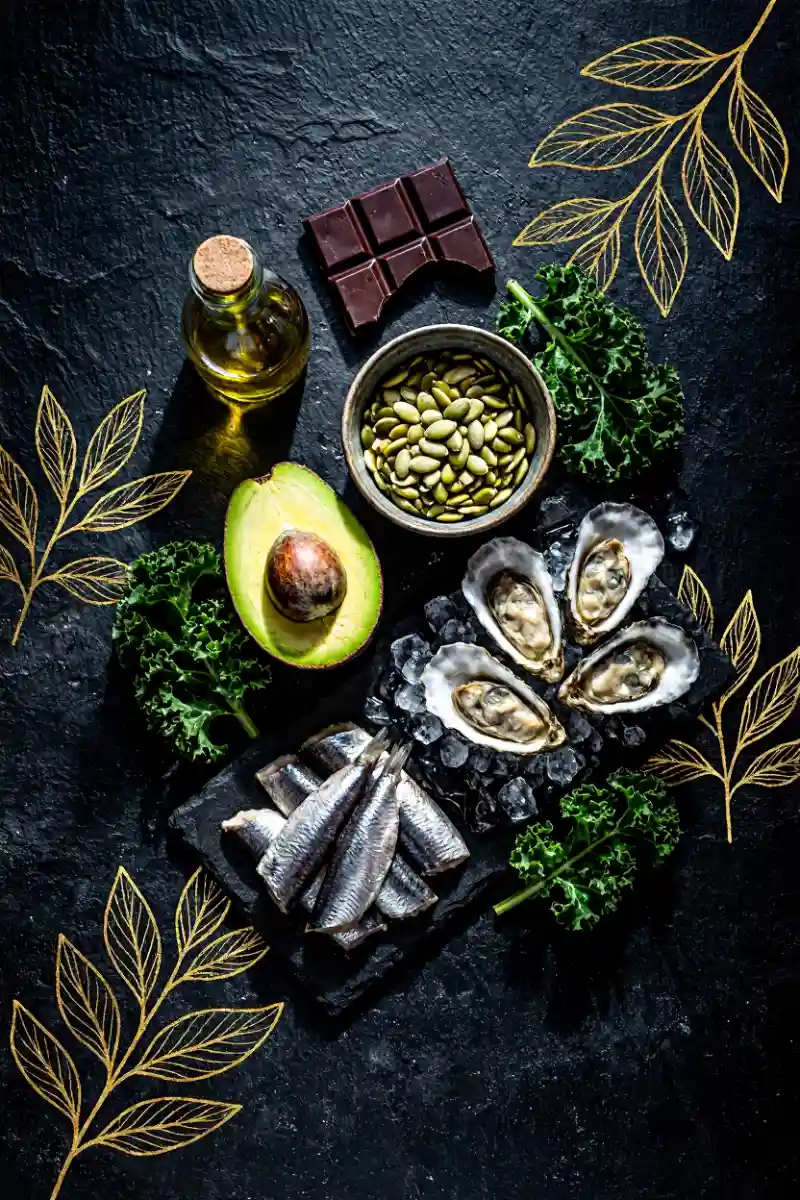
The best dietary sources of zinc include oysters (the highest-zinc food in existence at approximately 74mg per 100g), pumpkin seeds (a practical daily source at 7 to 8mg per 100g), beef and lamb, cashews, chickpeas and dark chocolate with 70% or higher cacao content. For magnesium, the most reliable food sources are pumpkin seeds (also an excellent source), dark leafy greens (particularly spinach and Swiss chard), black beans, almonds, avocado and dark chocolate.
The combination of pumpkin seeds and dark chocolate appears repeatedly in functional nutrition approaches to hormonal health because both foods provide meaningful amounts of both zinc and magnesium simultaneously, making them particularly efficient for women who want to address multiple micronutrient gaps in a single food.
Healthy Fats for Hormone Synthesis
Testosterone is a steroid hormone, which means its molecular backbone is derived from cholesterol. Dietary fat, particularly saturated and monounsaturated fat, provides the cholesterol and fatty acid precursors that make steroid hormone synthesis possible. Low-fat diets have been consistently associated with lower testosterone levels in research populations, which partially explains why women who adopt very low-fat dietary patterns often report worsening hormonal symptoms over time.
The most hormonally supportive fats include avocado and avocado oil (monounsaturated fat plus potassium and B vitamins), extra virgin olive oil (oleocanthal and oleic acid with anti-inflammatory properties), whole eggs (the yolk contains cholesterol, choline and fat-soluble vitamins that support hormone synthesis), grass-fed butter and ghee, fatty fish like salmon and sardines (omega-3 fatty acids that reduce the inflammatory burden on the endocrine system) and full-fat dairy from grass-fed sources.
Cruciferous Vegetables and Estrogen Clearance
Cruciferous vegetables (broccoli, cauliflower, Brussels sprouts, kale, cabbage, arugula) contain a compound called indole-3-carbinol (I3C), which is converted in the gut to diindolylmethane (DIM). DIM supports the liver’s Phase 2 detoxification pathways that clear used estrogen metabolites from the body. When estrogen is cleared efficiently, the ratio of estrogen to testosterone shifts in a way that allows testosterone to be more biologically available and active at receptor sites.
This is particularly relevant for women with estrogen dominance (a pattern characterized by elevated estrogen relative to progesterone and testosterone), which is extremely common in perimenopause, in women with high body fat and in those with sluggish liver detoxification. Eating 1 to 2 cups of cruciferous vegetables daily is a practical, sustainable strategy for improving this ratio without supplementation.
Pair these hormone-supporting vegetables with the Roasted Potatoes with Leeks recipe for a mineral-rich, satisfying side dish that fits a hormonally supportive eating pattern.
How to Increase Testosterone Naturally in Females
Diet is the foundation, but movement and lifestyle factors are the most potent acute triggers for testosterone production in women. The body responds to physical and environmental signals with hormonal shifts that can be meaningfully influenced by intentional choices.

Strength Training and HIIT
Resistance training is the single most evidence-supported lifestyle intervention for increasing testosterone in women. Multiple studies have documented acute rises in testosterone (along with growth hormone and IGF-1) in the 15 to 30 minutes following a resistance training session. The magnitude of the response increases with the intensity and volume of the session, with compound movements (squats, deadlifts, bench press, rows) producing larger hormonal responses than isolation exercises.
High-intensity interval training (HIIT) produces a similar acute hormonal response through a different mechanism: the metabolic stress of repeated maximal-effort intervals triggers a sympathoadrenal response that includes a brief testosterone surge. For women who cannot do traditional weight training due to joint issues or mobility limitations, HIIT on a stationary bike or rowing machine can produce comparable hormonal benefits.
The key principle is progressive overload: consistently challenging the body with slightly more than it handled last time. A body that is never challenged has no hormonal incentive to invest in testosterone production.
Natural Ways to Support Testosterone in Menopausal Women
The menopause transition (perimenopause through post-menopause) involves a 40 to 50% reduction in testosterone production, largely because ovarian function declines and the ovaries are a primary production site. The adrenal glands continue producing some testosterone via DHEA conversion, which is why adrenal health becomes especially important in this life phase.
For post-menopausal women, the most evidence-supported natural strategies include maintaining or building muscle mass through consistent resistance training (which preserves receptor sensitivity to testosterone even as levels decline), ensuring adequate zinc and magnesium intake, supporting DHEA production through stress management and adequate sleep, optimizing Vitamin D3 levels (low Vitamin D is independently associated with low testosterone across all age groups), and considering targeted supplementation under medical supervision.
Support the protein intake necessary for muscle maintenance with hormone-friendly snacks like the Cottage Cheese Banana Bread, which provides a high-protein, satisfying option between meals.
Supplements to Support Testosterone Balance in Females
The following supplements have the strongest evidence base for supporting testosterone production or bioavailability in women. All should be used as adjuncts to dietary and lifestyle changes, not replacements for them, and all carry the same caveat: discuss with a qualified healthcare provider before starting, particularly if you take medications or have pre-existing conditions.
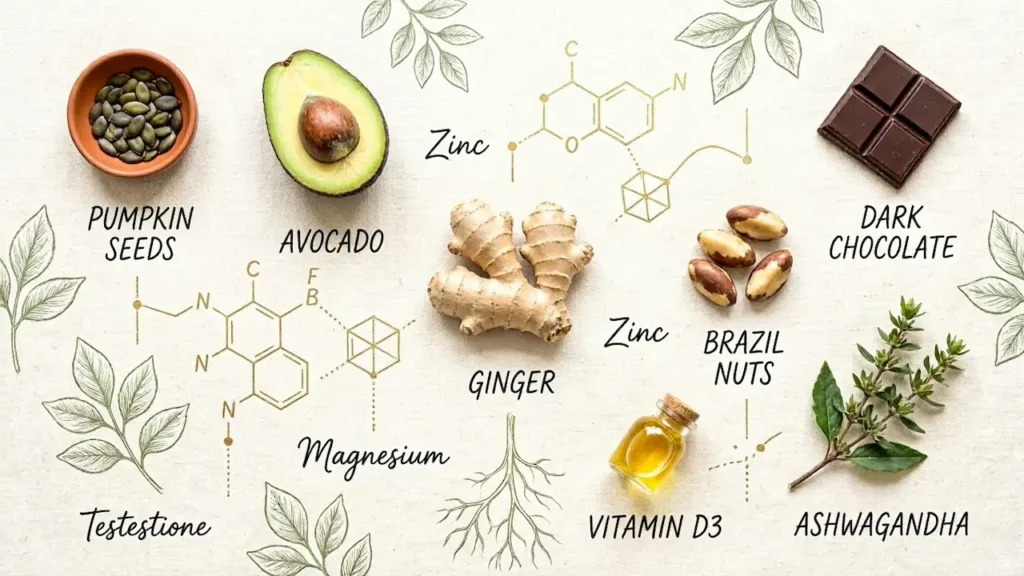
Ashwagandha (Withania somnifera). An adaptogenic herb with documented effects on cortisol reduction and testosterone support. A double-blind, placebo-controlled study found that ashwagandha supplementation significantly increased DHEA-S and testosterone levels in women over 8 weeks of use, alongside reductions in cortisol and improvements in sexual function and wellbeing. Typical dose: 300 to 600mg of root extract standardized to withanolides, taken at night.
When food and lifestyle changes are not sufficient on their own, targeted supplementation can meaningfully support testosterone for women at the cellular level.
Vitamin D3. Technically a hormone precursor rather than a vitamin, Vitamin D3 is required for the expression of genes involved in testosterone synthesis. Deficiency is extremely common (estimated at 40 to 60% of the population in northern latitudes and in women who spend limited time outdoors) and is independently associated with lower testosterone levels. Typical supplemental dose: 2000 to 5000 IU per day, always taken with K2 for proper calcium metabolism.
Zinc. If dietary zinc intake is insufficient (common in women who do not eat red meat or shellfish regularly), supplemental zinc at 15 to 30mg per day has been shown to support testosterone production. Higher doses (above 40mg per day) can interfere with copper absorption and should be avoided without medical supervision.
Magnesium. The National Institutes of Health documents the relationship between magnesium and testosterone production, noting that magnesium status is positively correlated with free testosterone levels. Supplemental magnesium glycinate or malate at 200 to 400mg per day before bed is well tolerated, supports sleep quality (compounding the hormonal benefit) and is one of the most broadly useful supplements for hormonally active women.
DHEA. DHEA is a direct precursor to testosterone and is available as an over-the-counter supplement in many countries. It should not be taken without hormonal testing, as excess DHEA can convert to estrogen as well as testosterone depending on individual enzyme activity. Under appropriate medical supervision, low-dose DHEA (5 to 25mg) is commonly used in post-menopausal women to support the adrenal contribution to testosterone production.
The Reddit Perspective: Real Women, Real Results
The hormone health subreddits (particularly r/PCOS, r/Menopause, r/HormoneHealth and r/femalehealthcare) contain thousands of threads on testosterone for women, and the anecdotal consensus that emerges from reading across them is remarkably consistent with the clinical evidence. The themes that appear most frequently in high-upvote threads include the following.
Sleep is non-negotiable. The single intervention most commonly credited with measurable improvements in energy, libido and body composition by women managing low testosterone is consistent, high-quality sleep. Reddit users repeatedly report that when sleep quality improves (either through lifestyle changes, magnesium supplementation or addressing sleep apnea), testosterone-related symptoms improve before any other intervention takes effect. This aligns with the clinical data showing that testosterone pulses occur primarily during deep sleep stages.
Endocrine disruptors are underrated as a cause. Women on these forums frequently cite the removal of plastics (particularly BPA-containing food containers and water bottles), synthetic fragrance (in personal care and cleaning products) and conventional non-stick cookware as contributing to hormonal improvements. Endocrine-disrupting chemicals mimic and block hormone receptors and are a legitimate but underaddressed contributor to hormonal imbalance. Switching to glass food storage, stainless steel water bottles and fragrance-free or naturally-scented products is a low-cost, low-effort change with plausible hormonal benefit.
Low-fat diets consistently worsen symptoms. Women who transition from low-fat dietary patterns to higher-fat, whole-food approaches (whether ketogenic, paleo or simply less processed) repeatedly report improvements in energy, mood and libido that they attribute to hormonal changes. This is consistent with the biochemical reality that fat is the raw material for steroid hormone synthesis.
Overtraining backfires. Women who describe themselves as exercising intensely 6 to 7 days per week with inadequate recovery frequently report testosterone-related symptoms despite being physically active. The hormonal response to exercise is U-shaped: moderate training increases testosterone, but chronic overtraining elevates cortisol, suppresses testosterone and creates the same hormonal picture as a sedentary lifestyle. Rest days are not optional for hormonal health.
FAQs About Testosterone for Women
Do women produce more testosterone on their period?
Testosterone for women does not peak during menstruation itself, but it does fluctuate meaningfully across the menstrual cycle.
Testosterone peaks during the follicular phase (days 1 to 14, counting from the first day of menstruation) and reaches its highest point around ovulation (approximately day 14 in a 28-day cycle). This is not coincidental: the testosterone peak around ovulation is associated with increased libido, improved mood, higher energy and better cognitive performance, all of which support the biological context of ovulation. After ovulation, in the luteal phase, testosterone declines alongside the rise in progesterone.
Women who track their cycle often notice this pattern: feeling more motivated, social and physically capable in the first half of the cycle, and more inward, tired and sensitive in the second half. Aligning high-intensity exercise and more demanding professional or social commitments with the follicular phase (when testosterone is naturally higher) is a practical application of this hormonal reality.
How to reduce testosterone in females?
Elevated testosterone in women is most commonly associated with polycystic ovary syndrome (PCOS), a condition characterized by insulin resistance, elevated androgens and disrupted ovulation. The most effective natural interventions for reducing excess testosterone in PCOS are directly tied to improving insulin sensitivity, because insulin stimulates the ovaries to produce excess androgens.
Dietary strategies that reduce insulin resistance include eliminating refined carbohydrates and sugars, eating adequate protein at each meal to stabilize blood sugar, prioritizing fiber-rich vegetables and legumes, and incorporating anti-inflammatory fats. Regular moderate exercise (particularly walking and resistance training) significantly improves insulin sensitivity and is consistently associated with reductions in free testosterone in women with PCOS.
Spearmint tea has also shown promise in small clinical trials for reducing free testosterone in women with PCOS, with two cups daily producing measurable reductions in androgen levels over 30 days.
High insulin has wide-ranging effects on hormonal balance beyond testosterone. For a deeper understanding of metabolic health, see the guide on What Does Mounjaro Do to Your Gut?
Related and Further Reading
- 21-Day Cleanse Program: Structured Hormonal Reset
- Cortisol Cocktail Recipe for Weight Loss
- Evening Satiety Protocol: Managing Nighttime Cravings
- Mounjaro Drink Hacks: Liquid Nutrition for Metabolic Health
- Cottage Cheese Banana Bread: High-Protein Hormone-Friendly Snack
- Roasted Potatoes with Leeks: Mineral-Rich Side Dish
- Gelatin vs Collagen for Weight Loss
- Natural Mounjaro Recipe
Testosterone for Women Hormone-Support Bowl

A nutrient-dense bowl specifically designed to provide the healthy fats, zinc, and magnesium required for natural testosterone synthesis in women.
- Prep Time: 10 minutes
- Cook Time: 6 minutes
- Total Time: 16 minutes
- Yield: 1 serving 1x
- Category: Functional Breakfast / Lunch
- Method: Stovetop
- Cuisine: Healthy
- Diet: Gluten Free
Ingredients
- 2 large pasture-raised eggs (boiled or poached)
- 1/2 large ripe avocado, sliced
- 1 cup sautéed kale or spinach
- 2 tbsp raw pumpkin seeds
- 1 tbsp extra virgin olive oil
- 1 tsp hemp seeds
- Optional: a side of roasted potatoes with leeks for complex carbs
- Pinch of sea salt
Instructions
- Lightly sauté the kale in a drop of olive oil until wilted but still vibrant green.
- Place the sautéed greens as the base of your bowl.
- Add the eggs on top of the greens.
- Arrange the sliced avocado next to the eggs.
- Sprinkle the raw pumpkin seeds and hemp seeds over the entire bowl.
- Drizzle with the remaining olive oil.
- Finish with a pinch of sea salt and serve immediately.
Notes
Designed as a hormone-support meal rich in healthy fats, zinc, and magnesium. Optional side: roasted potatoes with leeks for complex carbs. Keywords: Testosterone for Women, Hormone Balance Food.
Nutrition
- Serving Size: 1 serving
- Calories: 420
- Sugar: 2g
- Sodium: 220mg
- Fat: 32g
- Saturated Fat: 6g
- Unsaturated Fat: 24g
- Trans Fat: 0g
- Carbohydrates: 11g
- Fiber: 3g
- Protein: 18g
- Cholesterol: 370mg