
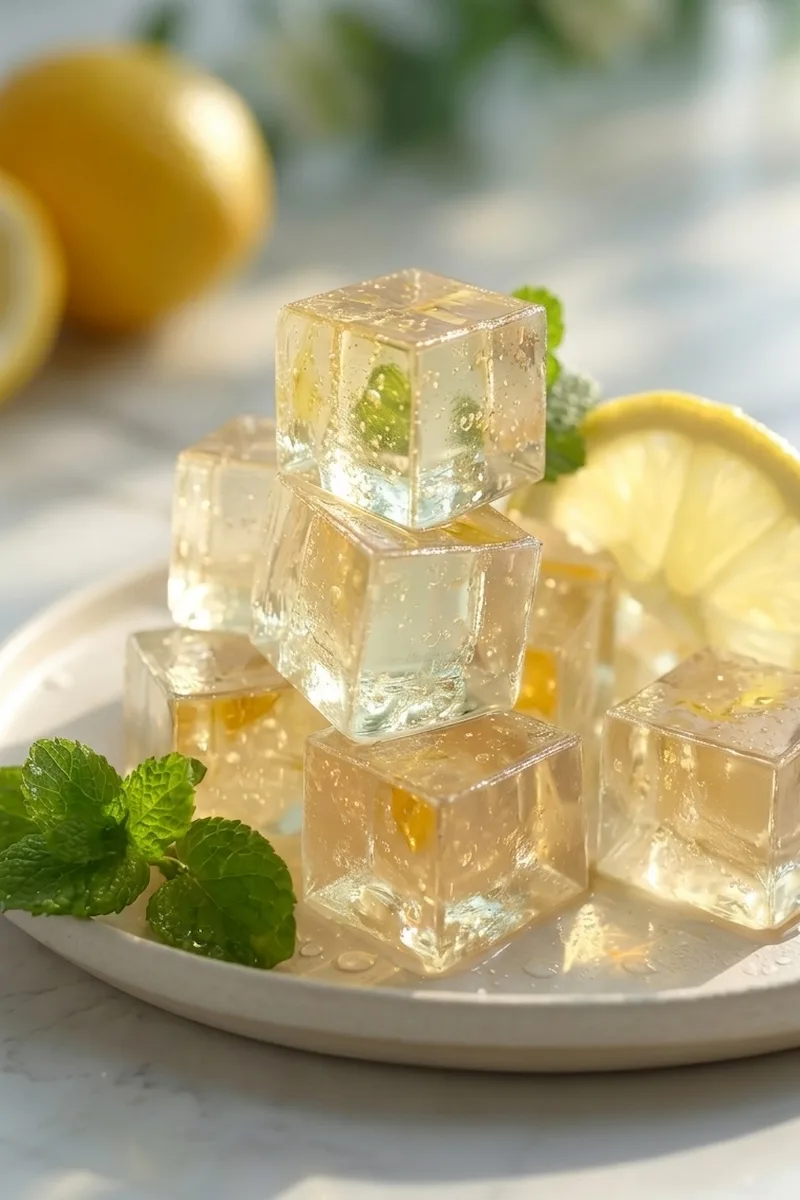
The ice gelatin trick for weight loss is a simple preparation method that turns unflavored gelatin into small, chewable cubes designed to reduce appetite before meals. It sounds almost too simple to work, and that is exactly why so many people overlook it in favor of more elaborate protocols. The mechanism is not complicated: high-protein, low-calorie food consumed before a meal reduces how much you eat at that meal. The cube format adds a physical and sensory dimension that the liquid version of the gelatin trick does not have.
This guide covers the complete 2026 protocol: what the ice gelatin trick actually is, why the cube format works differently from a gelatin drink, a full weekly batch recipe, the optimal timing strategy, and how to stack it with other morning and evening habits for best results.
Note: All internal links below connect to related guides on JoyfulBiteRecipes.com. All claims in this article are based on established nutritional science and are written conservatively where evidence is limited.
Table of Contents
Beyond the Viral Trend: What Is the Ice Gelatin Trick?
The ice gelatin trick is a functional food strategy that involves preparing unflavored gelatin as solid, chewable cubes and consuming them strategically before meals or during high-risk snacking windows. It is not a product, not a detox, and not a celebrity-backed supplement. It is a preparation method that takes advantage of three properties that gelatin has in solid form: physical volume, protein content, and the mechanical act of chewing.
The “ice” in the name refers to the fact that the cubes are kept refrigerated (and served cold, not frozen) and are meant to be treated like a functional pre-meal ritual rather than a dessert. The method has circulated through wellness communities in various forms, gaining renewed attention in 2025 and 2026 as interest in high-protein, low-calorie appetite management strategies has grown.
The Evolution of the Gelatin Protocol
Earlier iterations of the gelatin trick, including the various liquid-form versions discussed in our Dr. Jennifer Ashton Gelatin Trick Recipe and Dr. Gupta Gelatin Recipe guides, focused on drinking a warm or room-temperature gelatin solution before meals. The liquid format is effective and remains the easier entry point for most people.
The cube format addresses something the liquid version does not: the psychological and neurological satisfaction of eating something solid. For people who struggle with evening snacking in particular, the act of reaching for and chewing a cube of food is a more satisfying substitute for a snack than drinking a glass of liquid. This is not a trivial distinction. Habit replacement works better when the replacement is mechanically similar to the behavior it is replacing.
The Ray Peat gelatin tradition, covered in our Ray Peat Gelatin Metabolism Guide, focused on gelatin as a way to balance amino acid profiles rather than as a satiety tool. The 2026 cube protocol is a different application of the same base ingredient, optimized specifically for appetite management and routine consistency.
The Biology of Satiety: Why the Cube Format Works
Appetite management fails most often not because of a lack of discipline but because hunger hormones are working faster than rational food choices. Understanding why the cube format is effective means understanding the specific signals that tell the brain the stomach is satisfied.
Mechanical satiety and chewing. Research on food texture and satiety consistently shows that solid foods require more chewing effort and produce stronger satiety signals than liquids of equivalent caloric value. The act of chewing triggers cephalic phase responses, which are neurological signals that prepare the gut for digestion and begin releasing satiety hormones before food even reaches the stomach. Eating three to five gelatin cubes before a meal activates this process. The equivalent liquid volume does not.
Gastric volume and emptying rate. Solid gelatin cubes create a physical mass in the stomach. High-volume, low-calorie foods are one of the most consistently effective strategies in appetite management research: they occupy space and trigger stretch receptors in the stomach wall, which signal the brain that food has been consumed. A gelatin cube has almost no caloric content but behaves physically like a food in the stomach in a way that water or a thin liquid does not.
Glycine and appetite signaling. Gelatin is among the richest dietary sources of glycine, providing approximately 3 grams per tablespoon of dry powder. Glycine supports healthy glucose response and has been studied for its role in improving insulin sensitivity. Stable blood sugar between meals is one of the most reliable predictors of reduced between-meal hunger. A full discussion of glycine’s metabolic role is available in our cortisol cocktail recipe guide, which covers amino acid signaling in the context of stress-driven appetite.
Gelatin vs. Collagen: Why the Cube Only Works with Gelatin
This is one of the most common points of confusion in the gelatin protocol space, and it matters practically for this recipe. Collagen peptides and gelatin come from the same source material, but they behave completely differently in water.
Gelatin gels. Collagen peptides do not. When gelatin is dissolved in warm water and cooled, it forms a firm, solid structure because its protein chains are long enough to create a three-dimensional network. Hydrolyzed collagen peptides are short-chain proteins that dissolve in both hot and cold water without ever setting. You cannot make a gelatin cube with collagen powder. The entire physical mechanism of this protocol depends on the gelling property, which only gelatin has.
Gastric behavior. In the stomach, gelatin cubes re-form a viscous gel as they warm back to body temperature. This gel-like bolus slows gastric emptying, which extends the feeling of fullness and reduces the rate at which glucose enters the bloodstream from the following meal. Collagen peptides dissolve quickly and do not produce this effect.
Amino acid similarity. For nutritional purposes, both gelatin and collagen deliver glycine, proline, and hydroxyproline in comparable amounts. If your goal is amino acid supplementation rather than appetite management through physical volume, collagen peptides are more convenient. If your goal is the cube protocol described here, gelatin is the only option.
A detailed side-by-side breakdown of both forms is available in our gelatin vs. collagen for weight loss comparison.
The Official Ice Gelatin Trick Recipe (Weekly Cube Batch)
The most important practical decision in this protocol is to batch-prepare the cubes once per week. Making them fresh before each use adds friction to the habit and reduces compliance. Sunday batch prep produces 40 to 50 standard-sized cubes in under 10 minutes of active time, giving you a ready supply for the entire week.
Ingredients
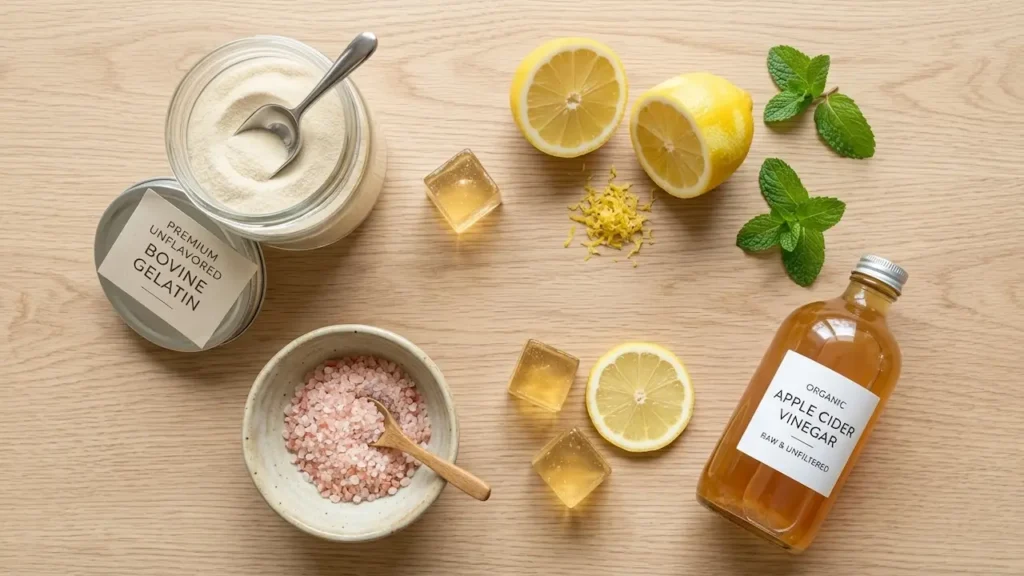
- 4 envelopes (approximately 4 tablespoons / 28 g) unflavored bovine gelatin, grass-fed where available
- 125 ml (1/2 cup) cold filtered water, for the bloom
- 375 ml (1.5 cups) hot filtered water, just below boiling
- Juice of 1 fresh lemon or 1 tablespoon raw apple cider vinegar
- Optional: 1 pinch of quality sea salt or Himalayan pink salt for trace minerals
- Optional: a few drops of liquid stevia if you prefer a lightly sweet cube
On gelatin quality: The difference between grass-fed bovine gelatin and commodity alternatives is primarily in heavy metal content and amino acid completeness, not in gelling strength. For a daily-use protocol, the upgrade to grass-fed is worthwhile. Standard unflavored gelatin from a reputable brand works perfectly for the gelling function if cost is a consideration.
Step-by-Step Preparation
- The cold bloom. Sprinkle all four envelopes of gelatin evenly over the 125 ml of cold water in a medium bowl or measuring jug. Do not stir. Let it sit undisturbed for exactly 5 minutes. This hydration step is the most critical in the whole recipe. Gelatin that has not been properly bloomed will produce a grainy, unpleasant texture that does not set cleanly. Five minutes is the minimum; up to 10 minutes is fine.
- The dissolve. Add the hot water (just below boiling, around 85 to 90 degrees Celsius) to the bloomed gelatin. Stir steadily for 2 to 3 minutes until the mixture is completely clear with no visible granules. If you see cloudiness or floating grains, the water was not hot enough. Do not use boiling water: temperatures above 95 degrees Celsius begin to weaken the protein structure and produce softer, less satisfying cubes.
- The flavoring. Add the lemon juice or apple cider vinegar and stir to combine. This addition serves two purposes: it improves the flavor significantly (plain gelatin water has an earthy, neutral taste that most people find unpleasant) and the acidity complements the digestive function of the cubes. Add sea salt and stevia if using, and stir once more.
- The pour. Pour the liquid into a silicone ice cube mold. Standard 1-inch cube molds work well; smaller gummy bear molds produce a fun, snack-like format that some people find easier to commit to as a daily habit. Tap the mold gently on the counter a few times to release any air bubbles.
- The set. Refrigerate for at least 4 hours. Overnight is better and produces firmer, more cleanly textured cubes. Do not put the mold in the freezer: frozen gelatin loses its unique soft-but-firm texture entirely and becomes an unpleasant icy mass when thawed.
- Storage. Once fully set, pop the cubes out into a sealed glass container and store in the refrigerator. They keep well for 5 to 7 days. Do not stack them without a sheet of parchment between layers if you are using a shallow container, as they can stick together at room temperature.
Nutrition per Serving (4 standard cubes)
- Calories: approximately 25 to 30 kcal
- Protein: approximately 6 g
- Carbohydrates: 0 g
- Fat: 0 g
- Glycine: approximately 1.5 to 2 g
- Glycemic load: 0
Ice Gelatin Trick Recipe
A simple high-protein, low-calorie gelatin cube recipe designed to support satiety and reduce appetite before meals.
- Prep Time: 10 minutes
- Cook Time: 0 minutes
- Total Time: 4 hours 10 minutes
- Yield: 40 cubes 1x
- Category: Snack
- Method: Refrigerated
- Cuisine: Healthy
Ingredients
- 4 envelopes unflavored gelatin (about 28g)
- 125 ml cold water
- 375 ml hot water (not boiling)
- Juice of 1 lemon or 1 tablespoon apple cider vinegar
- Pinch of sea salt (optional)
- Liquid stevia (optional)
Instructions
- Pour cold water into a bowl.
- Sprinkle gelatin evenly over the water.
- Let sit for 5 minutes to bloom.
- Add hot water and stir until fully dissolved.
- Add lemon juice, salt, and stevia if using.
- Mix well until combined.
- Pour into silicone molds.
- Refrigerate for at least 4 hours until set.
- Remove cubes and store in a container in the fridge.
- Consume 3–5 cubes before meals.
Notes
Do not use flavored gelatin. Do not freeze. Always consume it before meals for the best appetite control results.
Nutrition
- Serving Size: 4 cubes
- Calories: 30
- Sugar: 0g
- Sodium: 15mg
- Fat: 0g
- Saturated Fat: 0g
- Unsaturated Fat: 0g
- Trans Fat: 0g
- Carbohydrates: 0g
- Fiber: 0g
- Protein: 6g
- Cholesterol: 0mg
Strategic Timing: When to Use the Cube Method
Timing is what separates a gelatin cube used as a snack from a gelatin cube used as a satiety tool. The two uses involve the same food but produce meaningfully different outcomes.
Pre-meal anchor (20 minutes before lunch or dinner). Consuming 3 to 5 cubes 20 minutes before your largest meals gives the physical mass time to settle in the stomach and the glycine time to enter the bloodstream before your meal begins. This is the core use case and the one best supported by the logic of pre-meal satiety strategies. At under 30 calories per serving, the cubes add negligible caloric content to the meal while reducing the total calories consumed at it.
Evening appetite guard. The window between dinner and sleep is when most dietary lapses happen. Keeping a container of gelatin cubes in the refrigerator as a designated evening snack replacement gives you a physical, chewable option that satisfies the impulse to eat something without introducing meaningful calories or glucose. This is the most common use case reported by people who find the cube format easier to sustain than the liquid drink. It also integrates naturally with our Evening Satiety Protocol, which covers the full strategy for managing late-night appetite.
Between-meal hunger management. If you follow an intermittent fasting window or simply want to extend the gap between meals without hunger becoming unmanageable, 2 to 3 cubes during a hungry moment provide enough protein and physical volume to take the edge off without breaking a fasted metabolic state in any meaningful way. At essentially zero carbohydrates and negligible calories, they are one of the few genuinely fasting-compatible snack options.
Synergistic Stacking: Building the Ice Gelatin Trick Into Your Day
The ice gelatin trick produces the best results when it is embedded in a broader daily routine that addresses appetite, gut health, and blood sugar from multiple angles. The following is a practical example of how to integrate it, using protocols covered in detail elsewhere on this site.
- 07:00 – Morning gut primer: Aloe Vera Lemon Water. Taken on an empty stomach, this soothes the gut lining, supports early digestive enzyme activity, and sets a favorable blood sugar baseline for the morning.
- 12:20 – Pre-lunch: 3 to 5 ice gelatin cubes, 20 minutes before eating. This is the core satiety anchor for the midday meal.
- 15:00 – Afternoon option: If you follow a higher-protein approach, a small gelatin drink using the Dr. Jennifer Ashton protocol makes a practical mid-afternoon bridge if you tend to graze between lunch and dinner.
- 18:20 – Pre-dinner: 3 to 5 ice gelatin cubes, 20 minutes before eating.
- 20:00 to 22:00 – Evening guard: A small serving of gelatin cubes during the peak snacking window as a replacement for high-sugar, high-fat snacks.
You do not need to implement all of these steps to see results. Start with the pre-dinner cubes only, maintain that for two weeks, then add the pre-lunch cubes. Build the stack gradually rather than attempting everything at once.
5 Mistakes That Reduce Results with the Ice Gelatin Trick
- Using flavored gelatin. This is the most common mistake and the most consequential. Commercial flavored gelatin products contain significant amounts of sugar or artificial sweeteners. Sugar introduces a glucose spike that undermines the stable blood sugar benefit of the glycine. Artificial sweeteners may trigger cephalic phase insulin responses in some people. Use only unflavored gelatin with a single ingredient on the label.
- Skipping the cold bloom. Pouring hot water directly onto dry gelatin powder without a cold bloom first produces a gritty, poorly-set cube with an unpleasant texture. The bloom step is not optional. Five minutes of hydration in cold water changes the protein structure in a way that produces clean, smooth cubes.
- Using boiling water. Temperatures above 95 degrees Celsius begin to weaken the long protein chains responsible for gelatin’s gelling strength. The result is a softer cube that does not hold its shape well and has a less satisfying texture to eat. Use water that is hot but clearly not at a rolling boil: the small bubbles that form just before boiling begins are the right temperature.
- Freezing the cubes. Frozen gelatin thaws into a grainy, watery mass rather than the smooth, firm texture of properly refrigerated cubes. The freezer also disrupts the gel structure in a way that is irreversible. Always store in the refrigerator. If you are making a week’s batch on Sunday, they will last the full week in a sealed glass container in the fridge.
- Eating the cubes immediately after a meal. The satiety benefit is a pre-meal effect, not a post-meal one. Eating the cubes after you have already consumed a full meal provides no meaningful appetite benefit and is simply additional calories (modest as they are). Timing is the mechanism. Consume the cubes before the meal, not alongside or after it.
Frequently Asked Questions
Is the ice gelatin trick real?
Yes, in the sense that it is a real food-based satiety strategy with a plausible mechanism. It is not magic, and it is not supported by large clinical trials in its specific cube form. The underlying mechanisms, pre-meal high-protein food reducing appetite and calorie intake at the following meal, are well-documented in nutritional science. The cube format adds a behavioral dimension (chewing, physical volume) that the liquid version lacks. Whether it produces meaningful results for you depends on consistency and whether poor appetite management between meals is actually a driver of your excess calorie intake.
What is the 3-ingredient gelatin weight loss drink?
The most common version uses unflavored gelatin, water, and lemon juice (or apple cider vinegar). This is the same base as the cube protocol, prepared as a warm drink instead of a set cube. The drink format has a faster preparation time; the cube format has better behavioral compliance for people who want something to physically eat rather than drink. Both deliver the same protein and glycine content per serving.
Can I use Jell-O instead of unflavored gelatin?
No. Commercial Jell-O and similar flavored gelatin desserts contain sugar or artificial sweeteners as their primary added ingredients. A serving of sugar-sweetened Jell-O has roughly 70 to 80 calories and enough simple sugar to trigger an insulin response, which defeats the primary benefit of the protocol. Even sugar-free versions introduce artificial sweeteners whose effect on appetite signaling is debated. Use only plain, unflavored gelatin.
How many cubes should I eat before a meal?
Three to five standard 1-inch cubes is the recommended serving, providing approximately 6 grams of protein and roughly 25 to 30 calories. This is enough physical mass to begin activating satiety signaling without adding enough caloric content to meaningfully reduce your nutritional intake at the meal that follows. Start with three cubes if you are new to the protocol and assess how your appetite responds before increasing to five.
Does this work while intermittent fasting?
Gelatin cubes contain approximately 25 to 30 calories and 6 grams of protein per serving. Strictly speaking, any caloric intake breaks a fast. In practice, at zero carbohydrates and zero fat, gelatin cubes have negligible impact on insulin and will not disrupt fat-burning states in any meaningful way for most people. Many people who follow an intermittent fasting window use gelatin cubes in the final hour of their fasted state to manage hunger without feeling they have compromised their fast.
How long before I notice results?
Most people who use gelatin cubes consistently before their two main meals notice reduced portion sizes and reduced evening snacking urges within 7 to 10 days. Meaningful changes in scale weight, if that is the goal, require the same 4 to 6 week minimum that applies to any food-based habit. The cubes are a tool for creating a calorie deficit more comfortably, not a fat-burning ingredient. Results depend on whether reduced appetite actually translates to reduced calorie intake in the rest of your diet.
Final Thoughts on the Ice Gelatin Trick for Weight Loss
The ice gelatin trick earns its place among practical food-based weight management strategies not because of exotic chemistry but because it solves a specific, common problem: the gap between meals is where most dietary habits fall apart. Having a batch of cubes in the refrigerator, ready to eat in 30 seconds, closes that gap with something that costs almost nothing, takes minimal preparation, and has a clear and defensible mechanism.
The cube format specifically is worth choosing over the liquid version if you find yourself reaching for food rather than drinks when hunger strikes. The behavioral replacement is more complete, and the chewing mechanic adds a layer of physical satisfaction that a drink cannot match.
Make a batch this Sunday. Use it consistently for two weeks before forming an opinion. The people who dismiss it tend to have tried it once or twice; the people who find it genuinely useful have made it a refrigerator staple.
For a broader look at high-protein, low-calorie appetite management strategies that pair well with this protocol, our high-protein low-calorie snack guide and our fiber-maxxing for weight loss guide both cover complementary approaches that address appetite from a different angle.
More whole-food weight loss strategies at JoyfulBiteRecipes.com
For a quick overview you can save and revisit later, this Pinterest version of the ice gelatin trick breaks down the ingredients and final result visually.