
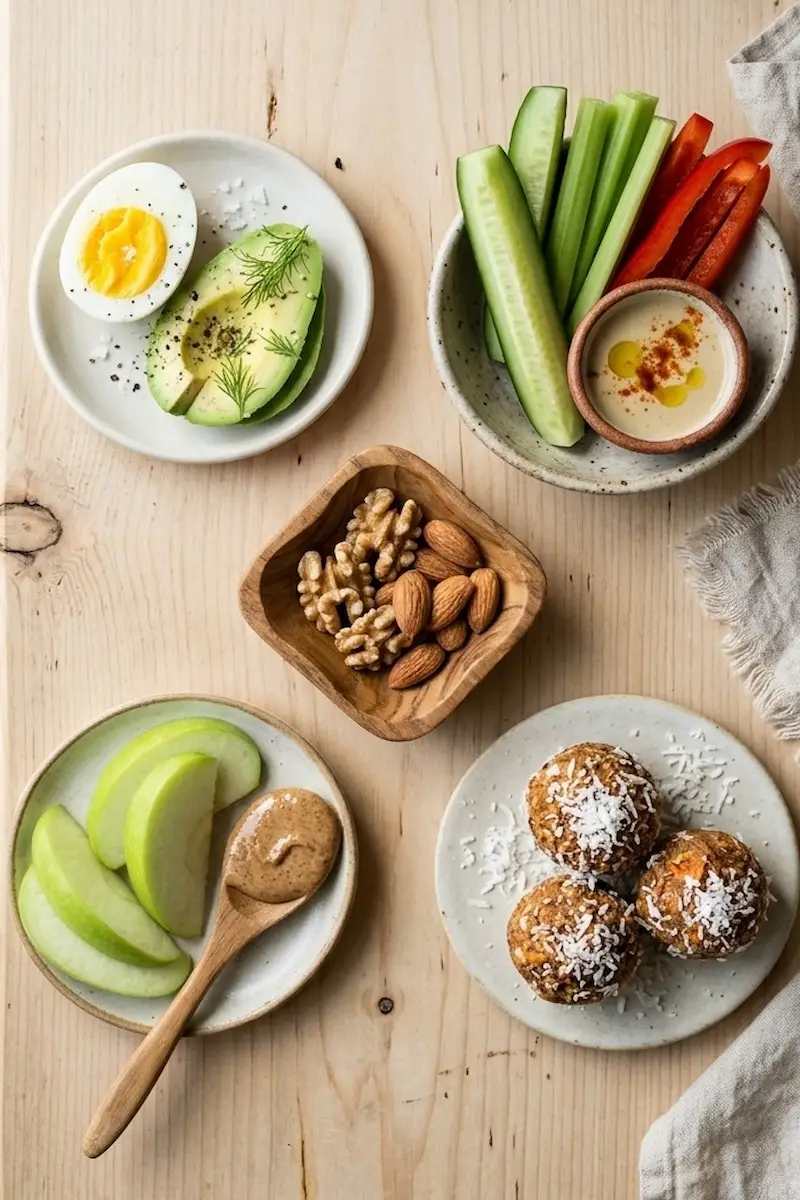
Mark Hyman Snack Ideas aren’t about convenience calories, they’re metabolic signals. Most people’s current snacks work against them: a granola bar between meals, a handful of pretzels at 3 p.m., a low-fat yogurt with 20 grams of sugar. Each triggers an insulin spike, a crash an hour later, and a hunger cycle that makes sustainable eating nearly impossible. Dr. Mark Hyman’s functional medicine approach to snacking solves this by treating food as information that stabilizes blood sugar, reduces inflammation, and sustains energy between meals.
Hyman’s framework, grounded in the Pegan diet he developed and outlined in his book of the same name, treats snacks not as calorie fillers but as metabolic signals. The right snack at the right time stabilizes blood sugar, reduces inflammation, and gives your body the raw materials it needs to sustain energy between meals. The wrong snack does the opposite, regardless of how healthy it looks on the label.
This guide covers the complete Pegan snack framework: the underlying philosophy, 15 specific snack ideas categorized by goal, four step-by-step recipes, a pantry stocking guide, situation-specific strategies, a 7-day challenge, and the most common mistakes that undermine even well-intentioned snack choices.
Quick Answer: Top 5 Mark Hyman Snack Ideas
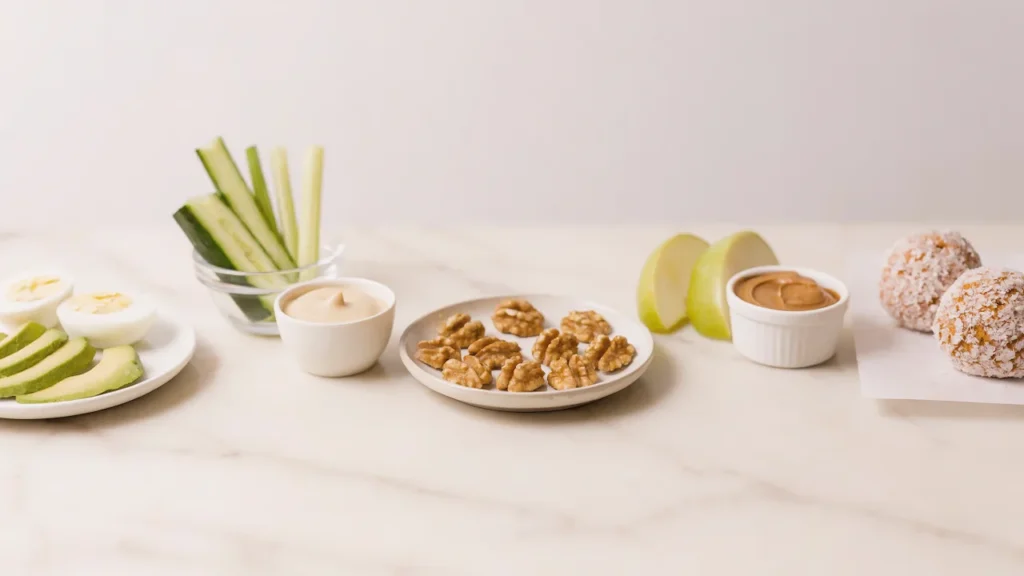
- Hard-boiled eggs + avocado
- Raw vegetables with hummus or tahini
- Small handful of walnuts or almonds
- Green apple slices + almond butter
- Homemade energy balls (nuts/seeds base)
📌 Save This Guide for Later!
Pin this Pegan snack protocol to your healthy eating board and have it handy for your next meal prep. Save on Pinterest →
Table of Contents
The Pegan Snack Framework: Why Most “Healthy” Snacks Sabotage Your Metabolism
The Blood Sugar Roller Coaster Problem
The core of Hyman’s snack philosophy is blood sugar stability. When you eat a snack that is high in refined carbohydrates or sugar, glucose enters the bloodstream quickly, insulin spikes to manage it, blood sugar crashes below baseline, and hunger returns stronger than before. This cycle is not a willpower problem; it is a biochemical one, and it repeats every time you choose a snack based on convenience rather than composition.
Hyman’s solution, described in his Blood Sugar Solution program, is to build every snack around a combination of protein, healthy fat, and low-glycemic fiber. This combination slows glucose absorption, prevents the insulin spike, and sustains energy for 2 to 3 hours. A hard-boiled egg with a few walnuts does this. A protein bar with 15 grams of sugar does not, regardless of the word “protein” on the label.
The comparison is practical: a standard granola bar might produce a blood sugar rise of 40 to 60 mg/dL above baseline, followed by a crash below starting point. A Pegan snack (nuts, vegetables with hummus, or a homemade energy ball) produces a rise of less than 20 mg/dL with no subsequent crash. That is the functional difference between a snack and a metabolic disruption.
Food as Information: The Functional Medicine Approach
One of the principles Hyman returns to consistently in his work is that food is not just fuel: it is information that your body uses to regulate gene expression, inflammation, hormone production, and cellular repair. This is not mystical; it is the science of nutrigenomics, the study of how dietary compounds influence gene activity.
What this means practically for snacking: every snack you eat sends a signal. Omega-3 fatty acids from walnuts send an anti-inflammatory signal. Polyphenols from berries activate cellular protective pathways. Refined sugar and industrial seed oils send pro-inflammatory signals that affect everything from gut permeability to cortisol production. Choosing snacks through this lens changes the criteria: the question becomes not just “how many calories?” but “what is this food telling my cells to do?”
If you are already using a morning habit to support metabolic health, our aloe vera lemon water guide covers a gut-supportive morning ritual that pairs well with a Pegan snack approach throughout the day.
The Pegan 70/30 Ratio Applied to Snacks
The Pegan diet, as Hyman describes it, is built on a roughly 70 to 80 percent plant-based foundation with 20 to 30 percent quality animal protein. Applied to snacks, this means the bulk of every snack should come from vegetables, nuts, seeds, or low-glycemic fruit, with a smaller protein anchor from eggs, a small amount of clean jerky, a spoonful of nut butter, or a dairy alternative.
The ratio is not meant to be calculated precisely at each snack. It is a mental model: lead with plants, anchor with protein and fat, treat carbohydrates as a minor supporting element rather than the base. A plate of raw vegetables with tahini is 80% plant, 20% protein-fat anchor. A handful of walnuts is almost entirely plant-fat. A hard-boiled egg with half an avocado is closer to 50/50 but still fits the spirit of the approach because both components are whole-food and nutrient-dense.
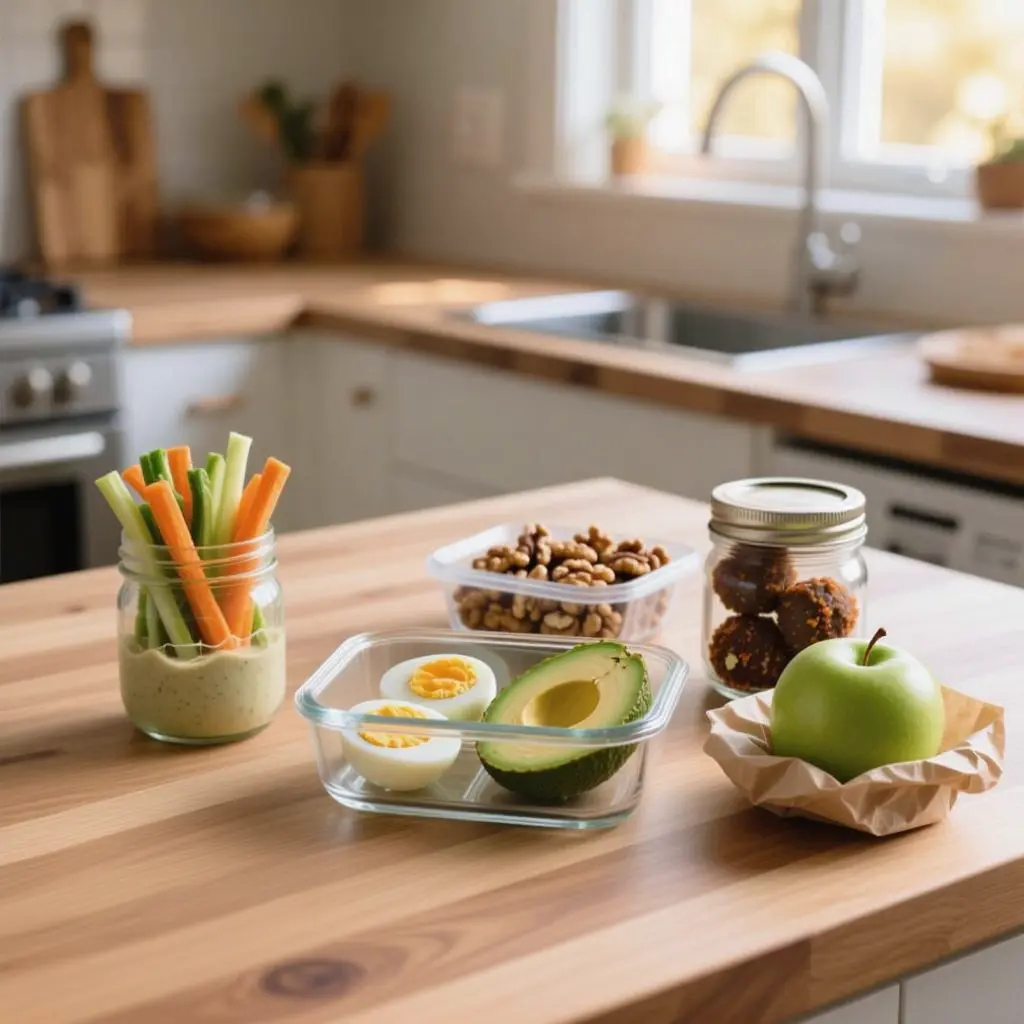
Mark Hyman’s Top 15 Snack Ideas (Categorized by Goal)
For Blood Sugar Stabilization
1. Hard-boiled eggs with avocado.
This is the most consistently recommended combination in Hyman’s snack philosophy. One large egg provides 6 grams of complete protein and a full amino acid profile. Half a medium avocado provides 10 grams of monounsaturated fat, 5 grams of fiber, and potassium. Together they produce near-zero glycemic impact and 2 to 3 hours of genuine satiety. Prep a dozen eggs on Sunday and they last the whole week.
2. Raw vegetables with tahini or hummus.
Hyman consistently cites this as his go-to quick snack. The vegetables provide non-starchy fiber; the tahini or hummus provides fat and plant protein. Use cucumber, celery, bell pepper strips, broccoli florets, or radishes. Avoid carrot sticks as the primary base if blood sugar is a concern, as they are higher glycemic than most raw vegetables. Hummus should ideally be homemade or from a brand with no added sugar or industrial oils.
3. Walnuts or almonds (a small handful).
Walnuts specifically are one of the most nutritionally dense snack choices in the Pegan framework. They are the richest nut source of plant-based omega-3 fatty acids (ALA), and they contain melatonin, which makes them particularly suitable as an evening snack for sleep support. One ounce (roughly 14 walnut halves) provides 4 grams of protein, 18 grams of fat primarily from polyunsaturated sources, and 2 grams of fiber. The key is portion control: a serving, not a bag.
4. Green apple slices with almond butter.
Green apples are lower in sugar and higher in fiber than red varieties, making them one of the few fruits Hyman uses regularly as a snack component. Paired with one to two tablespoons of natural almond butter (no added sugar), the fat and protein in the nut butter slow glucose absorption from the fruit significantly. This is Hyman’s model for how fruit can fit into a blood-sugar-conscious snack: never alone, always paired with fat or protein.
5. Cottage cheese bowl with pumpkin seeds.
Full-fat cottage cheese is one of the highest-protein, lowest-sugar dairy options available. It is rich in casein protein, which digests slowly and provides sustained amino acid release. Topped with two tablespoons of pumpkin seeds (a source of zinc, magnesium, and plant-based omega-3s), this combination provides approximately 18 to 20 grams of protein per serving with minimal glycemic impact. Choose organic, full-fat versions without added stabilizers.
For Energy and Performance
6. Carrot cake energy balls.
Energy balls are Hyman’s most practical high-prep snack: made once per week, they are portable, pre-portioned, and contain no processed ingredients. The carrot cake version uses dates, oats (in moderation), walnuts, shredded carrot, cinnamon, and coconut. Full recipe in the next section.
7. Strawberry coconut cookie dough bites.
Almond flour base, freeze-dried strawberry, shredded coconut, a small amount of coconut oil and vanilla extract. These store well in the freezer and provide a satisfying sweet-fat combination without any refined sugar or flour. Full recipe below.
8. Homemade double chocolate protein bars.
Hyman’s position on commercial protein bars is consistent: most are sophisticated candy bars with a protein label. His approach is to make bars at home using a base of almond butter, collagen peptides, cacao powder, and a small amount of honey or maple syrup as the only sweetener. These provide real protein from whole food sources without the emulsifiers, artificial sweeteners, and seed oils found in most packaged bars.
9. Grass-fed beef jerky.
For travel and situations where refrigeration is unavailable, jerky is one of the few genuinely portable, high-protein Pegan-compatible options. The critical requirement is zero added sugar and a short ingredient list: beef, salt, pepper, spices only. Most commercial jerky contains sugar as the third or fourth ingredient. Source from a reputable brand or make your own if you have a dehydrator.
For Evening and Sleep Support
10. Tart cherry and gelatin protocol.
Tart cherries are one of the few whole foods with a meaningful natural melatonin content. Combined with unflavored gelatin (rich in glycine, which supports sleep architecture and gentle overnight blood sugar stability), this combination functions as a practical pre-bed snack that addresses both evening hunger and sleep quality. Prepare as a light jelly or a warm drink. Our full gelatin protocol, including the reasoning behind glycine and sleep, is detailed in the Dr. Jennifer Ashton Gelatin Trick Recipe.
11. Coconut butter spoonful.
One tablespoon of raw coconut butter (not coconut oil: coconut butter contains the full flesh including fiber) provides approximately 100 calories, 3 grams of fiber, and medium-chain triglycerides that are metabolized differently from long-chain fats. MCTs are converted to ketones relatively quickly and provide a clean, stable energy source. This is particularly useful as an evening snack for people who train in the morning and want to support overnight recovery without a significant glucose load.
12. Roasted peppers with baba ghanoush.
Roasted red peppers are low-glycemic, high in vitamin C and polyphenols. Baba ghanoush (roasted eggplant with tahini and lemon) provides fat, plant protein, and prebiotic fiber from the eggplant. This is Hyman’s model for a satisfying savory evening snack that involves real food preparation rather than a packaged product.
For Gut Health and Detox Support
13. Fermented vegetables with olive oil.
Sauerkraut, kimchi, or other lacto-fermented vegetables deliver live cultures that support gut microbiome diversity. Drizzled with a small amount of extra virgin olive oil (a source of oleocanthal, an anti-inflammatory polyphenol), this is one of the most gut-supportive snack options in the Pegan framework. Use small portions (2 to 3 tablespoons) as a condiment-style snack rather than a large serving.
14. Canned wild sardines.
Sardines are among the most nutritionally complete whole foods available. They are exceptionally high in omega-3 fatty acids (approximately 2 grams per can), vitamin D, vitamin B12, calcium (from the bones), and selenium. Because of their position low in the food chain, they have minimal mercury accumulation. Hyman has cited sardines repeatedly as one of his personal staple foods. Wild-caught, packed in olive oil or water, with no added salt or sauces.
15. Purple sweet potato bites.
Purple sweet potatoes are meaningfully different from standard orange sweet potatoes in their anthocyanin content, the same class of polyphenols found in blueberries that support cognitive function and reduce oxidative stress. Roasted in small cubes with olive oil and sea salt, they are a warm, filling snack that provides prebiotic fiber for the gut microbiome. Their glycemic impact is moderated by their fiber content; pair with a small amount of nut butter or a spoonful of tahini if blood sugar stability is a primary concern.
Glycemic impact comparison: Pegan snacks vs. common alternatives
| Snack | Estimated Glycemic Response |
| Hard-boiled egg + avocado | Negligible |
| Walnuts (1 oz) | Negligible |
| Raw vegetables + hummus | Very low |
| Green apple + almond butter | Low (fiber/fat buffered) |
| Homemade energy balls | Low to moderate |
| Commercial granola bar | High |
| Low-fat yogurt with fruit | High (hidden sugar) |
| Rice cakes | High (rapidly digested starch) |
| Flavored protein bar | Moderate to high |
The Science Behind Hyman’s Snack Philosophy
Insulin Management Through Strategic Snacking
The timing and composition of snacks affects insulin sensitivity over time, not just acutely. Research consistently shows that high-protein, high-fat meals and snacks produce significantly lower insulin responses than isocaloric high-carbohydrate options. This matters beyond the immediate blood sugar effect: chronically elevated insulin is associated with increased fat storage, reduced fat oxidation, and over time, impaired insulin receptor sensitivity.
Hyman’s recommendation to snack 2 to 3 hours after lunch rather than immediately before the next meal is based on giving the previous meal’s insulin response time to fully resolve before introducing more food. This gap allows blood sugar to return to baseline and prevents the compounding insulin burden of eating before the previous digestion cycle is complete.
A review published in the American Journal of Clinical Nutrition found that protein-fat combinations produced significantly lower postprandial insulin responses than carbohydrate-matched meals. The full study and related research are available through the NIH PubMed database for readers who want to explore the primary literature.
Anti-Inflammatory Snack Compounds
Three categories of compounds in Pegan snacks have the strongest evidence base for reducing systemic inflammation:
Polyphenols from berries and colorful vegetables. Polyphenols activate Nrf2 pathways, which upregulate the body’s own antioxidant and anti-inflammatory enzyme systems. Blueberries, strawberries, tart cherries, purple sweet potatoes, and red bell peppers are among the richest dietary sources. The effect is dose-dependent and cumulative: consistent daily intake matters more than occasional large servings.
Omega-3 fatty acids from nuts and seeds. EPA and DHA from marine sources (sardines), and ALA from walnuts and flaxseed, downregulate inflammatory cytokine production. The western diet is characterized by a dramatically skewed omega-6 to omega-3 ratio (often 15:1 to 20:1 where the target is closer to 4:1). Consistently choosing walnuts, sardines, and pumpkin seeds over processed snacks shifts this ratio in a meaningful direction over time.
Fermentable fiber and gut microbiome health. Prebiotic fiber from vegetables, legumes (in moderation under the Pegan framework), and seeds feeds the gut microbiome. A diverse, well-fed microbiome produces short-chain fatty acids (butyrate, propionate, acetate) that directly reduce gut inflammation and support the integrity of the intestinal lining. This connection between snack fiber content and systemic inflammation operates through the gut-brain and gut-immune axes. Our fiber-maxxing guide covers this mechanism in detail.
The Detox Connection
Hyman’s approach to detox is grounded in supporting the liver’s natural Phase I and Phase II detoxification pathways rather than commercial cleanses. Phase I involves cytochrome P450 enzymes that oxidize toxins; Phase II conjugates those metabolites for excretion. Both phases require specific micronutrients.
Snack choices directly support or undermine this process. Cruciferous vegetables (broccoli, cauliflower, Brussels sprouts) contain glucosinolates that upregulate Phase II enzymes. Turmeric (easily added to hummus or energy balls) contains curcumin, which supports both phases. Fermented vegetables support the gut microbiome that processes a second wave of detoxification through the intestinal tract. Processed snacks containing industrial seed oils, artificial preservatives, and synthetic additives add to the liver’s detox burden rather than supporting it.
Mark Hyman Snack Recipes: Step-by-Step
The following recipes are inspired by functional medicine principles and the Pegan diet framework. They are designed for batch preparation, use no refined ingredients, and can be made in under 30 minutes of active time.
PrintCarrot Cake Energy Balls
A wholesome no-bake snack made with oats, dates, walnuts, carrot, almond butter, coconut, and warm carrot cake spices.
- Prep Time: 15 minutes
- Cook Time: 0 minutes
- Total Time: 45 minutes
- Yield: 16 balls 1x
- Category: Snack
- Method: No-Bake
- Cuisine: Healthy
Ingredients
- 200 g rolled oats
- 80 g Medjool dates, pitted
- 60 g raw walnuts
- 1 medium carrot, finely grated
- 60 g almond butter
- 2 tablespoons raw honey or maple syrup
- 1 teaspoon ground cinnamon
- 1/2 teaspoon ground ginger
- 1/4 teaspoon ground nutmeg
- 40 g unsweetened shredded coconut
- Pinch of sea salt
Instructions
- Add dates and walnuts to a food processor and pulse until finely chopped.
- Add oats, cinnamon, ginger, nutmeg, and sea salt.
- Pulse briefly to combine.
- Add almond butter, honey, grated carrot, and half the shredded coconut.
- Pulse until the mixture forms a dough.
- Refrigerate for 15 minutes.
- Roll into small balls.
- Roll each ball in remaining shredded coconut.
- Refrigerate for at least 30 minutes before serving.
Notes
Store in a sealed container in the refrigerator for up to 7 days or freeze for up to 3 months.
Nutrition
- Serving Size: 1 ball
- Calories: 115
- Sugar: 6g
- Sodium: 25mg
- Fat: 7g
- Saturated Fat: 2g
- Unsaturated Fat: 5g
- Trans Fat: 0g
- Carbohydrates: 10g
- Fiber: 2g
- Protein: 4g
- Cholesterol: 0mg
Good Morning Citrus Truffles
Bright, protein-rich citrus truffles made with cashew butter, orange zest, protein powder, coconut, and vanilla.
- Prep Time: 20 minutes
- Cook Time: 0 minutes
- Total Time: 1 hour 20 minutes
- Yield: 14 truffles 1x
- Category: Snack
- Method: No-Bake
- Cuisine: Healthy
Ingredients
- 120 g raw cashew butter
- 30 g vanilla protein powder
- Zest of 1 large orange
- 1 tablespoon fresh orange juice
- 1 tablespoon coconut oil, melted
- 1 teaspoon pure vanilla extract
- 1 tablespoon raw honey
- Pinch of sea salt
- 30 g unsweetened shredded coconut
Instructions
- Combine cashew butter, protein powder, orange zest, orange juice, coconut oil, vanilla, honey, and sea salt in a bowl.
- Mix until a smooth dough forms.
- Refrigerate for 20 minutes if too soft to roll.
- Roll into small truffles.
- Coat each truffle in shredded coconut.
- Place on a parchment-lined plate.
- Refrigerate for at least 1 hour before serving.
Notes
These store well in the freezer for up to 2 months and work beautifully as a mid-morning snack.
Nutrition
- Serving Size: 1 truffle
- Calories: 95
- Sugar: 3g
- Sodium: 20mg
- Fat: 7g
- Saturated Fat: 2g
- Unsaturated Fat: 5g
- Trans Fat: 0g
- Carbohydrates: 6g
- Fiber: 1g
- Protein: 4g
- Cholesterol: 0mg
Strawberry Coconut Cookie Dough Bites
No-bake cookie dough bites made with almond flour, coconut, flaxseed, freeze-dried strawberries, and vanilla.
- Prep Time: 15 minutes
- Cook Time: 0 minutes
- Total Time: 35 minutes
- Yield: 18 bites 1x
- Category: Snack
- Method: No-Bake
- Cuisine: Healthy
- Diet: Gluten Free
Ingredients
- 150 g almond flour
- 30 g flaxseed meal
- 60 g coconut oil, melted
- 2 tablespoons raw honey or maple syrup
- 1 teaspoon pure vanilla extract
- Pinch of sea salt
- 40 g freeze-dried strawberries, crushed
- 30 g unsweetened shredded coconut
Instructions
- Combine almond flour, flaxseed meal, sea salt, and shredded coconut in a bowl.
- Stir until evenly mixed.
- Add melted coconut oil, honey, and vanilla extract.
- Mix until a soft dough forms.
- Fold in crushed freeze-dried strawberries.
- Roll into small bites.
- Place on a parchment-lined tray.
- Freeze for 20 minutes to firm up.
- Store chilled and serve cold.
Notes
Best eaten cold. Store in the refrigerator for up to 5 days or freezer for up to 2 months.
Nutrition
- Serving Size: 1 bite
- Calories: 90
- Sugar: 3g
- Sodium: 15mg
- Fat: 7g
- Saturated Fat: 3g
- Unsaturated Fat: 4g
- Trans Fat: 0g
- Carbohydrates: 5g
- Fiber: 2g
- Protein: 3g
- Cholesterol: 0mg
Herb and Veggie Muffins
Savory herb and veggie muffins made with eggs, almond flour, zucchini, carrot, herbs, and optional feta for a protein-rich snack.
- Prep Time: 20 minutes
- Cook Time: 22 minutes
- Total Time: 42 minutes
- Yield: 12 muffins 1x
- Category: Snack
- Method: Baked
- Cuisine: Healthy
- Diet: Gluten Free
Ingredients
- 6 large eggs
- 120 g almond flour
- 1 medium zucchini, grated and squeezed dry
- 1 medium carrot, grated
- 80 g red onion, finely diced
- 60 g feta cheese, crumbled (optional)
- 2 tablespoons extra virgin olive oil
- 2 tablespoons fresh parsley, chopped
- 1 teaspoon dried oregano
- 1/2 teaspoon garlic powder
- 1/2 teaspoon sea salt
- 1/4 teaspoon black pepper
- 1/2 teaspoon baking powder
Instructions
- Preheat oven to 180°C (350°F).
- Line or grease a 12-cup muffin tin.
- Whisk eggs with olive oil in a large bowl.
- Add almond flour and baking powder.
- Stir to form a batter.
- Fold in zucchini, carrot, onion, parsley, oregano, garlic powder, salt, and pepper.
- Add feta if using.
- Divide mixture evenly among muffin cups.
- Bake for 20–22 minutes.
- Cool completely before storing.
Notes
Squeeze excess water from zucchini to prevent soggy muffins. Refrigerate up to 5 days or freeze individually for up to 2 months.
Nutrition
- Serving Size: 1 muffin
- Calories: 130
- Sugar: 2g
- Sodium: 180mg
- Fat: 9g
- Saturated Fat: 2g
- Unsaturated Fat: 7g
- Trans Fat: 0g
- Carbohydrates: 5g
- Fiber: 2g
- Protein: 7g
- Cholesterol: 95mg
The Pegan Snack Pantry: What to Always Have Stocked
A well-stocked pantry removes the friction that causes most people to default to packaged snacks. The following is a practical, non-exhaustive stocking list based on the Pegan snack framework.
Proteins
- Pasture-raised eggs (refrigerator staple; hard-boil a dozen on Sunday)
- Grass-fed beef jerky, no added sugar (travel and desk use)
- Wild-caught canned sardines or mackerel in olive oil or water
- Full-fat cottage cheese or plain whole-milk Greek yogurt
- Collagen peptides (for adding to smoothies or as a base for homemade bars)
Healthy Fats
- Extra virgin olive oil (for roasting vegetables, drizzling over fermented foods)
- Coconut butter (distinct from coconut oil: contains full coconut flesh and fiber)
- Raw almond butter, tahini, or cashew butter (no added sugar or oil)
- Raw nuts: almonds, walnuts, macadamia, Brazil nuts
- Seeds: pumpkin seeds, chia, flaxseed, hemp hearts
Low-Glycemic Carbohydrates
- Frozen berries (blueberries, strawberries, tart cherries): as convenient as fresh
- Pre-cut raw vegetables: cucumber, celery, bell peppers, broccoli, radishes
- Green apples
- Purple sweet potatoes or standard sweet potatoes
- Rolled oats (for energy balls; not instant)
Flavor Builders
- Hummus (ideally homemade or a clean-ingredient commercial version)
- Tahini (sesame seed paste; versatile and nutritionally dense)
- Lacto-fermented vegetables: sauerkraut, kimchi, or mixed vegetable pickles
- Baba ghanoush (roasted eggplant dip)
- Spices: cinnamon, turmeric, ginger, cumin, smoked paprika
- Fresh herbs: parsley, cilantro, basil (used generously in savory snacks)
Situation-Specific Snack Strategies
Office and Desk Snacks
The office environment has two specific constraints: no refrigeration access for most people, and social consideration around noise. Non-perishable options that work well at a desk: walnuts or almonds in a pre-portioned container, grass-fed jerky, a green apple, homemade energy balls in an insulated container (they last several hours at room temperature). For people with refrigerator access: hard-boiled eggs, cut vegetables in a sealed container, cottage cheese.
The most important office snack habit is pre-portioning. Bringing a full bag of nuts to a desk leads to mindless eating. A small container with a pre-measured serving eliminates this entirely.
Post-Workout Recovery
Post-workout nutrition timing matters most in the 30 to 60 minute window after training. Hyman’s approach prioritizes protein for muscle repair and a small amount of complex carbohydrate to replenish glycogen, without a large glucose spike. Practical options: a hard-boiled egg and a small portion of sweet potato, a smoothie with collagen peptides and frozen berries, or cottage cheese with pumpkin seeds. The herbal muffin recipe in this article works well as a post-workout option for people who prefer solid food after training.
Travel and On-the-Go
Hyman has noted in interviews that he travels with his own snacks rather than relying on airport or hotel food options. Practical travel snack kit: grass-fed jerky, individual packets of nut butter, a small bag of mixed nuts, a green apple (most airlines and land border crossings allow whole fresh fruit), and individual sachets of collagen peptides that dissolve in any liquid. Energy balls in an insulated container are travel-friendly for up to 12 hours without refrigeration.
Snacks for Kids and Families
The energy balls and cookie dough bites in this article are consistently the most family-friendly options in the Pegan snack framework. They look and taste like treats, contain no refined sugar or flour, and are easy to involve children in making. Other family-compatible options: vegetable sticks with hummus (most children accept this with enough variety in the vegetables), apple slices with almond butter, and hard-boiled eggs with a small amount of sea salt.
Common Mistakes People Make with “Healthy” Snacks
The Hidden Sugar Trap
The most consistent source of confusion in healthy snacking is labels. “No added sugar” means something different from “no sugar.” “Natural flavors” is not a clean-ingredient claim. “Made with whole grains” says nothing about glycemic impact. The ingredients to watch for: any form of sugar in the first five ingredients (including brown rice syrup, agave, coconut sugar, and fruit juice concentrate), industrial seed oils (sunflower, canola, soybean, corn oil), and maltodextrin, which has a higher glycemic index than table sugar.
Hyman’s rule of thumb: if you can’t make it in your kitchen with ingredients you could buy separately at a grocery store, look at the label very carefully before purchasing.
Timing Errors
Snacking too close to a meal (within 90 minutes) prevents the previous meal’s digestive and hormonal cycle from completing, compounds the insulin burden, and often leads to overeating at the meal that follows. Snacking immediately before bed raises blood glucose at a time when insulin sensitivity is naturally lower and the body is moving toward fat-oxidizing overnight metabolism. The two ideal windows are mid-morning (if needed, 2 to 3 hours after breakfast) and mid-afternoon (2 to 3 hours after lunch). Evening snacks should end at least 2 hours before sleep.
Portion Distortion
Nuts are one of the most nutrient-dense snack options in the Pegan framework, and one of the easiest to over-consume. One serving of almonds is 23 almonds (approximately 28 g, 160 calories). Most people, eating from a bag or a shared bowl, consume 2 to 3 times this amount without noticing. The solution is physical pre-portioning: put the serving in a small container or a handful and put the rest away before starting to eat. The same principle applies to nut butter: measure one to two tablespoons rather than eating directly from the jar.
The “Diet” Snack Illusion
Fat-free and low-fat snacks typically replace the fat with sugar, modified starch, or artificial thickeners to maintain palatability. The result is a snack with a higher glycemic impact and less satiety than the full-fat original. Hyman’s position on this is direct: fat from whole food sources (avocado, nuts, eggs, olive oil) is not a weight loss enemy. It is a macronutrient that drives satiety, slows glucose absorption, and supports hormone production. The foods to avoid are those with added sugar and industrial seed oils, not those with naturally occurring fat.
The 10-Day Detox: Snack Protocol
Hyman’s 10-Day Detox program, outlined in his book of the same name, involves a temporary elimination of all grains, dairy, legumes, alcohol, caffeine, and refined foods to reduce systemic inflammation and reset metabolic baseline. Snacking during the detox phase follows a simplified set of guidelines.
What Is Allowed During the Detox
- Raw or roasted nuts and seeds (no oils or coatings)
- Raw vegetables only, no starchy options during the strict phase
- Limited fresh fruit: small portions of berries only
- Avocado (whole or halved)
- Hard-boiled pasture-raised eggs
- No packaged snacks of any kind, including “clean” versions
Sample Detox Snack Day
Morning: A small handful of raw almonds (approximately 15 to 20) with a few slices of cucumber.
Afternoon: A combination plate of raw broccoli florets, celery, radishes, and cucumber with 2 tablespoons of tahini.
Evening: Tart cherry gelatin cubes (see the ice gelatin trick recipe) made with unflavored gelatin and a small amount of tart cherry juice. This provides glycine for sleep support and melatonin precursors from the cherries.
Post-Detox Transition
After 10 days, the reintroduction of foods happens gradually, one category at a time, with attention to how each reintroduced food affects energy, digestion, and mood. Snacks can expand back to include the full range of Pegan-compatible options: legumes (hummus, lentils) are typically reintroduced first, followed by whole grains in small amounts (rolled oats in energy balls), and finally limited dairy if tolerated.
The post-detox period is also when a broader morning routine tends to have the most impact. Pairing Pegan snack habits with the oat-based satiety strategies covered in our oat trick for weight loss guide gives you a complete morning-to-evening blood sugar management system.
Meal Prep Sunday: Batch-Making Hyman-Style Snacks
Consistent snacking on whole, unprocessed foods requires preparation. Without it, the default is always a packaged option. A 90-minute Sunday prep session is enough to cover every snack need for the full week.
The 90-Minute Prep System
First 15 minutes: eggs and vegetables.
Hard-boil a dozen eggs (simmer for 10 minutes, ice bath immediately after). While the eggs are cooking, wash and cut a week’s supply of raw vegetables: cucumber spears, celery sticks, broccoli florets, bell pepper strips, radishes. Store in sealed glass containers in the refrigerator.
Next 30 minutes: one batch of energy balls and one batch of cookie dough bites.
These can be made simultaneously using the recipes above. While one mixture chills, prepare the other. Both store for 7 days in the refrigerator or 3 months in the freezer.
Next 25 minutes: herb muffins (if making this week).
These require the most hands-on time but are the most versatile: they work as snacks, breakfast, or a light lunch addition. Make a double batch and freeze half.
Final 20 minutes: portion and organize.
Divide nuts into individual serving containers (28 g each). Label and date everything in the refrigerator. Set up a visible snack station with room-temperature items (nuts, jerky, green apples) so the healthy option is always the most visible and accessible one.
Weekly Snack Calendar Template
| Day | Planned Snacks |
| Monday | Mid-morning: walnuts. Afternoon: veggie plate + hummus. |
| Tuesday | Mid-morning: energy ball x2. Afternoon: hard-boiled egg + avocado. |
| Wednesday | Mid-morning: green apple + almond butter. Afternoon: cottage cheese + pumpkin seeds. |
| Thursday | Mid-morning: citrus truffle x2. Afternoon: veggie plate + tahini. |
| Friday | Mid-morning: jerky + apple. Afternoon: herb muffin. |
| Saturday | Mid-morning: walnuts + berries. Afternoon: sardines with crackers or raw veg. |
| Sunday | Meal prep day. Light snacking: eggs + raw vegetables as needed during prep. |
Frequently Asked Questions About Mark Hyman Snack Ideas
What are the 10 healthiest snacks?
Based on Dr. Mark Hyman’s Pegan framework, the 10 healthiest snacks prioritize whole foods that combine protein, healthy fats, and low-glycemic fiber. Top choices include hard-boiled eggs with avocado, raw vegetables with tahini, walnuts, green apple with almond butter, cottage cheese with pumpkin seeds, homemade energy balls, wild sardines, fermented vegetables with olive oil, grass-fed jerky, and purple sweet potato bites. Each stabilizes blood sugar and reduces inflammation without processed ingredients.
What does Mark Hyman say to eat for breakfast?
Dr. Hyman recommends breakfasts built on protein, healthy fat, and low-glycemic fiber to stabilize blood sugar from the start of the day. Typical options include vegetable-packed omelets with avocado, protein smoothies with collagen and berries, savory bowls with leftovers and eggs, or herb veggie muffins for grab-and-go mornings. He avoids sugary cereals, pastries, or fruit-only meals that trigger mid-morning crashes. The key principle: breakfast should prevent cravings, not create them.
What foods are in Dr. Hyman’s 10 day detox?
Dr. Hyman’s 10-Day Detox eliminates grains, dairy, legumes, alcohol, caffeine, added sugars, and processed foods to reduce inflammation and reset metabolism. Allowed foods include pasture-raised eggs, wild-caught fish, grass-fed meats, unlimited non-starchy vegetables, limited berries, avocado, olive oil, coconut oil, raw nuts, seeds, and herbs/spices. Snacks focus on simple combinations like almonds with cucumber or tahini with raw vegetables. After 10 days, foods are reintroduced gradually while monitoring individual responses.
What are 7 healthy snacks for adults?
Seven Pegan-approved snacks for adults include hard-boiled eggs with avocado for sustained satiety, raw vegetables with tahini for fiber and plant protein, walnuts for omega-3s and melatonin support, green apple with almond butter for balanced fruit satisfaction, cottage cheese with pumpkin seeds for high protein and minerals, homemade carrot cake energy balls for portable sweetness, and wild sardines for nutrient density. These options prioritize blood sugar stability, metabolic health, and adult-specific nutritional needs like muscle preservation and hormone support.
Expert Perspectives: How Hyman’s Approach Compares
The Evidence Base for Functional Medicine Snacking
The core tenets of Hyman’s snack philosophy align well with the established nutritional science on blood sugar regulation and satiety. The evidence that protein-fat meals produce lower postprandial insulin responses than carbohydrate-matched meals is robust and replicated across multiple study designs. The research on dietary polyphenols and inflammation reduction is strong in observational studies, with growing mechanistic evidence from controlled trials. The connection between gut microbiome diversity and metabolic health (including appetite regulation) is one of the most active research areas in nutrition science.
Where the evidence is less certain: specific claims about “gene signaling” and epigenetics are often extrapolated from animal studies or in vitro research to human dietary recommendations. The direction of the effect is generally supported; the magnitude in whole-diet human interventions is harder to quantify precisely. Hyman’s recommendations are consistent with conservative nutritional science, even if some of his language is more mechanistic than the current evidence strictly supports.
How Pegan Compares to Other Diet Approaches
vs. Mediterranean diet: The Mediterranean diet allows more grain volume (whole grains, not refined) and more legumes. It is less restrictive in carbohydrate sources but similar in its emphasis on olive oil, fish, vegetables, and minimal processed food. For most people without specific metabolic concerns, both approaches produce similar outcomes. Pegan is more appropriate for people with blood sugar irregularities.
vs. Ketogenic diet: Keto is far more restrictive in carbohydrates (under 20 to 50 g net carbs per day) and is not plant-volume-focused. Pegan allows more dietary variety and is substantially easier to sustain. For people who need to achieve therapeutic ketosis (neurological conditions, specific metabolic situations), keto is more appropriate. For general metabolic health, Pegan’s flexibility makes it more practical as a long-term pattern.
vs. Vegan diet: Vegan diets can be either high or low in processed food depending on food selection. The Pegan addition of quality animal protein (eggs, sardines, small amounts of grass-fed beef) addresses the B12, complete protein, and omega-3 limitations that are common challenges in poorly planned vegan diets. Both emphasize plant volume; Pegan adds a specific quality-of-protein focus that vegan approaches need to address separately through supplementation.
Your 7-Day Mark Hyman Snack Challenge
The purpose of this challenge is to replace every packaged or processed snack in your week with one of the whole-food options from this guide. Start with the simplest options and build toward the batch-prep recipes by the middle of the week.
Day 1: Master the hard-boiled egg.
Hard-boil a dozen eggs. Eat two as your afternoon snack with half an avocado. Notice how long it takes before you feel hungry again compared to your usual snack.
Day 2: Make your first energy ball batch.
Use the carrot cake energy ball recipe. This takes 15 minutes of active prep and gives you snacks for the week. Refrigerate overnight and use for the next 4 days.
Day 3: Vegetable prep and hummus.
Cut a week’s supply of raw vegetables. Buy or make hummus and tahini. Use as your afternoon snack for the next 3 days. Notice whether this format satisfies your snack urge as well as something sweet would.
Day 4: Try a new nut variety.
If you default to almonds, try walnuts or macadamia nuts today. Pre-portion one serving into a small container in the morning. Eat them 2 to 3 hours after lunch, not before and not with the meal.
Day 5: Build a portable snack kit.
Assemble a travel-ready kit: a small insulated container with 2 energy balls, a sachet of nut butter, and a green apple. This is your snack today. This is also what you will carry on travel days going forward.
Day 6: Berries with protein.
Today’s snack: a small bowl of mixed frozen berries (thawed) with full-fat cottage cheese and a tablespoon of pumpkin seeds. This is Hyman’s sweet snack without any refined sugar.
Day 7: Reflection.
Compare this week to the previous week. Specifically: how often did you feel the mid-afternoon energy crash? How satisfied were you between meals? How many times did you reach for a packaged snack and find a whole-food alternative instead? These are the metrics that matter, not the scale.
Advanced Strategies: Optimizing Snacks for Specific Goals
For Insulin Resistance
Prioritize protein above other macronutrients at every snack. Add 1/4 teaspoon of cinnamon to energy balls, nut butter, or a small portion of yogurt: cinnamon has a documented modest effect on insulin receptor sensitivity. Time snacks to occur at the midpoint between meals, not at the end of a meal’s satiety window. Consider sardines or hard-boiled eggs as the snack anchor on days when blood sugar feels particularly unstable.
For Athletic Performance
Pre-workout (45 to 60 minutes before): berries with walnuts, or a green apple with almond butter. The small amount of low-glycemic carbohydrate provides substrate for the session without a mid-workout insulin crash. Post-workout (within 30 minutes): prioritize protein. A hard-boiled egg with a small amount of sweet potato, or a collagen peptide shake with frozen berries, provides amino acids for muscle repair and a modest carbohydrate replenishment without a large glucose spike.
For Hormone Balance
Cruciferous vegetables (broccoli, cauliflower, Brussels sprouts, radishes) contain indole-3-carbinol and DIM, compounds that support estrogen metabolism. Including these as the vegetable component of any snack supports healthy hormone clearance through the liver. Healthy fats from avocado, olive oil, and nuts provide the raw material for steroid hormone production. Pumpkin seeds contain zinc, which supports testosterone production and thyroid function.
For Gut Healing
Prioritize fermented vegetables at one snack daily. Include bone broth as a warm between-meal drink rather than a snack (it is low-calorie but rich in glycine and gut-supportive compounds). Choose snacks with high fiber diversity: rotating the types of vegetables and nuts you use each week feeds different microbial species in the gut and builds microbiome diversity over time. Our roasted barley tea guide covers a warm prebiotic drink that pairs well with a gut-healing snack strategy.
Conclusion: Snacks as a Metabolic Tool
The shift in perspective that Hyman’s approach asks for is specific: stop thinking of snacks as a gap-filler between real meals and start thinking of them as deliberate metabolic signals. The right signal, at the right time, composed of whole-food protein, healthy fat, and low-glycemic fiber, stabilizes blood sugar, reduces inflammation, and makes every other aspect of a healthy eating pattern easier to sustain.
Start with three snacks from this guide this week. Choose the ones that require the least preparation. Master those, make them habitual, then add the batch-prep options as the habit solidifies. The energy balls and muffin recipes are worth making at least once: they demonstrate concretely that a snack can be convenient, genuinely satisfying, and contain nothing that works against your metabolic health.
The 7-day challenge above is the simplest entry point. The meal prep system is the most sustainable long-term structure. Both are built around the same principle: whole food, prepared in advance, available at the moment when the alternative would be something packaged.
More functional food guides at JoyfulBiteRecipes.com
Medical and Content Disclaimer
Not medical advice. This article is for informational and educational purposes only. It does not constitute medical advice, diagnosis, or treatment. The content is based on publicly available information about the Pegan diet as described in Dr. Mark Hyman’s published books and publicly shared materials. Always consult a qualified healthcare professional before making significant dietary changes, especially if you have a health condition, are pregnant or nursing, or are taking medications.
Individual results vary. Nutritional needs, blood sugar responses, food sensitivities, and metabolic health are highly individual. What works well for one person may not be appropriate for another.
No affiliation. This content is independently created and is not sponsored by, affiliated with, or endorsed by Dr. Mark Hyman, the UltraWellness Center, or any brand mentioned in this article. Recipe adaptations are based on publicly available functional medicine principles and are original creations in their specific form here.
Nutritional estimates. Calorie and macronutrient figures are estimates based on standard nutritional databases and may vary depending on ingredient brands, portion sizes, and preparation methods.
External links. Links to external research databases and educational resources are provided for informational purposes only. We do not control third-party content and are not responsible for its accuracy or availability.