
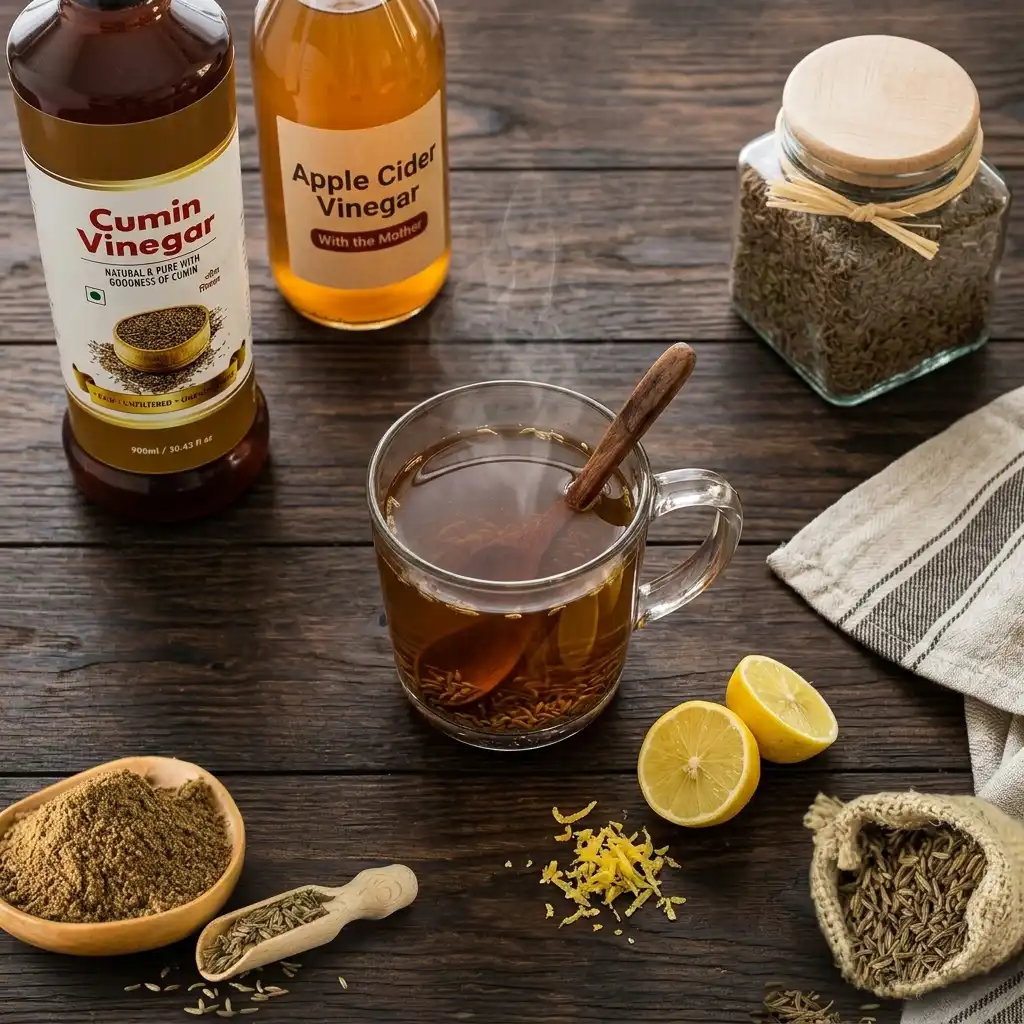
Medical Disclaimer
This article is for informational purposes only and is not medical advice. Cumin-vinegar infusion is a traditional homemade drink, and individual results vary. People with acid reflux, GERD, stomach sensitivity, diabetes, kidney disease, or other medical conditions should speak with a qualified healthcare professional before using it regularly. Always dilute vinegar with water before drinking.
Most weight-loss drinks promise miracles. This one promises nothing, except that it takes 2 minutes to make, costs pennies, and might help you build a better morning habit.
The cumin-vinegar infusion for weight loss is a simple kitchen remedy that some people use as part of a broader morning routine. Made with three ingredients (cumin, vinegar, and water), it has circulated through Ayurvedic practice, folk medicine traditions, and more recently, wellness communities online as a low-cost, easy-to-make morning drink with modest digestive and metabolic effects.
Here is what actually happens when you drink it daily, how to make it properly across three variations, who should avoid it, and how it compares honestly to other morning drinks on both cost and evidence quality.
If you are building a broader set of morning food habits alongside this drink, our aloe vera lemon water guide covers another low-cost, 5-minute morning ritual with a well-documented gut-priming mechanism that pairs naturally with a cumin-vinegar practice.
Table of Contents
Quick Answer: What Is the 3-2-1 Cumin-Vinegar Method?
Featured Summary: The 3-2-1 Method
The 3-2-1 method is a simple framework for remembering one morning drink: 3 ingredients (cumin, vinegar, and water), 2 minutes of prep time, and 1 daily habit.
What it is
A warm or room-temperature drink made by briefly steeping cumin in diluted apple cider vinegar, consumed before or with breakfast. At most, it may offer modest digestive support and a small satiety effect from the acetic acid in the vinegar.
What it is NOT
It is not a meal replacement, not a fat-burning supplement, and not a substitute for a balanced, healthy diet.
What Is the 3-2-1 Cumin-Vinegar Method?
The name is a memory device, not a scientific protocol. Breaking it down:
3 ingredients: Cumin (seeds or ground), vinegar (apple cider or white), and warm water. That is the entire ingredient list. No supplements, no proprietary blends, no expensive powders.
2 minutes: Total prep time from pantry to cup. Toast whole cumin seeds for 30 seconds (optional but improves flavor significantly); combine with vinegar and warm water; steep for 2 minutes; and strain if using whole seeds. Done.
1 habit: One fixed morning ritual to anchor the routine. Habit research consistently shows that a simple, time-specific daily action (drinking something at a fixed time before breakfast) is more likely to stick than a complex protocol. The drink’s simplicity is a feature, not a limitation.
What it is: A warm or room-temperature drink, consumed before or alongside breakfast, with traditional roots in digestive support. Cumin has a long, documented history in Ayurvedic medicine for this purpose. Vinegar has been used as a digestive aid and food preservative across virtually every culinary culture.
What it is not: A miracle weight-loss solution. A meal replacement. A fat-burning drink in any direct sense. A substitute for sleep, reduced calorie intake, or physical activity. If you go looking for the mechanism by which cumin seeds dissolve belly fat overnight, you will not find one, because it does not exist.
For a broader look at how simple low-cost drinks fit into a weight management strategy, our oat trick for weight loss guide covers one of the most evidence-backed morning drink strategies available, with a comparable preparation time.
What Happens When You Drink This Daily? (30, 60, and 90 Days)
Here is an honest, realistic timeline based on what the research suggests and what regular users report. There are no guarantees.
Days 1 to 7: Adjustment
Your palate adjusts to the savory, slightly sharp taste of cumin and vinegar, which is genuinely unusual if you are used to sweet or fruity morning drinks. Some people like it immediately; most find it tolerable within a few days. Possible mild digestive changes (loose stool or slight increase in gut activity) as the gut adjusts to the acidity and new aromatic compounds. Some people report reduced morning sugar cravings, though this is largely anecdotal and may reflect the placebo effect of beginning a health-focused morning routine.
Days 8 to 30: Habit Formation
By week two to three, the drink stops requiring conscious effort to prepare and becomes automatic. This habituation is itself a meaningful outcome: a fixed pre-breakfast ritual tends to make breakfast itself more deliberate, which research consistently links to better overall dietary choices throughout the day. Some people report subjectively better digestion during this period; this is plausible given cumin’s documented effect on digestive enzyme activity but difficult to attribute to the drink alone in an uncontrolled real-world setting.
Days 31 to 60: Observation Window
This is when most people who continue honestly assess whether the drink is doing anything for them. Results at this stage vary considerably by individual. Those who see the most benefit are typically using the drink as one component of broader dietary improvements, not as a standalone intervention. The drink alone does not produce weight loss; it may support a slightly more favorable digestive and appetite environment when the rest of the diet is also improving.
Days 61 to 90: Integration or Discontinuation
By 90 days, the drink is either genuinely embedded in the morning routine (in which case continuing is fine, with appropriate attention to tooth enamel health) or has been discontinued because no meaningful benefit was perceived. Both are valid outcomes. The drink is not a commitment; it is an experiment with a very low cost of entry.
The Reality Check
Weight loss depends on sustained calorie balance, not any single drink. The cumin-vinegar infusion may help some people feel more mindful about their health and slightly more satisfied before breakfast, but it will not produce weight loss in the absence of other dietary and lifestyle changes.
“Anyone claiming you can lose 10 pounds just by drinking this is selling something.”
According to a 2009 study published in Bioscience, Biotechnology, and Biochemistry and accessible on the NIH National Library of Medicine, daily vinegar consumption (approximately 1 to 2 tablespoons) was associated with modest reductions in body weight, BMI, and waist circumference in obese Japanese adults over 12 weeks compared to a placebo. The effect size was small (roughly 1 to 2 kg difference), and the mechanism was attributed primarily to acetic acid’s effect on satiety and appetite hormones. This is the best human trial data available on vinegar and weight, and it demonstrates a real but modest effect.
The Science: What Cumin and Vinegar Actually Do
Cumin (Cuminum cyminum)
Cumin is a seed spice from the Apiaceae family, used for thousands of years in Indian, Middle Eastern, and Latin American cooking. Its primary bioactive compounds include cuminaldehyde (responsible for its distinctive aroma), cymene, and terpenoids.
Digestive enzyme support: The most consistent research finding on cumin is its effect on digestive enzyme activity. Several studies, primarily conducted in animal models and small human trials, have found that cumin consumption increases the secretion of digestive enzymes (lipase, amylase, protease) in the small intestine, improving the breakdown and absorption of dietary fat, carbohydrates, and protein. This effect reduces the likelihood of undigested food fermenting in the gut, which contributes to gas, bloating, and discomfort.
A small clinical trial: A 2014 randomized controlled trial published in Complementary Therapies in Clinical Practice compared cumin supplementation to a control in overweight women. The cumin group showed significant reductions in serum triglyceride levels and modest improvements in body composition over 8 weeks. The supplementation dose was higher than a typical culinary amount, and the design had limitations, but the results are directionally consistent with cumin’s traditional use.
Iron and antioxidants: Cumin is nutritionally notable for its iron content (one teaspoon provides approximately 1.4 mg, or roughly 8% of the daily requirement) and its antioxidant activity from flavonoids and phenolic compounds. At the concentrations used in this drink, the nutritional contribution is minor, but not zero.
Vinegar (Acetic Acid)
All vinegars contain acetic acid, typically at 4 to 8% concentration. Apple cider vinegar (ACV) is the most commonly used in wellness contexts and additionally contains the “mother” (a colony of beneficial bacteria and enzymes formed during the fermentation process). The evidence on the mother’s additional benefit beyond acetic acid is limited; the acetic acid itself is the best-studied active component.
Blood sugar modulation: The most replicated finding in vinegar research is its effect on postprandial blood glucose. Several human trials have shown that consuming vinegar before or during a carbohydrate-containing meal reduces the blood sugar spike from that meal by 20 to 30%. The mechanism involves acetic acid inhibiting salivary amylase (the enzyme that begins starch digestion in the mouth) and delaying gastric emptying. This blunted glucose response reduces the corresponding insulin spike and the subsequent hunger rebound that follows carbohydrate-heavy breakfasts.
Satiety effect: Acetic acid appears to increase feelings of fullness through two mechanisms: the delayed gastric emptying mentioned above and possible effects on appetite-regulating hormones (GLP-1 and ghrelin). The satiety effect is modest and most pronounced when the vinegar is consumed before or with a meal rather than separately.
Important limitation: Most vinegar research uses amounts that are higher or equivalent to what this recipe contains (1 tablespoon), so the recipe is within the studied range. However, many studies use standardized acetic acid supplements rather than food vinegar, and the real-world translation to dietary vinegar has not been rigorously established in long-term human trials.
Why Cumin and Vinegar Together
There is no specific study on the combination. The pairing is traditional rather than clinically validated. What can be said reasonably: Cumin’s digestive enzyme-supporting effect complements vinegar’s blood sugar-blunting effect, and the earthy, warming flavor of cumin significantly improves the palatability of diluted vinegar. Most people who struggle with straight apple cider vinegar in water find the cumin version considerably more pleasant to drink daily. Palatability is underrated in habit formation research: a drink you actually enjoy consuming produces better long-term results than one that is marginally more effective but unpleasant.
For evidence-based weight loss strategies beyond individual ingredients, the CDC’s guide to healthy weight management provides a solid, unremarkable but accurate foundation: sustained calorie balance, adequate sleep, physical activity, and dietary quality over time.
How to Make Cumin-Vinegar Infusion: 3 Variations
All three versions use the same base and take under 3 minutes of active time. Start with the classic version for the first week to establish your baseline tolerance before adding variations.
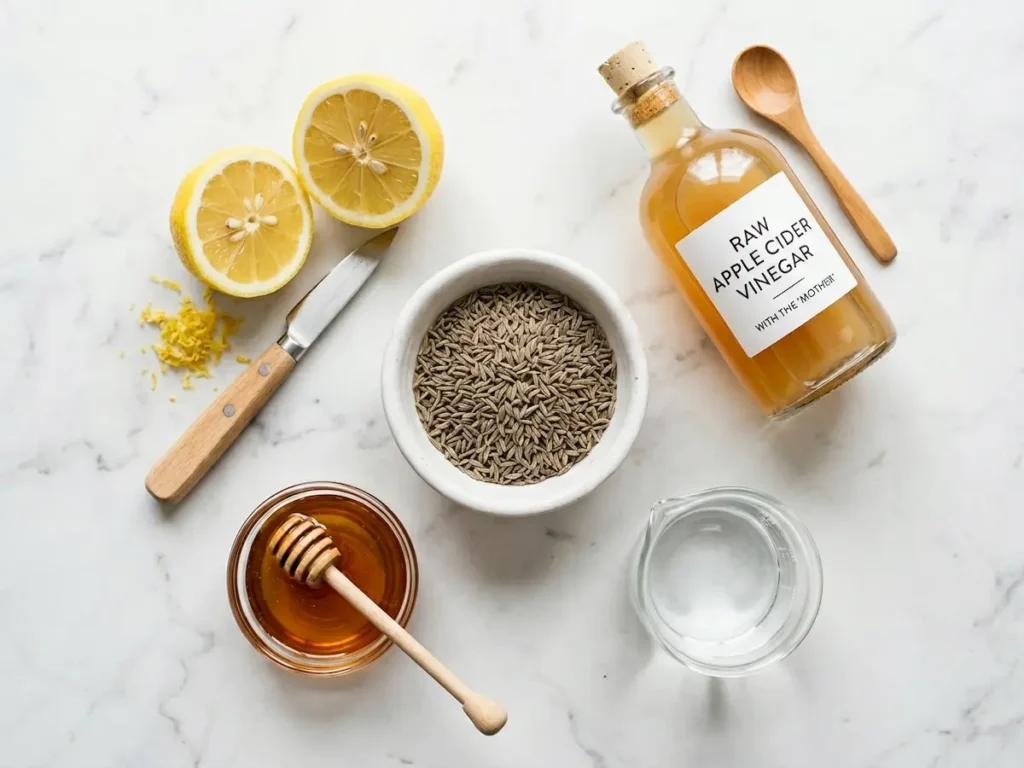
Classic Version
Ingredients:
- 1 teaspoon whole cumin seeds (or 1/2 teaspoon ground cumin)
- 1 tablespoon apple cider vinegar (with the mother) or white vinegar
- 240 ml (1 cup) warm water (not boiling)
- Optional: 1/4 teaspoon raw honey or juice of 1/4 lemon
Instructions:
- Toast the cumin seeds in a dry pan over medium heat for 30 seconds, stirring constantly, until fragrant. This step is optional but meaningfully improves the flavor by releasing cuminaldehyde. Skip it if you are using ground cumin.
- Add the toasted seeds (or ground cumin) to your cup.
- Add the vinegar and warm water. Stir briefly.
- Steep for 2 to 3 minutes.
- Strain through a fine mesh strainer if using whole seeds. Skip this step if using ground cumin (or accept the sediment, which is harmless).
- Add honey or lemon if using. Drink warm or allow it to cool to room temperature.
Tooth Enamel Care Note
- Use a straw: Drink through a glass or reusable straw to minimize acid contact with your teeth.
- Rinse with water: Swish your mouth with plain water immediately after finishing the drink to neutralize the acid.
- Wait to brush: Avoid brushing your teeth immediately after drinking. Wait at least 30 minutes to allow your enamel to re-harden.
Lemon Variation
Add the juice of half a fresh lemon (approximately 1.5 tablespoons) after steeping. The lemon brightens the flavor considerably, adds vitamin C, and for many people makes this version significantly more enjoyable than the straight vinegar version. Vitamin C also slightly improves iron absorption from the cumin.
Ginger Variation
Add 2 to 3 thin slices of fresh, peeled ginger to the cup before adding the water. Steep the ginger alongside the cumin for the 2- to 3-minute infusion time. Ginger adds its own documented digestive benefits (improved gastric motility, reduced nausea, and anti-inflammatory gingerols) and produces a warming, more complex flavor. This is the recommended variation for people who find the classic version too flat or sharp.
Prep time: 2 to 3 minutes. Servings: 1. Calories: approximately 5 to 10 without honey; 20 to 25 with honey.
For more quick morning drink options, our flat belly blueberry smoothie guide offers a 5-minute, higher-calorie option with a much stronger evidence base for gut health and metabolic support, which pairs well with this drink as an alternative on days when you want more satiety from your morning routine.
PrintCumin-Vinegar Infusion for Weight Loss

A simple 3-ingredient morning drink made with cumin, vinegar, and warm water. This traditional infusion may support digestion, blood sugar balance, and mindful weight-loss habits.
- Prep Time: 2 minutes
- Cook Time: 1 minute
- Total Time: 3 minutes
- Yield: 1 serving 1x
- Category: Drink
- Method: Infusion
- Cuisine: Wellness
- Diet: Vegan
Ingredients
- 1 teaspoon whole cumin seeds or 1/2 teaspoon ground cumin
- 1 tablespoon apple cider vinegar or white vinegar
- 1 cup warm water (240ml)
- Optional: 1/4 teaspoon raw honey
- Optional: juice of 1/4 lemon
- Optional: 2 to 3 thin slices fresh ginger
Instructions
- Toast cumin seeds in a dry pan for 30 seconds until fragrant.
- Add cumin to a cup.
- Pour in vinegar and warm water.
- Stir well and steep for 2 to 3 minutes.
- Strain if using whole cumin seeds.
- Add honey, lemon, or ginger if desired.
- Drink warm before or with breakfast.
Notes
Always dilute vinegar with water. Drink through a straw, rinse your mouth afterward, and wait at least 30 minutes before brushing your teeth.
Nutrition
- Serving Size: 1 cup
- Calories: 10
- Sugar: 0g
- Sodium: 5mg
- Fat: 0g
- Saturated Fat: 0g
- Unsaturated Fat: 0g
- Trans Fat: 0g
- Carbohydrates: 1g
- Fiber: 0g
- Protein: 0g
- Cholesterol: 0mg
When and How to Drink It
Timing
15 to 30 minutes before breakfast (best for blood sugar benefit): This is the window when acetic acid has the most opportunity to blunt the blood sugar spike from the meal that follows. It also allows the digestive enzyme-stimulating effect of cumin to prime the gut before food arrives.
With breakfast (if an empty stomach causes discomfort): Some people experience nausea or heartburn when consuming acidic drinks on an empty stomach. If this applies to you, drink the infusion alongside rather than before breakfast. The blood sugar benefit is modestly reduced but still present.
Morning only: Avoid consuming vinegar-based drinks within 2 to 3 hours of lying down. Acidic liquids increase the risk of acid reflux when consumed close to bedtime or when you are about to be horizontal. Morning consumption eliminates this risk entirely.
How Much
- Week 1: Start with 120 ml (half a cup) to assess tolerance
- From week 2: Increase to a full 240 ml cup if well tolerated
- Maximum: 1 cup per day (1 tablespoon of vinegar). More is not better and increases the risk of enamel erosion and stomach irritation
Critical Safety Warning
Never drink undiluted vinegar.
Undiluted apple cider vinegar directly from the bottle damages tooth enamel on contact and can cause throat irritation and esophageal burns with repeated use.
Always dilute with at least 240 ml (1 cup) of water per tablespoon of vinegar. This is not optional.
Pairing this with a balanced, protein-rich breakfast produces the most consistent reported experience. Our Mark Hyman snack ideas guide covers a Pegan-compatible breakfast and snack framework that complements the blood sugar management goal of the vinegar component.

The 30-Day Cumin-Vinegar Challenge
The 30-day challenge is not about transformation; it is about consistency data. Thirty days is long enough to know whether the drink agrees with your body, whether the habit sticks, and whether you notice any subjective changes in digestion, morning cravings, or energy. Below is the tracker content formatted for a printable PDF.
30-Day Cumin-Vinegar Challenge
3 Ingredients • 2 Minutes • 1 Daily Habit. Track your progress below.
Daily Habit Tracker
Weekly Reflections
Week 1: The Adjustment
How did the taste and your stomach feel?
Week 2: The Routine
Did it become easier to remember?
Week 3: The Shift
Any changes in digestion or cravings?
Week 4: The Habit
Will you keep this in your daily routine?
30-Day Cumin-Vinegar Tracker: Content for PDF
Title: My 30-Day Cumin-Vinegar Morning Challenge
Subtitle: Habit over hype. Track your mornings, not your results.
Daily grid: Days 1 through 30, each with a checkbox and a single line for a 5-word daily note (e.g., “felt good,” “slightly nauseous,” “no noticeable change”). Three columns of 10 days each.
Weekly reflections (4 prompts, one per week):
- Week 1: How does the taste feel now compared to Day 1?
- Week 2: Have you noticed any change in morning appetite? Circle: More / Less / Same
- Week 3: Has the habit become automatic? Circle: Yes / Sometimes / Not yet
- Week 4: What changes, if any, do you genuinely attribute to this drink?
Footer note: Rinse your mouth with plain water after each serving. If you experience heartburn or nausea, stop and speak with your doctor.
Cumin-Vinegar vs. Other Morning Drinks
Here is an honest comparison of common morning drinks on the metrics that actually matter.
| Drink | Prep time | Cost/serving | Taste | Evidence for weight support |
| Cumin-vinegar infusion | 2 min | ~$0.10 | Savory, tangy, earthy | Limited; modest satiety and blood sugar effects from vinegar |
| Lemon water | 1 min | ~$0.15 | Citrus, fresh | Minimal direct effect; mostly habit value and hydration |
| Apple cider vinegar (straight) | 1 min | ~$0.15 | Sharp, very acidic | Some (small studies); same acetic acid mechanism |
| Green tea | 3 min | ~$0.25 | Grassy, mild bitter | Moderate; EGCG and caffeine have replicated fat oxidation data |
| Oat water drink | 5 min (+ overnight soak) | ~$0.20 | Mild, slightly earthy | Good; beta-glucan fiber has strong satiety data |
| Blueberry smoothie | 5 min | ~$1.50 to $2.00 | Sweet, fruity | Good; anthocyanins have human trial data for insulin sensitivity |
| Aloe vera lemon water | 5 min | ~$0.30 | Mild, slightly citrus | Limited but plausible; acemannan prebiotic and gut lining support |
Bottom line: Cumin-vinegar is the cheapest and fastest option on this list. It is not the most effective. Green tea, oat water, and blueberry smoothies all have stronger and more replicated evidence for metabolic support. The value of cumin-vinegar is its cost, its simplicity, and the fact that it works well as a morning habit anchor, particularly for people who dislike sweet drinks.
For a more nutrient-dense morning drink option, our flat belly blueberry smoothie provides a richer evidence base alongside significantly more protein and fiber for around $1.50 per serving.
Who Should Avoid This Drink
Who Should Avoid This Drink
- Acid reflux or GERD: Vinegar reliably worsens symptoms.
- Active stomach ulcers: The acidity causes direct irritation to the stomach lining.
- Diagnosed erosive tooth enamel: Acidic drinks will accelerate further damage.
- Diabetes on glucose-lowering medication: Vinegar affects blood sugar; do not combine without direct medical supervision.
- Kidney disease: Consult your doctor regarding potassium content and fluid restrictions before consuming.
Consult your doctor before starting if you are:
- Pregnant or breastfeeding
- Taking any prescription medications, particularly for diabetes, hypertension, diuretics, or heartburn
- Managing a digestive disorder including IBS, IBD, Crohn’s disease, or gastritis
- Under 18 years old
For people with a sensitive gut who want a gentler morning drink option, our roasted barley tea guide covers a caffeine-free, low-acid option with prebiotic benefits and zero irritation risk for most people.
Common Mistakes to Avoid
Mistake 1: Drinking it undiluted.
This causes real harm. Even “organic” or “raw” apple cider vinegar from the bottle is acidic enough to cause throat irritation and accelerate tooth enamel erosion with repeated undiluted consumption. The 1:16 ratio in this recipe (1 tablespoon vinegar in 240 ml water) brings the solution to a safe concentration. Do not concentrate it further in the belief that more is better.
Mistake 2: Expecting results in a few days.
The mechanisms by which vinegar and cumin produce any metabolic effect operate over weeks, not days. The modest satiety and blood sugar effects compound with consistent use. Trying the drink for three days and concluding it does not work is like starting a new exercise habit and giving up after one week because you do not look different. Give it 30 days of honest daily use.
Mistake 3: Using it as a meal replacement.
This drink contains approximately 5 to 10 calories. It provides no meaningful protein, fat, or carbohydrate. Using it instead of breakfast to reduce calories produces a calorie deficit through deprivation, not through the drink’s mechanism. This approach reliably leads to compensatory overeating later in the day. Drink it before or with breakfast, not instead of it.
Mistake 4: Too much vinegar.
One tablespoon per serving is both the studied amount and the practical maximum for comfort. Using two or three tablespoons does not triple the benefit; it triples the acid exposure and significantly increases the likelihood of nausea, heartburn, and enamel damage. More is not better with acidic substances.
Mistake 5: Continuing through pain or discomfort.
Mild adjustment (slightly unusual taste, minor gut activity changes in the first week) is normal. Pain, burning in the throat or stomach, nausea beyond the adjustment phase, or worsening heartburn are signals to stop immediately. These symptoms indicate the drink is not suitable for your physiology. There is no benefit worth experiencing pain for a 10-calorie drink.
FAQs for The cumin-vinegar infusion for weight loss
Does cumin-vinegar infusion really work for weight loss?
There is no strong scientific evidence that this specific combination causes significant weight loss on its own. The individual components have modest supporting evidence: vinegar (acetic acid) has a replicated small effect on satiety and postprandial blood sugar in human trials, and cumin has preliminary evidence for digestive enzyme support. Neither produces dramatic fat loss. The drink may help as part of a broader healthy morning routine, particularly through the habit-anchoring effect and the mild appetite management provided by acetic acid. It is not a weight loss intervention; it is a low-cost morning habit with modest physiological support.
Can I drink it every day?
Most healthy adults can drink one cup per day without issue. The primary long-term concern with daily vinegar consumption is tooth enamel erosion from repeated acid exposure. Mitigate this by always drinking through a glass straw, rinsing your mouth with plain water immediately after, and waiting at least 30 minutes before brushing teeth. If you develop tooth sensitivity over time, reduce frequency or stop.
Is it safe on an empty stomach?
For people with a robust stomach, yes. For people with acid sensitivity, mild GERD, or a history of ulcers, consuming acidic drinks on an empty stomach reliably causes nausea or heartburn. If this is you, drink the infusion with or just after breakfast rather than before it. The blood sugar benefit is slightly reduced, but the habit value is preserved.
Which vinegar is best?
Apple cider vinegar with the mother is the most popular choice for flavor and for the additional probiotic and enzyme content of the mother culture. White distilled vinegar has a sharper, more one-dimensional taste but contains the same acetic acid. Both work for the mechanism. Avoid flavored, sweetened, or infused vinegars that contain added sugar, which defeats the blood sugar management purpose entirely. Balsamic vinegar is too sweet and thick for this application.
How long before I see any changes?
There is no guaranteed timeline, and changes depend heavily on what else you are eating and doing. The most realistic expectation: some people notice subjectively easier digestion within 1 to 2 weeks. Any effect on appetite and satiety that might support calorie reduction takes at least 30 days of consistent daily use to evaluate. The 30-day challenge tracker is designed specifically for this assessment window. Focus on the habit, not the result, especially in the first month.
Can I use ground cumin instead of whole seeds?
Yes. Use half a teaspoon of ground cumin in place of one teaspoon of whole seeds. Ground cumin infuses more quickly (60 to 90 seconds is sufficient) and does not require straining, though it does leave sediment at the bottom of the cup. Stir before drinking to distribute it, or accept that the last sip will be more intensely flavored. Whole seeds produce a cleaner liquid with a more aromatic result after straining.
Does it break an intermittent fast?
Technically yes: the drink contains 5 to 10 calories, which means it ends a calorie-defined fast. For people fasting for autophagy (cellular cleanup), any caloric intake disrupts the process. For people fasting primarily for calorie restriction, the impact of 10 calories is genuinely negligible, and the blood sugar management benefit of the vinegar may actually support the fasting goal by blunting the glucose response when the eating window opens. If fasting purity matters to you, drink it in your eating window.
The Bottom Line: Habit Over Hype
The cumin-vinegar infusion for weight loss is not a miracle drink. It will not melt fat while you sleep, it will not replace the need for a balanced diet, and it will not produce results without the other components of a healthy lifestyle also being in place.
What it is: a cheap (approximately $0.10 per serving), simple (2 minutes), surprisingly pleasant morning drink with a modest evidence base for digestive support and blood sugar management, and strong potential as a habit anchor for people building a healthier morning routine. If you enjoy the taste, tolerate it without discomfort, and it gives you a mindful, intentional way to start your morning, it is worth trying. If it causes heartburn, nausea, or any other discomfort, stop without guilt. Not every intervention works for every person.
The real mechanism of sustainable weight loss is not in any single drink. It is in consistent habits accumulated over months. This drink, at its best, is a two-minute daily reminder that you are doing something intentional about your health. That behavioral signal matters more than the cumin.
For a broader set of practical, evidence-grounded food habits to build alongside this morning ritual, the fiber-maxxing guide covers the single dietary habit with the strongest evidence base for long-term weight management and gut health, and the Mark Hyman snack ideas guide provides a complete Pegan snack framework for the hours after your morning drink.
Related Reading
CMS note: These 5 confirmed live articles are recommended for a visual-related reading section.
1. Aloe Vera Lemon Water for Weight Loss – A gut-priming morning ritual with a complementary mechanism: acemannan prebiotic fiber and digestive enzyme support.
2. Oat Trick for Weight Loss Recipe – A stronger-evidence morning drink using beta-glucan fiber for pre-meal satiety and blood sugar buffering.
3. Flat Belly Blueberry Smoothie – A higher-satiety morning option with protein, probiotic, and anthocyanin content for gut health and metabolic support.
4. Roasted Barley Tea Benefits – A low-acid, caffeine-free prebiotic drink for people who want a gentle gut-supportive morning option without vinegar.
5. Fiber-Maxxing for Weight Loss – The complete dietary fiber framework: the single most evidence-backed dietary habit for long-term appetite management and gut health.
✨ Ready to Start Your 30-Day Challenge?
Save this pin and get the complete recipe + FREE printable tracker!
📌 Save on Pinterest3 ingredients • 2 minutes • 1 simple habit