
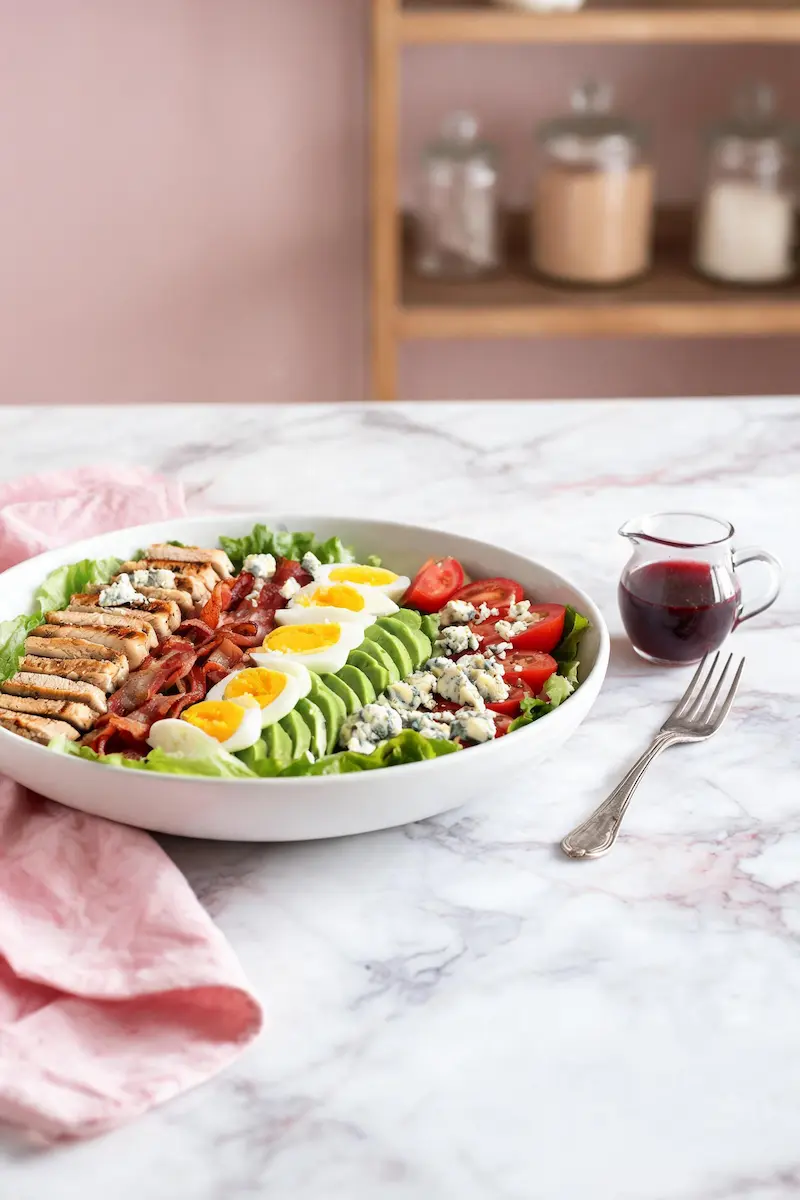
Quick Answer: The Perfect Low-Carb Cobb Salad
If you want a meal that delivers serious protein, healthy fats, and enough fiber to keep you full for hours without spiking your blood sugar, this low-carb Cobb salad is it. Built around pasture-raised eggs, crispy bacon, grilled chicken, avocado, and a homemade red wine vinaigrette, it comes together in under 20 minutes and holds up beautifully for meal prep. Each serving clocks in at approximately 35g of protein, 28g of fat, and under 6g of net carbs. Jump to the full recipe card below.
Table of Contents
Why This Low-Carb Cobb Salad Works for Weight Management
The Satiety Trinity: Protein, Healthy Fats, and Fiber
The reason this salad keeps hunger away for hours is not luck; it is nutritional architecture. Protein triggers the release of satiety hormones like peptide YY and GLP-1, healthy fats slow gastric emptying so you stay full longer, and fiber feeds the gut bacteria that regulate appetite signaling. When you combine all three in a single meal, you create a satiety response that processed foods simply cannot match. If you want to take your fullness strategy further, our guide on fiber maxxing for weight loss explains exactly how to use dietary fiber as a metabolic tool.
Blood Sugar Stability Through Strategic Macros
A traditional Cobb salad loaded with croutons, sweetened dressings, and corn can send your blood glucose on a roller coaster that leaves you hungrier two hours later than when you started. This version eliminates those glycemic triggers entirely. By keeping net carbs under 6g per serving and centering the meal around protein and fat, you produce a flat, stable blood sugar curve that supports consistent energy and reduces cravings throughout the day. For more ideas on how to structure low-carb meals and snacks around blood sugar balance, see Mark Hyman snack ideas.
The Volumetrics Advantage: High Volume, Low Calories
One of the most underrated aspects of a well-built Cobb salad is sheer volume. A large bowl of leafy greens, sliced egg, chunked avocado, and chopped chicken occupies significant stomach space for relatively few calories. Volumetrics research consistently shows that meals with high water and fiber content relative to calorie density produce stronger satiety signals than calorie-equivalent meals with smaller physical volume. You are essentially training your stomach to feel satisfied on fewer calories without ever feeling deprived.
The Science-Backed Benefits of a Low-Carb Cobb Salad
High-Quality Protein for Muscle Preservation
One of the most overlooked consequences of weight loss is muscle loss. When you cut calories without maintaining adequate protein intake, your body breaks down lean tissue for energy, which slows your metabolism and makes long-term weight maintenance harder. This salad delivers complete protein from three sources simultaneously: eggs, chicken, and bacon. Together they provide all nine essential amino acids your body needs to preserve and rebuild muscle tissue during a caloric deficit.
Monounsaturated Fats from Avocado and Olive Oil
The avocado in this recipe is not a concession to trend. It is one of the most nutrient-dense foods you can put in a salad. Half an avocado provides roughly 7g of monounsaturated fatty acids, primarily oleic acid, the same fat that gives extra virgin olive oil its anti-inflammatory properties. Research consistently associates high monounsaturated fat intake with reduced visceral fat, improved insulin sensitivity, and lower LDL oxidation. The homemade red wine vinaigrette made with quality olive oil adds another layer of the same beneficial fats without any of the hidden sugars found in store-bought dressings.
Choline from Eggs for Cognitive Support
Each whole egg provides approximately 147mg of choline, a nutrient that most people do not get enough of and that plays a direct role in acetylcholine synthesis, the neurotransmitter responsible for memory, focus, and muscle control. Two eggs in a single salad gets you close to 60% of the daily adequate intake for choline without any supplementation. This is one of the reasons that whole egg consumption, rather than egg whites only, is increasingly supported by nutrition researchers as part of a complete metabolic health diet. For complementary support of cognitive and sleep function, see our piece on glycine for sleep.
Gut-Friendly Ingredients for Microbiome Diversity
Romaine, arugula, and mixed greens are not just filler. They provide prebiotic fibers and polyphenols that feed beneficial gut bacteria strains associated with lower inflammation, better mood regulation, and improved metabolic efficiency. Blue cheese, when included, adds a small dose of live cultures. Avocado contributes short-chain fatty acid precursors that support the intestinal lining. Together these ingredients make this salad quietly one of the more microbiome-supportive meals you can assemble in under 20 minutes.
The Ultimate Low-Carb Cobb Salad Recipe
The Functional Ingredient Stack
Every ingredient in this recipe earns its place. For the protein base, you need two pasture-raised eggs hard-boiled and halved, one grilled or rotisserie chicken breast sliced thin, and three to four strips of heritage or uncured bacon cooked until crispy and crumbled. For the fat and micronutrient layer, you need half a ripe avocado sliced or cubed, two tablespoons of crumbled blue cheese, and a small handful of cherry tomatoes halved but used sparingly to keep net carbs low.
For the greens, you want a generous base of romaine hearts, arugula, or a mix of both, roughly four to five cups per serving. For the dressing, you need two tablespoons of extra virgin olive oil, one tablespoon of red wine vinegar, half a teaspoon of Dijon mustard, a pinch of sea salt, and cracked black pepper, whisked together just before serving.
🥑 Visual Ingredient Guide?
Get a beautifully styled visual of all 7 functional ingredients and their portions for your low-carb Cobb salad.
📌 Save Ingredient Guide on Pinterest
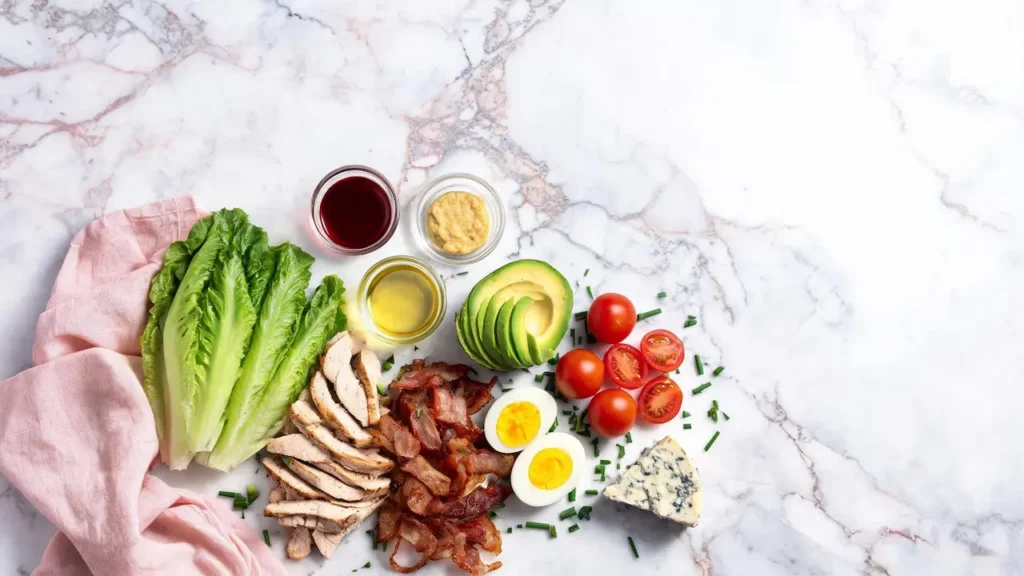
Everything you need for a nutrient-dense, keto-friendly meal laid out for easy prep and maximum flavor.
Step-by-Step Assembly for Maximum Flavor
Start by preparing all your proteins before touching the greens. Cook the bacon first so it has time to cool and crisp up properly. Hard boil your eggs and let them cool in ice water for clean peeling. Slice or shred your chicken. Once all proteins are ready and at room temperature, lay your greens down as a thick, generous base in a wide bowl or plate.
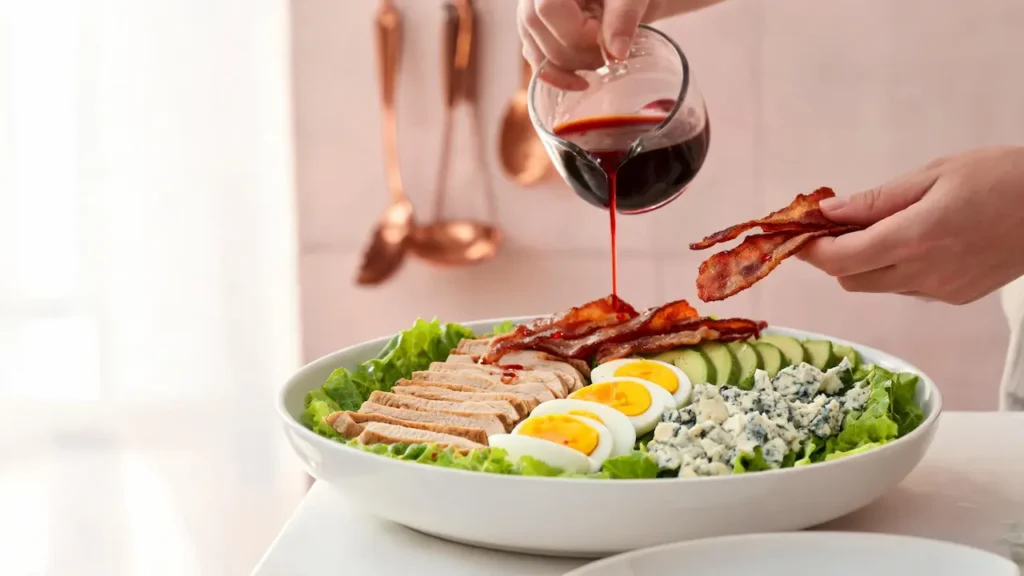
Arrange the toppings in classic Cobb rows running lengthwise across the greens: eggs on one side, then chicken, then bacon, then avocado, then tomatoes, then blue cheese. This classic row presentation is not just aesthetic; it allows each person to control how much of each topping they get in each bite. Drizzle the vinaigrette lightly over the entire salad just before eating, never in advance, to keep the greens from wilting.
Macro Breakdown and Customization Options
A standard single serving of this recipe contains approximately 35g of protein, 28g of fat, 8g of total carbohydrates, and 5 to 6g of net carbs, placing it comfortably within both keto and low-carb macros. For a strict keto version, omit the cherry tomatoes entirely and replace blue cheese with shredded parmesan.
For a paleo version, remove the blue cheese and use a lemon-tahini dressing instead of red wine vinaigrette. For a dairy-free version, skip the blue cheese entirely and add a tablespoon of toasted pumpkin seeds for textural contrast. For meal prep, store the proteins, greens, and dressing in three separate containers. Combine and dress only at the moment of eating. Assembled but undressed salads keep well in the refrigerator for up to two days.
PrintLow-Carb Cobb Salad
A protein-packed low-carb Cobb salad loaded with grilled chicken, crispy bacon, avocado, eggs, blue cheese, and a homemade red wine vinaigrette for the perfect keto-friendly meal.
- Prep Time: 10 minutes
- Cook Time: 10 minutes
- Total Time: 20 minutes
- Yield: 1 serving 1x
- Category: Salad
- Method: No-Cook
- Cuisine: American
Ingredients
- 2 pasture-raised eggs, hard-boiled and halved
- 1 grilled chicken breast, sliced
- 3 to 4 strips uncured bacon, cooked and crumbled
- 1/2 avocado, sliced
- 2 tablespoons blue cheese, crumbled
- 1 small handful cherry tomatoes, halved
- 4 to 5 cups romaine or mixed greens
- 2 tablespoons extra virgin olive oil
- 1 tablespoon red wine vinegar
- 1/2 teaspoon Dijon mustard
- Sea salt and cracked black pepper to taste
Instructions
- Cook bacon until crispy and set aside to cool.
- Hard-boil eggs and cool in ice water before peeling and halving.
- Slice or shred the grilled chicken breast.
- Arrange greens in a wide bowl as the base.
- Place eggs, chicken, bacon, avocado, tomatoes, and blue cheese in rows across the greens.
- Whisk olive oil, red wine vinegar, Dijon mustard, salt, and pepper together.
- Drizzle dressing over the salad just before serving.
- Serve immediately and enjoy.
Notes
Store greens, proteins, and dressing separately for meal prep. Add avocado and dressing only before serving to maintain freshness.
Nutrition
- Serving Size: 1 salad
- Calories: 520
- Sugar: 3g
- Sodium: 780mg
- Fat: 38g
- Saturated Fat: 10g
- Unsaturated Fat: 24g
- Trans Fat: 0g
- Carbohydrates: 8g
- Fiber: 3g
- Protein: 35g
- Cholesterol: 310mg
Strategic Pairing: Complete Your Low-Carb Meal
Pre-Salad Hydration Protocol
One of the simplest ways to amplify the satiety effect of any high-volume meal is to front-load with water or a light drink 15 to 20 minutes before eating. This primes gastric stretch receptors and reduces the likelihood of overeating during the meal itself. A glass of water with lemon or a light herbal drink before your salad is a small habit with a measurable impact on how full you feel at the end of the meal. For a specific pre-meal drink protocol, see our guide on aloe vera lemon water for weight loss.
Post-Salad Snacking Without Breaking Keto
Even a well-constructed salad may not carry everyone through a full afternoon, particularly if you are physically active or in a significant caloric deficit. The key is having a planned low-carb snack ready so you do not reach for something processed out of convenience. Hard-boiled eggs, a small handful of macadamia nuts, or a portion of smoked salmon are all options that extend satiety without disrupting ketosis. For a curated list of options that also support blood sugar balance, see high-protein, low-calorie snack ideas and Mark Hyman snack ideas.
Evening Satiety Extension
If you eat this salad for lunch, the evening can be the hardest stretch to navigate on a low-carb plan. Hunger tends to peak in the late evening for most people, driven by cortisol rhythms and habitual eating patterns rather than genuine caloric need. Building a deliberate evening protocol around hydration, a small glycine-rich snack, and consistent sleep timing helps break this cycle without adding unnecessary calories. Our evening satiety protocol covers this in detail, and our guide on glycine for sleep explains why a small gelatin-based snack before bed can reduce nighttime hunger while also improving sleep quality.
Recipe Card: Low-Carb Cobb Salad
Prep time: 10 minutes. Cook time: 10 minutes. Total time: 20 minutes. Servings: 1.
Ingredients: 2 pasture-raised eggs, hard-boiled and halved. 1 grilled chicken breast, sliced. 3 to 4 strips of uncured bacon, cooked and crumbled. Half an avocado, sliced. 2 tablespoons blue cheese, crumbled. A small handful of cherry tomatoes, halved. 4 to 5 cups of romaine or mixed greens. 2 tablespoons extra virgin olive oil. 1 tablespoon red wine vinegar. Half a teaspoon of Dijon mustard. Sea salt and cracked black pepper to taste.
Instructions: Cook bacon until crispy and set aside to cool. Hard-boil eggs and cool in ice water before peeling and halving. Slice or shred grilled chicken. Arrange greens in a wide bowl as the base. Place toppings in rows across the greens in this order: eggs, chicken, bacon, avocado, tomatoes, and blue cheese. Whisk olive oil, red wine vinegar, Dijon mustard, salt, and pepper together. Drizzle over salad just before serving.
Nutrition per serving: Calories 520. Protein 35g. Total fat 38g. Total carbohydrates 8g. Net carbs 5g. Fiber 3g.
Storage: Store components separately. Greens and proteins keep refrigerated for up to 2 days. Dress only at the time of serving.
Frequently Asked Questions About Low-Carb Cobb Salad
Is Cobb salad keto-friendly?
A traditional restaurant Cobb salad is often not keto-friendly because it includes croutons, sweetened dressings, corn, or candied nuts that add significant net carbs. This version is specifically built for keto, with all high-carb toppings removed and a homemade sugar-free vinaigrette, keeping net carbs at 5 to 6g per serving.
How many carbs are in a traditional Cobb salad?
A standard Cobb salad from a restaurant can contain anywhere from 15g to 40g of net carbs depending on the toppings and dressing used. The main culprits are croutons, corn, sweetened bacon bits, and commercial dressings that contain added sugar. This homemade version eliminates all of those variables.
What dressing is best for low-carb Cobb salad?
The best dressings for a low-carb Cobb salad are homemade ones where you control every ingredient. A simple red wine vinaigrette with olive oil, vinegar, and Dijon mustard is the most versatile option. Caesar dressing made without crouton-flavored bases, avocado-lime dressing, and ranch made with full-fat sour cream are all good alternatives. Always check store-bought labels carefully, as most contain added sugar or maltodextrin.
Can I meal prep Cobb salad for the week?
Yes, but with one important rule. Never dress the salad in advance. Store the cooked proteins, raw greens, and dressing in three separate airtight containers. The proteins and greens keep well for up to two days in the refrigerator. Avocado should be added fresh at serving time to prevent browning or tossed with a small amount of lemon juice if you need to prep it ahead.
What can I substitute for blue cheese?
If you dislike blue cheese or are avoiding dairy, the best substitutes that maintain a similar richness and saltiness are shaved parmesan, crumbled feta, or goat cheese. For a fully dairy-free version, a tablespoon of toasted pumpkin seeds or sunflower seeds adds a satisfying textural contrast without any compromise on flavor or macros.
Does Cobb salad help with weight loss?
A well-constructed low-carb Cobb salad actively supports weight loss through several mechanisms at once. The high protein content preserves muscle mass during a caloric deficit, the healthy fats slow digestion and reduce appetite, and the fiber from greens and avocado feeds gut bacteria linked to better metabolic function. It is not a magic solution, but it is one of the most nutritionally complete single-bowl meals you can build on a low-carb or keto plan.
Common Mistakes That Sabotage Low-Carb Cobb Salad Results
Overloading on high-carb toppings. The most common mistake people make when trying to keep a Cobb salad low-carb is not removing all the glycemic offenders. Croutons are the obvious one, but corn, sweetened dried cranberries, candied pecans, and even some commercial bacon bits contain enough sugar to push a single serving well above keto thresholds. Check every topping individually if you are buying pre-made components.
Using store-bought dressings with hidden sugars. Most commercial salad dressings, including ones marketed as “light” or “healthy,” contain added sugars, high-fructose corn syrup, or starchy thickeners that spike blood glucose. A homemade vinaigrette takes 90 seconds to make and gives you complete control over what goes into your meal. There is no version of a store-bought dressing that is more convenient than that.
Skipping the healthy fats out of fear. A surprisingly common mistake among people new to low-carb eating is cutting avocado or olive oil because they are trying to reduce overall calories. On a low-carb diet, fat is the primary energy source. Removing it from a meal that already lacks carbohydrates leaves you with a protein-only plate that will not sustain energy or satiety for more than an hour or two. Keep the avocado. Use the olive oil. The fat is the point.
Not balancing protein portions. On the other end of the spectrum, some people pile on so much chicken, bacon, and egg that the salad becomes calorie-dense beyond what the meal requires. A single serving of this recipe is designed to deliver around 35g of protein, which is a meaningful and complete dose for most adults. Beyond that, additional protein does not add proportionally more satiety and simply increases total caloric load.
Conclusion: From Classic Cobb to Metabolic Mastery
A Cobb salad has always been one of the most naturally low-carb meals on any menu. This version simply removes the last remaining glycemic obstacles, optimizes the protein and fat ratio, and gives you a clear framework for building it consistently at home. If you are following a structured low-carb or keto plan and want a printable meal framework that extends beyond a single salad, our 21-day cleanse program is a logical next step. And if you want a warm, low-carb alternative for colder days, our gelatin weight loss recipe pairs well as an evening complement to a salad-based lunch routine.
Related Reading: Your Low-Carb Toolkit
For anyone building a broader low-carb lifestyle around meals like this one, these six resources cover the most important adjacent topics. Mark Hyman snack ideas for blood sugar balance gives you a curated list of between-meal options that keep glucose stable without breaking ketosis. Fiber maxxing blueprint for fullness explains how to use dietary fiber strategically to extend satiety beyond what protein and fat alone can achieve. Evening satiety protocol to stop night eating addresses the most vulnerable window of the day for most people on a caloric deficit.
High-protein low-calorie snack ideas is the practical companion to this recipe for the hours after your meal. Keto smoothie for weight loss offers a fast liquid alternative for mornings when a full salad assembly is not practical. And roasted barley tea benefits covers one of the best zero-calorie, gut-supportive drinks to pair with a low-carb meal plan.