
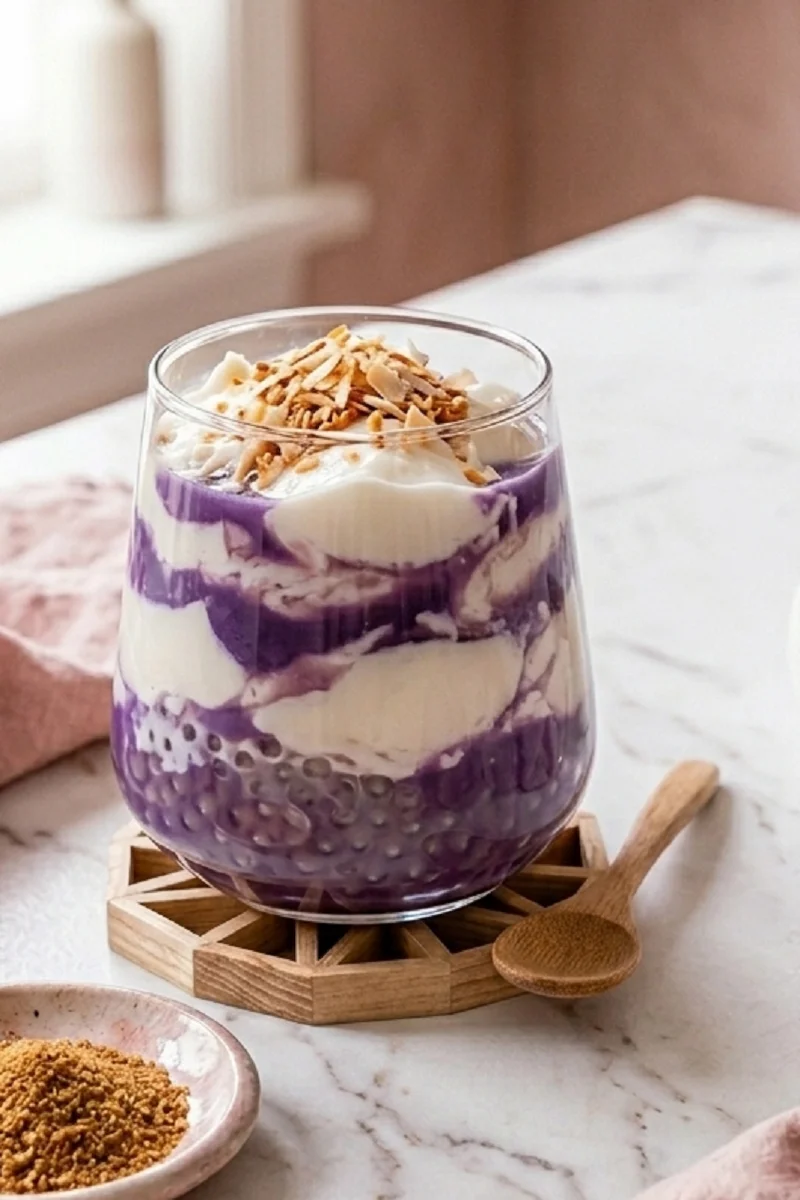
There is a specific joy to ube taho that is difficult to describe to someone who has not had it. The silken tofu is warm, barely set, and impossibly soft. The tapioca pearls have a gentle chew that gives way without effort. And the ube syrup, fragrant with purple yam, coconut milk, and a whisper of vanilla, turns the whole bowl a deep, vivid violet that looks almost too beautiful to eat. Almost.
Taho in its classic form is one of the Philippines’ most beloved street foods: vendors called “magtataho” walk through neighborhoods in the early morning, calling out “TAHO!” and carrying aluminum containers of warm silken tofu and sweet arnibal syrup. The ube version takes that familiar comfort and adds the earthy, subtly nutty flavor of purple yam, making it as visually striking as it is delicious.
This recipe is designed to be achievable in a home kitchen in 25 minutes. It covers the full process for tapioca pearls, ube syrup, and tofu preparation, texture secrets that separate a great bowl from a mediocre one, variations for different dietary preferences, and answers to every question a first-time maker is likely to have.
Table of Contents
Quick Answer: The Perfect Ube Taho Recipe
At a glance: Key ingredients: silken tofu, ube halaya (purple yam jam) or fresh ube, small tapioca pearls (sago), coconut milk, and coconut sugar or muscovado. Total time: 25 minutes (10 min prep, 15 min cook). Texture: warm, silky tofu with chewy tapioca and a pourable, richly purple ube syrup. Serves 4. Naturally vegan and gluten-free.
What Is Ube Taho and Why Is It So Popular?
The Filipino Origins of Taho
Taho is a warm Filipino street food and breakfast drink made from fresh silken tofu, arnibal (a brown sugar or muscovado syrup), and sago (small tapioca pearls). It has been part of Filipino food culture for centuries, with Chinese origins: it is closely related to the Chinese douhua, a silken tofu dessert. In the Philippines, it became its own distinct preparation, served warm rather than cold and deeply embedded in morning culture.
The magtataho is a defining figure in Filipino urban life: a vendor, usually male, who carries two large aluminum containers suspended from a shoulder pole and walks through residential neighborhoods calling out his wares, typically between 6 and 9 in the morning. Children and adults alike come out of their homes with cups or bowls to be served. The experience is communal, familiar, and tied to the sensory memory of mornings in the Philippines in a way that is difficult to replicate but deeply worth trying to bring into a home kitchen.
How Ube Transforms Classic Taho
Ube (Dioscorea alata) is a purple yam native to Southeast Asia and widely cultivated in the Philippines. It is distinct from purple sweet potato (Ipomoea batatas), though the two are sometimes confused: ube has a more intensely pigmented flesh, a more delicate, slightly nutty flavor, and a drier, starchier texture when cooked compared to sweet potato. Its flavor is often described as a cross between vanilla and pistachio with an earthy, slightly floral quality that is genuinely unlike anything else.
When ube is cooked into a syrup with coconut milk and sugar, the resulting liquid is a deep, vivid purple that transforms the pale silken tofu beneath it into one of the most visually striking desserts you can make in a home kitchen. Beyond aesthetics, ube contributes real flavor complexity: the syrup is not simply sweet but has depth, a hint of earthiness, and a richness from the coconut milk that makes it genuinely addictive.
Ube also belongs to the same anthocyanin-rich family of purple plants as blueberries, purple cabbage, and acai. These compounds, which produce the vivid coloring, are well-studied for their antioxidant and anti-inflammatory properties. Our purple peel weight loss guide covers the science of anthocyanins in detail if you are curious about the nutritional dimension of purple-pigmented foods.
Why Ube Taho Went Viral Worldwide
Ube has had a remarkable decade outside the Philippines. Starting around 2015 and accelerating sharply with the rise of food-focused social media, ube became one of the most photographed and shared dessert ingredients in the world. The reason is simple: nothing else in common baking produces that particular shade of vivid, natural purple without artificial coloring. In an era when visual distinctiveness drives food virality, ube is extraordinary.
Ube taho specifically became popular internationally because it combines the visual appeal of the vivid purple syrup with the accessibility of a dessert that requires no special baking skills, no oven, and ingredients that are increasingly available outside the Philippines in Asian grocery stores and online. It is genuinely easy to make and genuinely beautiful to serve, which is a combination that social media rewards reliably.
The Nutritional Benefits of Ube Taho
Silken Tofu: Plant-Based Protein and Gentle Satiety
Silken tofu is made from coagulated soy milk that has not been pressed or drained, which gives it its characteristic custard-like texture and high water content. A 100-gram serving provides approximately 5 to 6 grams of complete protein (containing all nine essential amino acids), roughly 50 to 60 calories, and a small amount of fat that is primarily unsaturated. It is also a source of isoflavones, plant compounds that have been studied for their modest role in supporting hormonal balance, particularly in postmenopausal women.
For a dessert context, silken tofu is nutritionally unusual: it provides meaningful protein at very low caloric density. A serving of ube taho is genuinely more satiating than most desserts of similar caloric content because of this protein contribution, which slows gastric emptying and reduces the speed of post-dessert hunger return. This does not make it a “health food” in the supplement sense, but it does make it a more nutritionally substantive sweet treat than most alternatives.
For more on how plant-based protein contributes to satiety in a broader dietary context, our low-carb cobb salad guide covers the role of protein in meal composition and why it matters for appetite management.
Ube’s Antioxidant Profile
The deep purple color of ube is produced by anthocyanins, the same class of polyphenolic compounds responsible for the color of blueberries, tart cherries, and red cabbage. Anthocyanins are well-studied antioxidants that neutralize free radicals, reduce oxidative stress at the cellular level, and have demonstrated anti-inflammatory effects in multiple human trials.
Purple yam specifically is a rich source of these compounds. Research on Dioscorea alata has identified cyanidin and peonidin derivatives as the primary anthocyanins present, compounds associated with cardiovascular support and anti-inflammatory activity. The concentration of anthocyanins varies by preparation: raw or minimally processed ube retains more of these heat-sensitive compounds than heavily processed ube halaya. Using fresh ube or minimally sweetened halaya maximizes the antioxidant benefit.
For a deeper exploration of anthocyanins and their metabolic effects, our flat-belly blueberry smoothie guide goes into detail on the research connecting purple-pigmented foods to gut health, insulin sensitivity, and inflammation reduction.
Tapioca Pearls: Gluten-Free Texture and Energy
Tapioca pearls (sago) are made from cassava starch, which means they are naturally gluten-free and suitable for people with celiac disease or gluten sensitivity. They are almost pure starch with very little protein, fat, or micronutrient content. Their nutritional value is primarily as a source of carbohydrate energy: easily digestible, gentle on the digestive system, and, when cooked to the right consistency, deeply satisfying from a textural perspective.
The chewy, slightly translucent quality of well-cooked tapioca pearls is one of the pleasures of taho that is irreplaceable. The pearls provide textural contrast to the silky tofu and pourable syrup, and that contrast is what makes the dish feel complete rather than one-dimensional. From a pure nutrition standpoint they are simply starchy energy; from a sensory standpoint they are the detail that elevates the dish.
The Best Ube Taho Recipe: Step-by-Step
The Functional Ingredient Stack
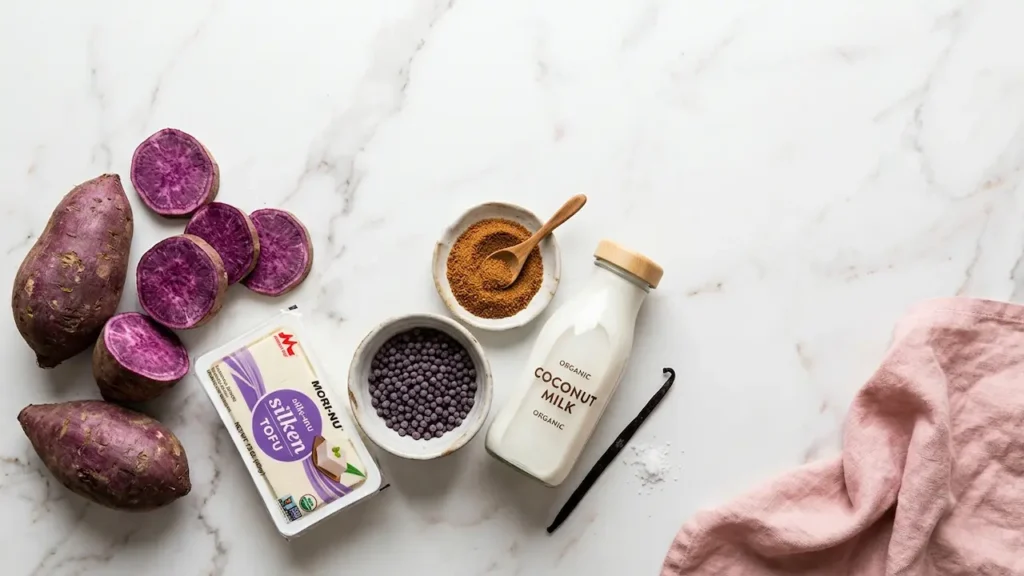
| Ingredient | Amount | Notes and substitutions |
| Silken tofu | 400 g (1 standard block) | Japanese-style silken tofu recommended; do not use firm or extra-firm tofu |
| Ube halaya (purple yam jam) | 120 g (1/2 cup) | OR 150 g cooked fresh ube, mashed. Sweetened halaya requires less added sugar |
| Small tapioca pearls (sago) | 80 g (1/2 cup dry) | Small pearls cook faster; do not use large bubble tea tapioca without adjusting cooking time |
| Coconut milk, full-fat | 240 ml (1 cup) | Full-fat produces a richer, more fragrant syrup; light coconut milk works but is thinner |
| Coconut sugar or muscovado | 60 to 80 g (1/3 cup) | Adjust based on sweetness of your ube halaya; muscovado adds caramel depth |
| Pure vanilla extract | 1/2 teaspoon | Optional but recommended; amplifies ube’s natural vanilla notes |
| Sea salt | Pinch | Balances sweetness and sharpens the ube flavor significantly |
| Water (for tapioca) | Approximately 1.5 liters | Generous water for cooking tapioca prevents sticking |
Ingredient sourcing note: Ube halaya is available at most Filipino grocery stores and many Asian supermarkets. It is also widely available online. If you cannot find it, purple yam powder combined with condensed coconut milk is a workable substitute. Fresh ube is less common outside the Philippines and Southeast Asia but is worth seeking out if available. Do not substitute with taro (different flavor, less vivid color) or purple sweet potato (closer but less distinctively flavored).
Step-by-Step Preparation
Step 1: Cook the tapioca pearls.
Bring a large pot of water (at least 1.5 liters) to a rolling boil. Add the dry tapioca pearls and stir immediately to prevent clumping. Cook over medium-high heat, stirring every 2 minutes, for 12 to 15 minutes for small pearls. The pearls are done when they are mostly translucent with just a tiny white dot remaining at the center. Remove from heat, cover the pot, and let them sit for 5 minutes; this steam-finishing step ensures the center cooks through without the outer layer becoming mushy.
Drain the cooked pearls through a fine mesh strainer and rinse briefly with warm (not cold) water to remove excess starch. Transfer to a small bowl and toss with a teaspoon of coconut sugar to prevent clumping while you prepare the rest of the recipe. Keep warm.
Step 2: Make the ube syrup.
In a small saucepan over medium-low heat, combine the ube halaya (or mashed fresh ube), coconut milk, coconut sugar, vanilla extract, and a pinch of sea salt. Whisk continuously as it heats: ube halaya is thick and will resist blending into the coconut milk until it warms. After 3 to 4 minutes of steady whisking over medium-low heat, the mixture will smooth out into a pourable, richly purple syrup. The consistency you are aiming for is thicker than cream but looser than jam, something like a warm chocolate sauce in pourability. Do not bring to a boil; a gentle simmer is sufficient, and excessive heat dulls the color.
Taste and adjust sweetness at this stage. If the syrup is very sweet (from a pre-sweetened halaya), reduce the sugar. If it tastes flat, add the pinch of salt and a drop more vanilla. Remove from heat and keep warm.
Step 3: Warm the silken tofu gently.
This is the step that most home cooks get wrong. Silken tofu is delicate and will break apart under any mechanical stress. Remove it from its packaging carefully, draining the liquid. Place the whole block in a shallow bowl or pan and set it in a larger pan of hot (not simmering) water, essentially a water bath. Let it warm for 5 minutes. You want it warm throughout, not hot. Hot silken tofu separates and becomes grainy; warm silken tofu holds its structure while feeling soft and luxurious.
To serve, use a large shallow spoon (ideally a wide Asian soup spoon) to scoop portions of the warmed tofu gently from the block in smooth, flowing motions. Do not scoop straight down and lift; draw the spoon through the tofu in a scooping motion that picks up an irregular, silky portion. This technique, which Filipino vendors do effortlessly through years of practice, takes a minute to learn but produces a much more attractive result than cutting the tofu into cubes.
Step 4: Layer the bowl.
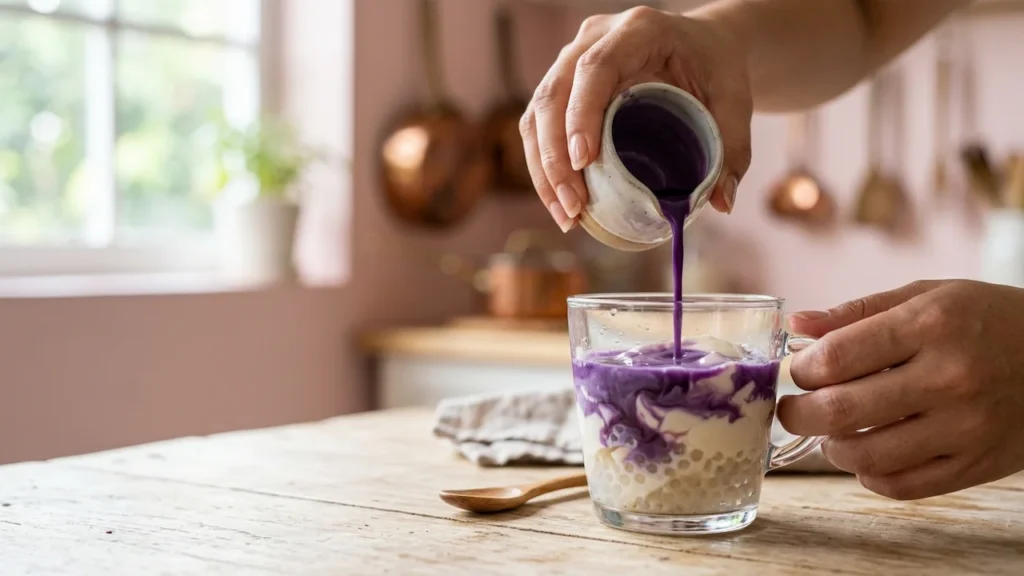
Add two to three spoonfuls of warm silken tofu to each serving bowl or cup. Add one to two tablespoons of the warm tapioca pearls on top. Pour two to three tablespoons of ube syrup over everything. Serve immediately while warm. The color contrast between the pale tofu, the deep purple syrup, and the translucent pearls is most vivid when served straight away.
Step 5: Serve warm or chilled.
Traditional taho is served warm. It is also excellent chilled: refrigerate the components separately and assemble cold for a summer variation. The chilled version has a slightly firmer tofu texture and a thicker syrup that settles around the pearls more slowly. Both are correct; “warm” is more traditional and more comforting.
Texture Secrets for Perfect Ube Taho
Tofu temperature: Warm is the target. If the tofu is too hot, the protein structure begins to contract and the texture becomes grainy and slightly rubbery rather than smooth and silky. If it is too cold, the bowl feels flat and the syrup does not meld with the tofu surface in the same way. The water bath method described above is the safest approach for consistent results.
Tapioca consistency: The pearls should be chewy and slightly resistant when bitten, with a gel-like outer layer and a soft interior. If they are mushy throughout, they were overcooked, or the water was not at a rolling boil when they were added. If they are still chalky or hard in the center, they need the covered steam-finish resting step. Cook them until mostly translucent, then rest covered for 5 minutes off heat. Do not skip the resting step.
Ube syrup thickness: The syrup should pour in a slow, thick ribbon rather than splashing like water or glopping like cold jam. If it is too thick (common when using dense halaya), whisk in additional coconut milk one tablespoon at a time over low heat. If it is too thin, simmer for an extra 2 to 3 minutes, stirring constantly, until it reduces slightly.
PrintUbe Taho Recipe
Warm silken tofu topped with chewy tapioca pearls and a richly purple ube coconut syrup. A Filipino street food classic made at home in 25 minutes. Naturally vegan, dairy-free, and gluten-free.
- Prep Time: 10 minutes
- Cook Time: 15 minutes
- Total Time: 25 minutes
- Yield: 4 servings 1x
- Category: Dessert
- Method: Stovetop
- Cuisine: Filipino
- Diet: Vegan
Ingredients
- 400 g silken tofu (Japanese-style preferred)
- 120 g ube halaya (purple yam jam)
- 80 g small tapioca pearls (sago)
- 240 ml full-fat coconut milk
- 60 to 80 g coconut sugar or muscovado sugar
- 1/2 teaspoon pure vanilla extract
- 1 pinch sea salt
- 1.5 liters water
Instructions
- Bring 1.5 liters of water to a rolling boil.
- Add the tapioca pearls and stir immediately.
- Cook for 12 to 15 minutes, stirring every 2 minutes.
- When mostly translucent with a small white center, remove from heat, cover, and rest for 5 minutes.
- Drain and rinse with warm water.
- Toss the pearls with 1 teaspoon coconut sugar and keep warm.
- In a saucepan over medium-low heat, whisk together ube halaya, coconut milk, coconut sugar, vanilla extract, and salt.
- Cook for 3 to 4 minutes until smooth and pourable. Do not boil.
- Warm the silken tofu gently in a hot water bath for 5 minutes.
- Scoop warm tofu into serving bowls.
- Top each bowl with tapioca pearls.
- Pour the warm ube syrup generously over the tofu.
- Serve immediately while warm.
Notes
Warm tofu is essential for authentic texture. Do not overheat the tofu or it may become grainy. The syrup should be thick enough to pour in a slow ribbon. Adjust sweetness to taste depending on the sweetness of your ube halaya.
Nutrition
- Serving Size: 1 serving
- Calories: 230
- Sugar: 18g
- Sodium: 90mg
- Fat: 9g
- Saturated Fat: 7g
- Unsaturated Fat: 1g
- Trans Fat: 0g
- Carbohydrates: 32g
- Fiber: 2g
- Protein: 6g
- Cholesterol: 0mg
Strategic Pairing: Complete Your Ube Taho Experience
Best Beverages to Pair with Ube Taho
Ube taho is sweet, creamy, and rich, which means the best beverage pairings are those that provide contrast rather than reinforcement. Warm, slightly bitter or earthy drinks are the ideal counterpoint.
Roasted barley tea (mugicha): Deeply toasty, slightly bitter, and completely caffeine-free, roasted barley tea is a natural partner for sweet desserts in Japanese and Korean food culture. The nuttiness of the roasted barley echoes the earthy quality of the ube without competing with it, and the mild bitterness cuts through the sweetness of the syrup in the same way coffee does with dessert. Our roasted barley tea guide covers preparation methods, storage, and the gut health benefits of its prebiotic beta-glucan content.
Warm calamansi tea: Calamansi is a small citrus fruit native to Southeast Asia and widely used in Filipino cooking. A few calamansi squeezed into hot water with a small amount of honey produces a bright, intensely fragrant citrus drink that is entirely different from lemon tea. The acidity and brightness of calamansi contrast beautifully with the sweet, creamy taho. If fresh or frozen calamansi are unavailable, a combination of equal parts fresh lime juice and fresh orange juice produces a similar flavor profile.
Unsweetened hot green tea: The simplest and most reliable pairing for a sweet dessert. The tannins in green tea cleanse the palate between bites, and the slight bitterness provides exactly the contrast that sweet, silky tofu needs.
When to Enjoy Ube Taho
Traditional: morning breakfast. In Filipino food culture, taho is morning food, specifically early morning, consumed warm before the day’s first proper meal. There is something particularly right about eating it this way: the warm tofu, the gentle sweetness, and the chewy pearls are a gentle way to start eating after an overnight fast. The protein from the tofu and the carbohydrate from the tapioca and syrup provide a balanced, if modest, morning fuel.
Modern: afternoon merienda. Merienda is the Filipino tradition of a late afternoon snack, roughly equivalent to English tea time, typically around 3 to 4 pm. Ube taho in this context is served as a treat rather than a meal starter, and a slightly more generous portion with an extra spoonful of ube syrup is appropriate. For the fuller Pegan-compatible snack context that makes the most of an afternoon treat, our Mark Hyman snack ideas guide covers the broader philosophy of snacking that balances blood sugar without restriction.
Dessert after a balanced meal. A small portion of ube taho after a protein- and vegetable-rich main course is one of the most satisfying dessert experiences you can build at home. The tofu’s protein content, the modest caloric load, and the genuinely luxurious texture make it an ideal sweet ending that does not produce the post-dessert heaviness of richer options.
An evening small treat. A smaller portion, perhaps half a standard serving with a slightly reduced syrup, works well as a late-evening treat for people who want something sweet without a large caloric input before bed. The tofu’s protein provides some overnight satiety; the carbohydrate from the tapioca is modest at half a serving. Paired with a cup of herbal tea or our roasted barley tea, this is a genuine small pleasure that feels indulgent without being excessive.
Ube Taho Variations and Customizations
Vegan Ube Taho: Already Plant-Based
The classic ube taho recipe as written is already completely vegan: silken tofu is made from soy milk, the syrup uses coconut milk rather than dairy, and coconut sugar or muscovado requires no animal products. There is genuinely nothing to modify for a vegan version. This is one of the reasons ube taho has become popular with people who avoid animal products: it is a rich, indulgent, satisfying dessert with no animal ingredients at any stage of preparation.
Low-Sugar Ube Taho
The sweetness in this recipe comes from two sources: the coconut sugar or muscovado in the syrup and the ube halaya itself (which is typically sweetened during production). To reduce the sugar content:
- Use freshly cooked ube rather than sweetened halaya: this removes the sugar from the jam stage entirely and lets you control the full sweetness of the syrup.
- Reduce the coconut sugar in the syrup to 30 to 40 g (approximately half the standard amount) and taste before adding more.
- Add 1/4 teaspoon of monk fruit extract or a few drops of liquid stevia to compensate for reduced sugar volume without significantly changing the flavor profile.
- A pinch more sea salt at the end of cooking sharpens the ube flavor and makes the reduced-sugar syrup taste more complex and satisfying than it would otherwise.
High-Protein Ube Taho
For people who want to use ube taho as a more substantial morning meal or post-workout option:
- Add one scoop of unflavored or vanilla protein powder (whey, pea, or rice protein) to the ube syrup while it is still warm and whisk well to incorporate. Add it off heat to avoid denaturing the protein. This adds approximately 20 to 25 grams of protein per full recipe (5 to 6 grams per serving).
- Top the assembled bowl with two tablespoons of toasted coconut flakes for additional fat, texture contrast, and a caramelized flavor that complements the ube.
- Add one tablespoon of chia seeds to the tapioca layer. The chia seeds absorb liquid and create a slightly pudding-like texture that adds additional protein (approximately 3 grams per tablespoon) and omega-3 fatty acids.
Ube Taho Smoothie Bowl Fusion
A contemporary variation that keeps the flavor profile but changes the format: blend 200 g silken tofu with 60 g ube halaya, 120 ml coconut milk, and a pinch of vanilla until completely smooth. Pour into a bowl and top with 2 tablespoons of cooked tapioca pearls, fresh sliced mango, toasted coconut flakes, and a small drizzle of additional ube syrup. The result is a smoothie bowl with the unmistakable ube-tofu flavor of taho but in a more substantial, Instagram-ready format.
For smoothie bowl inspiration with a complementary anthocyanin-rich base, our Flat Belly Blueberry Smoothie Guide covers the technique and nutritional logic behind blending for gut health and sustained satiety.
Frequently Asked Questions About Ube Taho
What does ube taho taste like?
Ube taho is warm, mildly sweet, and multi-textured. The silken tofu itself has almost no flavor of its own: it contributes a clean, neutral creaminess and a texture that is genuinely unlike anything else in Western cooking, something between a very soft panna cotta and a warm custard that melts on contact. The ube syrup is where the distinctive flavor lives: earthy, subtly nutty, faintly vanilla-like, with a sweetness that is rounded rather than sharp. The tapioca pearls add gentle chewiness. Together the effect is comforting, distinctive, and surprisingly light despite its richness. First-time tasters frequently describe it as “not as sweet as I expected” in a positive sense: the ube gives complexity rather than simple sugar.
Is ube taho healthy?
Ube taho is more nutritionally substantive than most desserts of similar caloric content (approximately 210 to 250 calories per serving). The silken tofu provides 6 to 7 grams of complete protein per serving, which is unusual for a sweet dish and contributes to satiety. The ube contributes anthocyanin antioxidants. The tapioca provides easily digestible carbohydrate energy. The coconut milk adds fat from medium-chain triglycerides. The overall nutritional profile is better than most conventional desserts, though it is still a sweet dish with meaningful sugar content from the syrup. As part of a varied, whole-food diet, it is a genuinely reasonable treat. As a daily breakfast, reducing the syrup quantity and increasing the tofu portion shifts the protein-to-sugar ratio favorably.
Can I use ube extract instead of fresh ube or halaya?
Yes, with significant caveats. Ube extract is a concentrated artificial or natural flavoring, not a food ingredient in the same sense as ube halaya or fresh ube. It provides the flavor and, in most formulations, the purple color, but it contributes no nutritional value, no body to the syrup, and often produces a slightly synthetic quality that experienced tasters notice. If ube extract is your only option, use it sparingly (a few drops to a teaspoon in the coconut milk base) and compensate for the lack of body by adding a tablespoon of cornstarch or arrowroot powder to the syrup to give it thickness. The result will be significantly less complex in flavor than the halaya version but will deliver the essential visual and taste impression.
Where can I buy ube and tapioca pearls?
Ube halaya is available at Filipino grocery stores, pan-Asian supermarkets, and, with increasing frequency, at mainstream grocery stores in areas with significant Asian communities. Online, it is readily available through Amazon and Filipino food specialty retailers. Fresh ube is harder to find outside Southeast Asia; frozen grated ube is a good middle option when available. Ube extract is the most widely available form and can be found at most baking supply stores. Small tapioca pearls (the correct size for taho) are available at most Asian grocery stores, typically labeled as “small sago pearls” or “tapioca starch balls.” They are usually less than $3 for a package that makes many batches.
How long does ube taho keep in the refrigerator?
The components keep best when stored separately rather than assembled. Cooked tapioca pearls: up to 2 days in the refrigerator in a sealed container with a small amount of syrup or water to prevent drying out. They harden in the fridge; reheat gently in warm water before serving. Ube syrup: up to 5 days refrigerated in a sealed jar; reheat gently in a small saucepan with a splash of coconut milk to restore pourable consistency. Silken tofu: best used within 2 days of opening; keep in its original liquid or submerged in fresh cold water in a sealed container, changing the water daily. Assembled ube taho does not keep well; the tofu absorbs liquid from the syrup and becomes waterlogged within a few hours.
Can I make ube taho ahead of time?
You can prepare all three components ahead and assemble to order, which is exactly how the magtataho vendors do it at scale. Make the tapioca pearls and ube syrup and warm the tofu separately, then assemble each bowl as it is served. For home meal prep, the syrup keeps the longest and is the most convenient to make in advance (up to 5 days). The tapioca pearls should ideally be made the day before or the morning of serving. The tofu should be warmed fresh each time; attempting to reheat already-warmed tofu produces a less pleasant texture. A practical prep strategy: make a double batch of syrup on Sunday, cook tapioca pearls as needed (they take 20 minutes), and warm the tofu fresh for each serving.
Is ube the same as a purple sweet potato?
No, though they are frequently confused and sometimes substituted for each other. Ube (Dioscorea alata) is a true yam, a monocot in the family Dioscoreaceae. Purple sweet potato (Ipomoea batatas) is a dicot in the family Convolvulaceae. They are not botanically related beyond both being tubers. The differences in practice: ube is drier, starchier, and more intensely pigmented, and its flavor is more delicate and nuanced (the vanilla-pistachio description applies). Purple sweet potato is moister, sweeter, and earthier, with a flavor closer to conventional orange sweet potato. In ube taho, the difference is noticeable: purple sweet potato produces a less vibrant color and a less distinctive flavor than genuine ube. In a pinch, purple sweet potato can substitute with acceptable results; it is not the same ingredient.
Common Mistakes That Ruin Ube Taho
Overcooking the Tapioca Pearls
The most common first-time mistake. Overcooked tapioca pearls dissolve into a starchy paste that is neither chewy nor textured; they lose their shape, their bounce, and their appeal entirely. The timing window for perfect tapioca is narrower than most people expect: 12 to 15 minutes at a rolling boil, followed by 5 minutes covered off the heat, is the correct method for small pearls. Test a pearl by removing it and biting through: there should be slight resistance in the center even when the outer layer is soft. The steam-finish resting step completes the center without mushifying the exterior. Set a timer and do not walk away from the pot in the final 3 minutes.
Breaking the Silken Tofu
Silken tofu cannot be handled the way firm tofu can. It breaks under its own weight if tilted, crumbles with any stirring, and separates if overheated. The most common mistakes: draining it by pouring it into a strainer (the block breaks on contact with the strainer wires), cutting it into cubes (they fall apart and produce ragged, unappetizing pieces), or heating it in a microwave (the steam inside causes explosive breakage). The correct method is to set the whole block in a water bath to warm through, then scoop it with a wide spoon in smooth, continuous motions. Practice the scooping technique on a corner of the block before serving; after two or three attempts it becomes intuitive.
Using Artificial Ube Flavoring as the Primary Ingredient
Ube extract has its place as a supporting accent, but using it as the primary ube ingredient rather than halaya or fresh ube produces a noticeably synthetic result. The color from most commercial ube extracts is produced by artificial dye (look for FD&C Red 40 and Blue 1 on the label) rather than natural anthocyanins, and the flavor has a synthetic quality, pleasant but recognizably artificial, that experienced tasters detect immediately. If you are making this dish to showcase ube’s genuine flavor, use the real ingredient. Ube extract is appropriate when ube halaya is genuinely unavailable and you need both the color and flavor note; it is not a substitute of equal quality.
Over-Sweetening the Syrup
The instinct when making a dessert syrup is to keep adding sweetness until it tastes very sweet from a spoon. The problem with ube syrup is that ube’s most interesting flavors (the earthiness, the nuttiness, the faint vanilla quality) are complex and subtle, and excess sugar masks them entirely. A well-made ube syrup should taste gently sweet and deeply ube-forward, not simply purple-colored simple syrup. Taste the syrup at 60 grams of coconut sugar before adding more. Add salt first (a pinch more than you think you need) and taste again before reaching for additional sweetener. The salt enhances the ube flavor and often makes reduced-sugar syrups taste more complete than they would without it.
Conclusion: Bringing Filipino Comfort to Your Kitchen
Ube taho is the kind of recipe that repays the small amount of technique it requires with a dish that feels genuinely special. The combination of warm silken tofu, chewy tapioca, and vivid purple ube syrup is something that most people outside the Philippines have never tasted, and the reaction when they do is almost always immediate delight.
The recipe here is complete: every component is explained with the specific details (the steam-finish for tapioca, the water bath for tofu, the salt-forward seasoning of the syrup) that separate a good bowl from a great one. Master the classic version first, then explore the variations once the base technique is comfortable.
The best ube taho you will make is the one you make for someone else who has never tried it. Watch their face when they take the first spoonful. That is the best reason to learn this recipe.
Related Reading: Your Purple and Wellness Toolkit
CMS note: All 6 articles below are confirmed live on the sitemap. Recommended for a visually related reading grid with thumbnails.
1. Flat Belly Blueberry Smoothie – Another purple-pigmented, antioxidant-rich recipe that explores anthocyanins in a drink format with gut health and metabolic benefits.
2. Purple Peel Weight Loss – The science behind anthocyanins in purple foods: the same compounds in ube, blueberries, and purple cabbage and their metabolic effects.
3. Mark Hyman Snack Ideas – The complete Pegan snack framework for balanced merienda choices that complement ube taho as a protein-forward afternoon treat.
4. Roasted Barley Tea Benefits – The best beverage pairing for ube taho: toasty, caffeine-free, and prebiotic with a flavor that contrasts beautifully with ube’s sweetness.
5. Low-Carb Cobb Salad – A high-protein, vegetable-forward meal that makes a balanced complement to ube taho as a dessert or snack within a whole-food day.
6. Recipe for Weight Loss Cabbage Soup – A low-calorie, high-fiber main course that pairs naturally with ube taho as a satisfying, nutritionally balanced meal structure.
💜 Love This Purple Dessert?
Save our ube taho recipe to Pinterest! Get the complete ingredient list, step-by-step layering guide, and texture secrets—all in one beautiful, easy-to-reference pin.
📌 Save Recipe on Pinterest →Join thousands who love this vibrant Filipino purple dessert!