

⚠️ Medical Disclaimer This article is for informational purposes only and does not constitute medical or nutritional advice. Cumin is a traditional kitchen spice, and individual responses vary. Anyone with digestive issues, pregnancy, diabetes, or other health conditions should consult a qualified healthcare professional before using cumin regularly for weight-loss purposes.
Cumin is a kitchen spice. It lives in your pantry between the paprika and the turmeric; it costs a few dollars for a jar that lasts months, and it makes roasted vegetables, soups, and lentils taste considerably better than they would without it. It is not a fat-burning supplement, it is not a metabolism hack, and it does not override the basics of energy balance.
That said, cumin for weight loss is a topic worth covering honestly, because there are real reasons why it shows up in weight management discussions. Not because cumin itself burns fat, but because it adds flavor to low-calorie food, it has a well-documented traditional role in digestive support, and the habit of preparing a simple morning drink with it creates a small, consistent ritual that some people find genuinely useful as a behavioral anchor.
This article covers what cumin actually does, the one simple recipe worth knowing, when to use it, realistic expectations at each stage, and the mistakes that turn a reasonable kitchen habit into a source of frustration. No pseudoscience, no dramatic claims, just a clear picture of what this spice can and cannot do.
If you are building a set of simple morning food habits, our aloe vera lemon water guide covers another low-cost, quick-to-prepare morning ritual with a well-grounded mechanism and pairs naturally with the cumin water habit described here.
Table of Contents
What Is Cumin? A Quick Kitchen Introduction
Cumin (Cuminum cyminum) is a flowering plant in the Apiaceae family, the same botanical family as carrot, coriander, and fennel. Its seeds (technically the dried fruit of the plant) are what we use as a spice: small, ridged, pale brown, and intensely aromatic when toasted or ground. Cumin originated in the eastern Mediterranean and the Middle East and has been cultivated for at least four thousand years. References to it appear in ancient Egyptian texts, the Bible, and Sanskrit medical literature. It is among the oldest documented spices in human use.
Today it is a cornerstone ingredient in Indian, Mexican, North African, and Middle Eastern cuisines. Its flavor profile is warm, earthy, slightly nutty, and faintly smoky, especially when the whole seeds are toasted dry in a pan before use. That toasting step releases cuminaldehyde, the primary aromatic compound, and transforms the spice from a background note into something considerably more present and complex.
Why does it appear in home remedies? Primarily because it is traditional, accessible, and inexpensive. Ayurvedic medicine has used cumin for digestive support for centuries. Folk medicine traditions across South Asia, the Middle East, and Latin America all have some version of a warm cumin preparation for stomach discomfort. None of this tradition is the same as clinical evidence, but it is also not nothing. A spice used medicinally across dozens of cultures over thousands of years at minimum deserves honest examination.
Why People Use Cumin for Weight Loss: The Realistic Reasons
It Fits Into Low-Calorie Cooking
One teaspoon of ground cumin contains approximately 8 calories. That same teaspoon completely transforms the flavor of roasted cauliflower, a bowl of lentil soup, or a simple chicken breast. This is the most direct and underappreciated connection between cumin and weight management: it makes low-calorie whole food taste good enough to eat consistently.
The dietary pattern that produces long-term weight loss is not a specific protocol; it is a consistent preference for whole, minimally processed food over time. The single biggest barrier to that preference is palatability. People eat what tastes good. A spice that makes a simple bowl of roasted vegetables genuinely satisfying rather than an obligation is a meaningful tool in that context, even if it never appears in a clinical trial.
Our low-carb cobb salad uses cumin as part of a spice-forward, flavor-rich approach to a meal that is genuinely low in calories without tasting like deprivation. The same principle applies across dozens of simple recipes.
It May Support Digestive Comfort
Cumin has been studied for its effect on digestive enzyme activity in a number of small trials. The most consistent finding is that cumin consumption increases the secretion of digestive enzymes (lipase, amylase, and protease) in the small intestine, which supports more efficient breakdown of dietary fat, carbohydrates, and protein. More complete digestion means less undigested substrate reaching the colon for fermentation, which directly reduces gas, bloating, and the abdominal discomfort that fermentation-driven bloating produces.
Cumin also contains compounds (thymol and cuminaldehyde) that have mild carminative properties, meaning they help relax the smooth muscle of the gut and support the expulsion of gas. This is the mechanism behind cumin’s traditional use for bloating and gas relief across multiple cultures.
The weight loss connection is indirect: people who are comfortable after eating tend to make better food choices than people who are bloated, gassy, and miserable after meals. Digestive comfort does not cause weight loss; it removes one of the friction points that makes healthy eating feel unpleasant.
The published research on cumin’s traditional digestive applications is summarized in a review available through the NIH National Center for Biotechnology Information. The evidence is preliminary, and most studies are small, but the direction is consistent with traditional use.
It encourages mindful eating habits.
There is a category of benefit from simple food rituals that is genuinely real but difficult to attribute to the food itself. The act of preparing a warm drink, sitting with it before breakfast, and drinking it slowly creates a brief, intentional pause before the first meal of the day. That pause has behavioral value: it introduces a moment of deliberation before eating, which research on mindful eating consistently associates with smaller portions, better food choices, and reduced reactive eating.
The cumin water habit is not unique in this respect. Any consistent pre-meal ritual produces some version of this effect. What cumin offers is a low-cost, unusual enough to feel intentional, and pleasant enough to maintain version of this ritual. For people who eat breakfast reactively (grabbing whatever is nearby without much thought), a simple warm drink habit can be a meaningful behavioral intervention before any other dietary change is made.
Our oat trick for weight loss guide covers a complementary pre-meal habit with a stronger direct satiety mechanism: using oat water before lunch or dinner to reduce appetite at that meal. Cumin water in the morning and oat water before dinner are low-effort double habit stacks.
It Is Cheap and Accessible
A 60-gram jar of ground cumin costs approximately $2 to $4 in most grocery stores and lasts several months at daily use of one teaspoon. Whole cumin seeds are similarly priced. There is no subscription, no proprietary blend, no upsell, and no waiting for delivery. It is in every grocery store, in most restaurant supply sections, and in virtually every international food market.
The accessibility point matters more than it might appear. Most wellness products marketed for weight loss create a financial commitment that produces psychological pressure to continue even when the product is not producing results. Cumin creates no such pressure. If it does not work for you, you stop using it, and you still have the jar for cooking. The cost of experimentation is essentially zero.
How to Use Cumin: One Simple Method
The Primary Method: Cumin Water
Cumin water is the simplest preparation and the most consistent with how this spice has traditionally been used as a digestive aid. You steep cumin seeds or ground cumin in hot water, let it sit for several minutes, strain if needed, and drink it warm. That is the complete method. No blending, no special equipment, no additional supplements required.
The advantages of this format over simply adding cumin to food: it is a discrete daily ritual with a fixed time and a fixed preparation, which makes it more reliable as a habit. Sprinkling cumin on food is easy to forget; making a cup of something specific at the same time every morning is easier to sustain.
The best timing is before or with breakfast, with a 15- to 20-minute window before eating if your stomach tolerates warm, acidic-adjacent drinks before food. For people with a sensitive stomach, drinking it alongside breakfast rather than before it is perfectly effective and produces the same digestive enzyme stimulation.
Alternative: Adding Cumin Directly to Meals
For people who find a warm spiced drink unappealing, the digestive and flavor benefits of cumin are equally available through food. Cumin added to cooking delivers the same cuminaldehyde and thymol compounds, just without the ritual structure of a discrete morning drink.
The most effective culinary uses for the weight management context:
- Roasted vegetables: toss cauliflower, broccoli, sweet potato, or carrots with olive oil and a generous amount of cumin before roasting. The cumin deepens in flavor in the oven and makes simple, low-calorie vegetables genuinely satisfying.
- Soups and stews: cumin added to a broth-based soup (added in the early stages of cooking with onion and garlic) produces a depth of flavor that makes the soup more filling and satisfying without adding meaningful calories. Our recipe for weight loss cabbage soup uses cumin as part of a functional spice stack alongside turmeric and black pepper.
- Lentils and beans: cumin is the classic pairing for legumes in South Asian and Middle Eastern cooking. Dal, chana masala, and similar preparations combine high-protein, high-fiber legumes with cumin in a way that is both highly nutritious and extremely filling per calorie.
Simple Cumin Water Recipe: The Only One You Need
This recipe is deliberately minimal. The goal is a preparation simple enough to do every morning without thinking about it. Variations (lemon, ginger) are covered after the core method.
Ingredients
- 1 teaspoon whole cumin seeds (preferred) or 1/2 teaspoon ground cumin
- 240 ml (1 cup) filtered water, just below boiling
- Optional: juice of 1/4 fresh lemon
- Optional: 1 small piece fresh ginger (approximately 1 cm), peeled and bruised
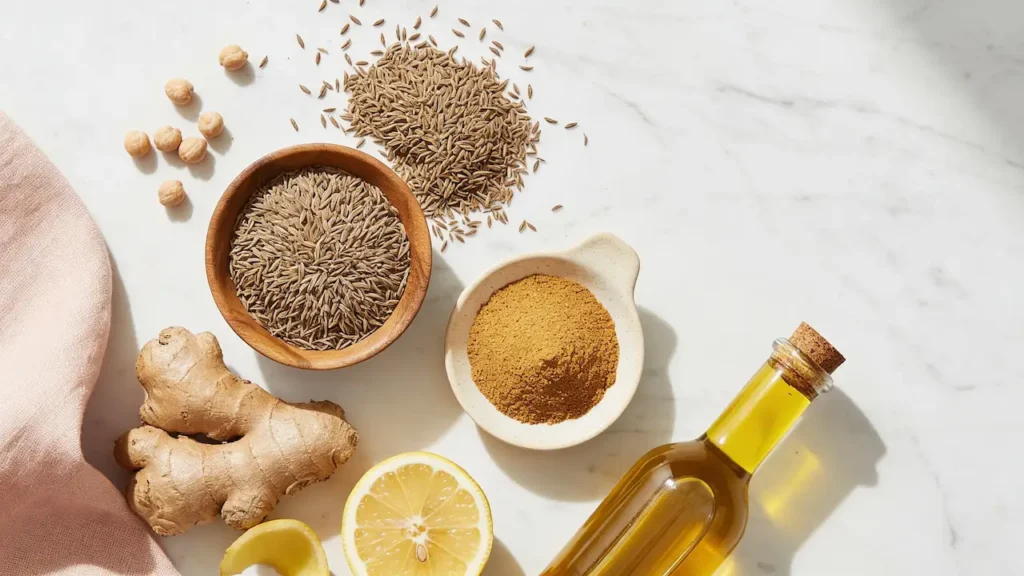
Whole cumin seeds, fresh ginger, lemon, and olive oil—the foundation of practical cumin-based recipes for digestive support and metabolism.
Instructions
- If using whole cumin seeds, toast them in a small dry pan over medium heat for 30 seconds, stirring constantly, until they release their aroma. This step is optional but makes a noticeably better-tasting drink and takes less than a minute.
- Place the cumin seeds or ground cumin in your cup.
- Heat water to just below boiling, approximately 90 to 95 degrees Celsius. Boiling water works fine but very slightly degrades aromatic compounds; “just below boiling” is ideal, not essential.
- Pour the hot water over the cumin. If using ginger, add it at this step.
- Steep for 5 to 10 minutes with a small plate over the cup to retain heat and volatile aromatics.
- Strain through a fine mesh strainer if using whole seeds. Skip this step for ground cumin (or accept the sediment, which is harmless and nutritionally fine).
- Add lemon juice if using. Drink warm.
Recipe card data for WP Recipe Maker: Recipe name: Simple Cumin Water. Prep time: 2 minutes. Steep time: 5 to 10 minutes. Total time: 12 minutes. Servings: 1. Calories: approximately 5 (negligible). Category: Drink / Morning Ritual. Diet: Vegan, Gluten-Free. Description: A simple daily cumin infusion for digestive support and a mindful morning habit. Three ingredients, under 5 calories, and ten minutes of passive time.
For a morning drink with more macronutrient substance, our flat belly blueberry smoothie provides protein, fiber, and anthocyanins in a 5-minute preparation that complements the cumin water habit: cumin water first, smoothie as breakfast.
PrintCumin for Weight Loss

A simple daily cumin water recipe traditionally used for digestive support and as a mindful morning ritual. Easy to prepare, vegan, gluten-free, and under 5 calories per serving.
- Prep Time: 2 minutes
- Cook Time: 10 minutes
- Total Time: 12 minutes
- Yield: 1 serving 1x
- Category: Drink
- Method: Steeping
- Cuisine: Wellness
Ingredients
- 1 teaspoon whole cumin seeds (preferred) or 1/2 teaspoon ground cumin
- 1 cup (240ml) filtered water, just below boiling
- Juice of 1/4 fresh lemon (optional)
- 1 small piece fresh ginger, peeled and bruised (optional)
Instructions
- If using whole cumin seeds, toast them in a dry pan for 30 seconds until fragrant.
- Place the cumin seeds or ground cumin in a cup.
- Heat the water to just below boiling.
- Pour the hot water over the cumin.
- Add ginger if using.
- Cover and let steep for 5 to 10 minutes.
- Strain if using whole seeds.
- Add lemon juice if desired.
- Serve warm and enjoy.
Notes
Use one teaspoon of whole cumin seeds or half a teaspoon of ground cumin per cup. This drink supports digestive comfort and mindful eating habits but is not a fat-burning remedy. Individual results vary.
Nutrition
- Serving Size: 1 serving
- Calories: 5
- Sugar: 0g
- Sodium: 2mg
- Fat: 0g
- Saturated Fat: 0g
- Unsaturated Fat: 0g
- Trans Fat: 0g
- Carbohydrates: 1g
- Fiber: 0g
- Protein: 0g
- Cholesterol: 0mg
When to Drink Cumin Water: Timing Matters
Morning, Before or With Breakfast (Most Common and Most Effective)
The morning window, before or alongside the first meal, is when cumin water is most likely to produce any measurable digestive benefit. Drinking it on an empty stomach allows the cuminaldehyde and enzyme-stimulating compounds to interact with the gut lining without competition from food already in the system. The digestive enzyme stimulation primes the gut for the breakfast that follows. Most people who build a lasting cumin-water habit use this window simply because mornings offer the most predictable routine structure.
For people who find straight cumin water too unusual-tasting first thing in the morning, the lemon variation (below) is considerably more approachable and produces the same effect. Start with the lemon version if you are skeptical about the taste.
Before Meals, 15 to 20 Minutes Ahead (For Portion Management)
The pre-meal timing is the same principle used in many appetite management strategies: consuming something warm and with some aromatic complexity before a meal creates a slight satiety signal and introduces a deliberate pause between the decision to eat and the actual eating. A warm liquid also occupies stomach volume, which activates stretch receptors even at low caloric content.
This timing is useful if you tend to eat quickly and find portion control difficult. The 15- to 20-minute gap between the drink and the meal is when the behavioral benefit is most pronounced. It is not a dramatic effect; it is a small, consistent signal that accumulates over weeks of repetition.
With Meals, as an Alternative to Plain Water
For people who find the drink too intense on an empty stomach or who simply prefer not to add another pre-meal step to their routine, drinking cumin water alongside a meal is a valid approach. The digestive enzyme effect is present regardless of timing relative to the meal. The mindful ritual aspect is slightly reduced (you are already eating, so the deliberate pause is gone), but for people who struggle with the habit of straight cumin water, integrating it into the meal itself as a warm drink is the version they will actually maintain.
What to Expect: An Honest Timeline
Week 1: Adjustment
The taste of cumin water is unfamiliar for most people. Warm, earthy, slightly savory, and faintly bitter without any sweetness. Most people find it tolerable by day three and genuinely pleasant by day seven, particularly with a squeeze of lemon. Some people experience mild changes in digestion (slightly more active gut, possible minor changes in stool consistency) as the digestive enzyme stimulation begins. There is no visible change in body weight from one week of cumin water. Anyone who tells you otherwise is selling something.
Weeks 2 to 4: Habit Formation
By week two, the preparation becomes automatic. The behavioral value of the habit, the morning pause and intention-setting, is most clearly felt in this period. Some people notice subjectively better digestion: less bloating after meals, more comfortable gut transit, and reduced gas. These effects are plausible given the digestive enzyme mechanism, but individual responses vary and are difficult to isolate from other dietary changes that often happen simultaneously when someone starts a new health habit. Still no dramatic scale changes that can be attributed to the cumin water itself.
Month 2 and Beyond: Integration
By this point, the drink is either embedded as a genuine daily habit or has been quietly discontinued. People who continue tend to describe it as “just part of their morning” rather than as a health intervention. This is the ideal outcome: a simple, inexpensive habit that requires no effort and creates a small, consistent positive signal toward health.
If weight loss has occurred by month two, it is attributable to the full dietary and lifestyle pattern, not to the cumin water specifically. The cumin water may have contributed to that pattern by making mornings more intentional, by supporting digestive comfort that made healthy eating feel better, and by adding flavor to lower-calorie cooking. Those indirect contributions are real. Direct fat burning from cumin is not.
The honest summary: Cumin alone will not cause weight loss. It supports the habits and conditions that support weight loss: digestive comfort, flavorful low-calorie cooking, and mindful morning routines. The results you get from cumin water depend almost entirely on what else you are doing with your diet and activity. If nothing else is changing, cumin water will not produce visible results.
For a more structured approach to dietary habits that can run alongside a cumin water practice, our Mark Hyman snack ideas guide covers the Pegan framework for blood sugar-stable, anti-inflammatory eating across the full day.
Mistakes to Avoid
Using Too Much Cumin
One teaspoon of whole seeds or half a teaspoon of ground cumin per cup is the appropriate amount. This is enough to produce flavor, aroma, and the documented bioactive effects. Using two or three times this amount does not increase the benefit proportionally and does meaningfully increase the likelihood of digestive upset, particularly nausea and stomach cramps in people with a sensitive gut. More is not better with concentrated aromatic spices. The traditional preparations that have been used for thousands of years use small, consistent amounts. Follow that guidance.
Expecting Dramatic Results
This is the mistake that generates the most frustration and the most negative reviews of cumin for weight loss. People who approach it expecting visible fat loss within a week, a noticeable reduction in waist measurement within a month, or any specific result that cumin water cannot physiologically produce will be disappointed. Any source claiming “lose 10 pounds in a week with cumin water” is describing a result that is not physically possible from any morning drink, including cumin water. Set expectations accordingly from day one.
Using It as a Meal Replacement
Cumin water contains approximately 5 calories. It provides no protein, no fat, and no meaningful carbohydrate. Drinking it instead of eating breakfast to reduce calorie intake produces a deficit through deprivation rather than through the drink’s mechanism and consistently leads to compensatory overeating later in the day. Drink it before or with a real, nutritionally complete meal. It is a complement to breakfast, not a substitute for it.
For practical, balanced snack and meal ideas that work alongside this morning habit, our Mark Hyman snack ideas guide provides a complete Pegan framework for eating throughout the day without blood sugar spikes or energy crashes.
Confusing Traditional Use with Medical Treatment
Cumin is food. It has traditional uses in digestive support that are consistent with its known biochemistry. It is not a treatment for any medical condition, and using it as such, particularly for digestive disorders like IBS, IBD, GERD, or gastric ulcers, without medical guidance is not appropriate. If you have a diagnosed digestive condition, speak with your doctor before adding a new daily preparation. For healthy people using cumin as a flavor-enhancing, habit-supporting kitchen spice, this consideration does not apply.
Simple Variations: If You Want to Mix It Up
The base recipe is the foundation. These variations are for people who have established the habit and want to add variation without complicating the preparation.
Cumin and Lemon
Add the juice of a quarter fresh lemon to the strained cumin water. This is the most universally liked variation: the citrus brightness cuts through the earthy heaviness of the cumin and makes the drink considerably more pleasant for people who find plain cumin water too savory first thing in the morning. Vitamin C from the lemon also slightly improves iron absorption from the cumin, which has minor nutritional relevance. This is the version to start with if you are new to the practice.
Cumin and Ginger
Add a small piece of fresh peeled ginger (approximately 1 cm, bruised with the flat of a knife to release its juices) to the cup before pouring the water. Steep alongside the cumin for the same 5 to 10 minutes. Ginger adds its own documented digestive support: gingerols improve gastric motility (helping food move through the stomach more efficiently) and have mild anti-inflammatory effects at the gut level. The flavor combination is warming and more complex than cumin alone. This is a good winter variation and is particularly useful for people who eat quickly and experience post-meal discomfort.

Sprinkling ground cumin over roasted chickpeas and sweet potatoes is an easy, delicious way to incorporate this digestive spice into your everyday meals.
Cumin in Food (The No-Drink Alternative)
For people who genuinely cannot get past the taste of cumin water, all the same compounds are available through culinary use. Add cumin generously to soups, stews, roasted vegetables, and legume dishes. The ritual structure is lost, but the digestive and flavor benefits are not. Our recipe for weight loss cabbage soup uses cumin as part of a functional spice combination that delivers real depth of flavor to a very low-calorie dish.
Frequently Asked Questions
Does cumin really help with weight loss?
No, not directly. Cumin does not burn fat, does not raise metabolic rate meaningfully, and does not produce a caloric deficit on its own. What it does: it may support digestive comfort by stimulating digestive enzyme activity; it adds depth of flavor to low-calorie whole foods, making them more satisfying to eat consistently; and it creates a simple, inexpensive morning ritual that some people find useful as a behavioral anchor for broader healthy habits. Weight loss comes from a sustained caloric deficit through diet and activity. Cumin can make the dietary side of that equation slightly more comfortable and more enjoyable; it cannot replace it.
Can I drink cumin water every day?
Yes, in moderate amounts (one to two cups per day) most healthy adults can drink cumin water daily without issue. One cup per day is the standard approach. There is no established upper limit for cumin consumption in healthy adults, but large amounts can cause digestive upset. Keep it at one teaspoon of seeds or half a teaspoon of ground cumin per cup, one cup per day, and you are well within reasonable daily intake. If you experience nausea, stomach cramps, or any recurring discomfort, reduce the amount or frequency.
Is cumin water safe on an empty stomach?
For most people, yes. Cumin water is not acidic in the way that vinegar or lemon juice is, so it does not carry the same risk of stomach irritation when consumed before food. People with a sensitive stomach, a history of acid reflux, or gastritis should pay attention to how their body responds in the first week. If it causes any discomfort before food, drink it alongside breakfast instead. The digestive enzyme effect is present regardless of whether food is in the stomach already.
How long before I notice any changes?
For digestive comfort, some people notice a difference within one to two weeks of daily use. For anything related to weight, the honest answer is do not expect to notice changes from cumin water alone. If you are simultaneously improving your diet and increasing activity, any weight changes are the result of those interventions. Cumin water may be making those interventions easier by supporting digestive comfort and creating morning intentionality, but isolating its contribution is not possible in a real-world setting. Give any single habit at least 30 days before evaluating.
What is the best way to use cumin for weight loss?
The best way is the one you will actually do consistently. For most people, that is one of two things: a simple cup of cumin water in the morning, prepared the same way every day, before or with breakfast. Or, for people who dislike the drink format, add cumin generously to every meal where it fits: soups, stews, roasted vegetables, and legumes. The consistency of the habit matters more than the specific format. A daily cup of cumin water that you maintain for six months is considerably more valuable than a complex protocol you abandon after two weeks.
Does cumin water break a fast?
At approximately 5 calories per cup, cumin water has negligible caloric content. For people fasting primarily for calorie restriction, the impact is effectively zero. For people fasting for autophagy (cellular cleanup) in a strict protocol, any calorie technically breaks the fast. If intermittent fasting purity matters to you, drink cumin water within your eating window. If you are fasting primarily for metabolic or calorie-management reasons, five calories will not meaningfully disrupt your goals.
Conclusion: Cumin as Part of a Real Kitchen Routine
Cumin is a remarkable kitchen spice: inexpensive, deeply flavorful, historically used across dozens of cultures for digestive support, and genuinely useful for making low-calorie whole food taste worth eating. Its role in weight loss is supportive rather than causal. It makes the dietary choices that produce weight loss easier and more enjoyable. It does not produce those choices on its own.
The simple daily recipe here, one teaspoon of cumin steeped in a cup of hot water for ten minutes, is the starting point. Try it for 30 days. Pay attention to how your digestion feels, not to the scale. If your gut feels better and your morning feels more intentional, the habit is working. If not, stop without guilt and use the cumin for cooking instead. Both outcomes are fine.
The real variables in sustainable weight loss are consistent over any timeline: dietary quality, calorie balance, adequate sleep, stress management, and physical activity. Cumin water can be a two-minute daily signal that you are taking those variables seriously. That signal has value. Just do not confuse the signal for the thing itself.
Ready to try it? The recipe card above has everything you need. For the broader dietary framework that makes simple habits like this one most effective, our fiber-maxxing guide is the most evidence-grounded single dietary habit you can add alongside a cumin-water practice.
Related Reading: Your Kitchen Wellness Toolkit
CMS note: The following confirmed live articles are recommended for a visually related reading grid.
1. Aloe Vera Lemon Water for Weight Loss – A morning gut-priming ritual with acemannan prebiotic fiber and digestive enzyme support. Pairs directly with cumin water as a two-drink morning sequence.
2. Low-Carb Cobb Salad – A high-protein, cumin-forward anti-inflammatory meal that demonstrates how spice-based flavor can make low-calorie food genuinely satisfying.
3. Flat Belly Blueberry Smoothie – A more nutritionally substantial morning drink with protein, probiotic cultures, and anthocyanins. The natural complement to cumin water when you want a complete breakfast alongside your morning ritual.
4. Roasted Barley Tea Benefits – A caffeine-free, low-acid prebiotic drink for afternoon gut health support. A warm drink habit for later in the day that reinforces the morning cumin water practice.
5. Recipe for Weight Loss Cabbage Soup – One of the best practical examples of cumin used in a culinary context for a very low-calorie, high-volume, deeply flavorful meal.
6. Mark Hyman Snack Ideas – The complete Pegan framework for balanced, blood sugar-stable eating throughout the day: the dietary context in which a cumin water morning habit is most effective.
Medical and Nutritional Disclaimer
Not medical advice. This article is for informational and educational purposes only. It does not constitute medical advice, diagnosis, or treatment. The content describes cumin as a culinary spice with traditional uses in digestive support and does not make any claims about the treatment or prevention of any medical condition.
Consult a healthcare professional. If you have a diagnosed digestive condition (IBS, IBD, GERD, or gastric ulcers), are pregnant or breastfeeding, take prescription medications, or have any other medical concern, speak with a qualified healthcare professional before adding cumin water as a daily practice. Cumin may interact with blood-thinning medications in very large amounts.
Individual results vary. Responses to any dietary change differ by individual. What works for one person may not work for another. The timeline and results described in this article are generalizations based on traditional use and preliminary research, not guarantees.
No affiliation. This content is independently created. No endorsement, sponsorship, or commercial relationship with any cumin brand, supplement company, or health organization is implied.
External research links. Links to NIH and CDC resources are provided for educational reference. We do not control the content of third-party websites and are not responsible for their accuracy or availability.
🌿 Love Honest Nutrition Tips?
Save our cumin guide to Pinterest! Get all 3 practical ways to use this digestive spice, plus the simple 10-minute morning steep recipe—all in one easy-to-reference pin.
📌 Save on Pinterest →Join thousands who start their day with honest, no-hype wellness tips!